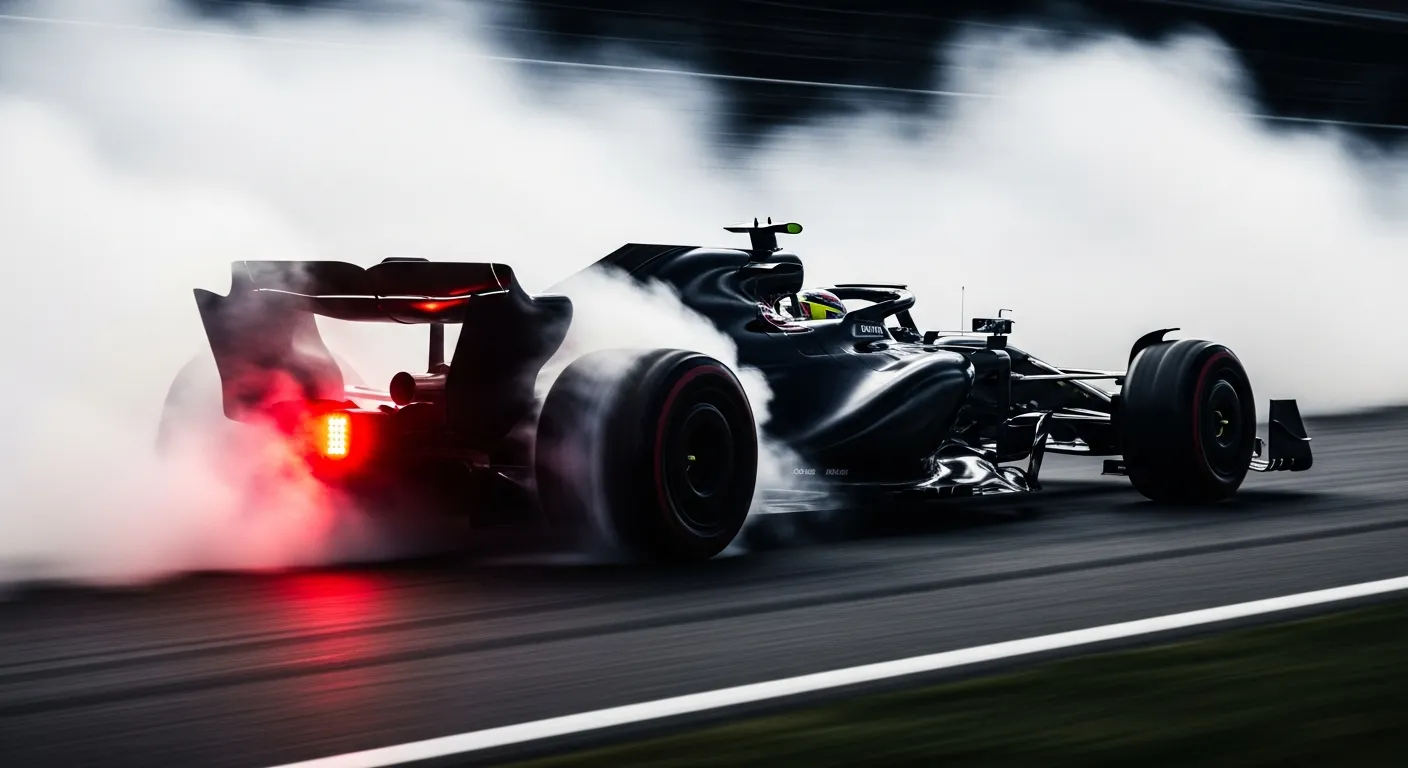
Max Verstappen's performance at the 2024 United States Grand Prix saw him convert a front-row start into a podium finish, navigating a competitive field at the Circuit of the Americas. Starting from second on the grid, the Red Bull Racing driver completed all 56 laps of the race, ultimately crossing the line in third position with a total race time of 1:35:29.051. This result, yielding 15 championship points, placed him behind the Scuderia Ferrari duo of Charles Leclerc and Carlos Sainz Jr., who secured a dominant one-two finish. Leclerc, starting fourth, took the win with a time of 1:35:09.639, while Sainz, from third, finished just over eight seconds adrift. The battle for the top positions was intense, with Lando Norris of McLaren, who started on pole, finishing closely behind Verstappen in fourth, only 0.942 seconds separating them. Verstappen's fastest lap of 1:38.117 on lap 42 ranked ninth overall, indicating a consistent, rather than outright fastest, pace throughout the Grand Prix. For a deeper dive into past performances, one might recall [Max Verstappen at the 2017 Azerbaijan Grand Prix](/results/2017-baku-max-verstappen), where race dynamics presented different challenges.
The strategic execution by Red Bull Racing ensured Verstappen's car remained competitive, despite not having the ultimate pace to challenge the Ferraris on this occasion. His teammate, Sergio Pérez, finished seventh, having started from ninth on the grid, further contributing to the constructor's points tally. The race at Austin highlighted the evolving competitive landscape of the 2024 season, a theme often explored on the [Formula 1 — official site](https://www.formula1.com/en). While Verstappen secured a solid podium, the pace demonstrated by Ferrari and McLaren suggests a tightening at the front of the field. Drivers like [Carlos Sainz at the 2017 Italian Grand Prix](/results/2017-monza-carlos-sainz) have shown the capability to capitalize on strong car performance, and this weekend was no exception for the Maranello squad. Observing the broader trends in F1 requires comprehensive data, which can be found through resources like the [Jolpica/Ergast — 2026 season data](https://api.jolpi.ca/ergast/f1/2026.json), offering a structured view of race outcomes. Even midfield contenders like [Nico Hülkenberg at the 2017 Italian Grand Prix](/results/2017-monza-nico-hulkenberg), who finished eighth in Austin, showcased the depth of competition across the grid, underscoring that every position is hard-fought in the [Wikipedia: Formula One](https://en.wikipedia.org/wiki/Formula_One) World Championship.
Verified race record · Ergast
Grid
P2
Finish
P3
Points
15
Laps
56
Constructor
Red Bull Racing
Status
Finished
Teammate that weekend
Sergio Pérez
Grid P9 · Finish P7 · 6 pts
Championship · before vs after
Before round 19
P1331 pts
After round 19
P1354 pts