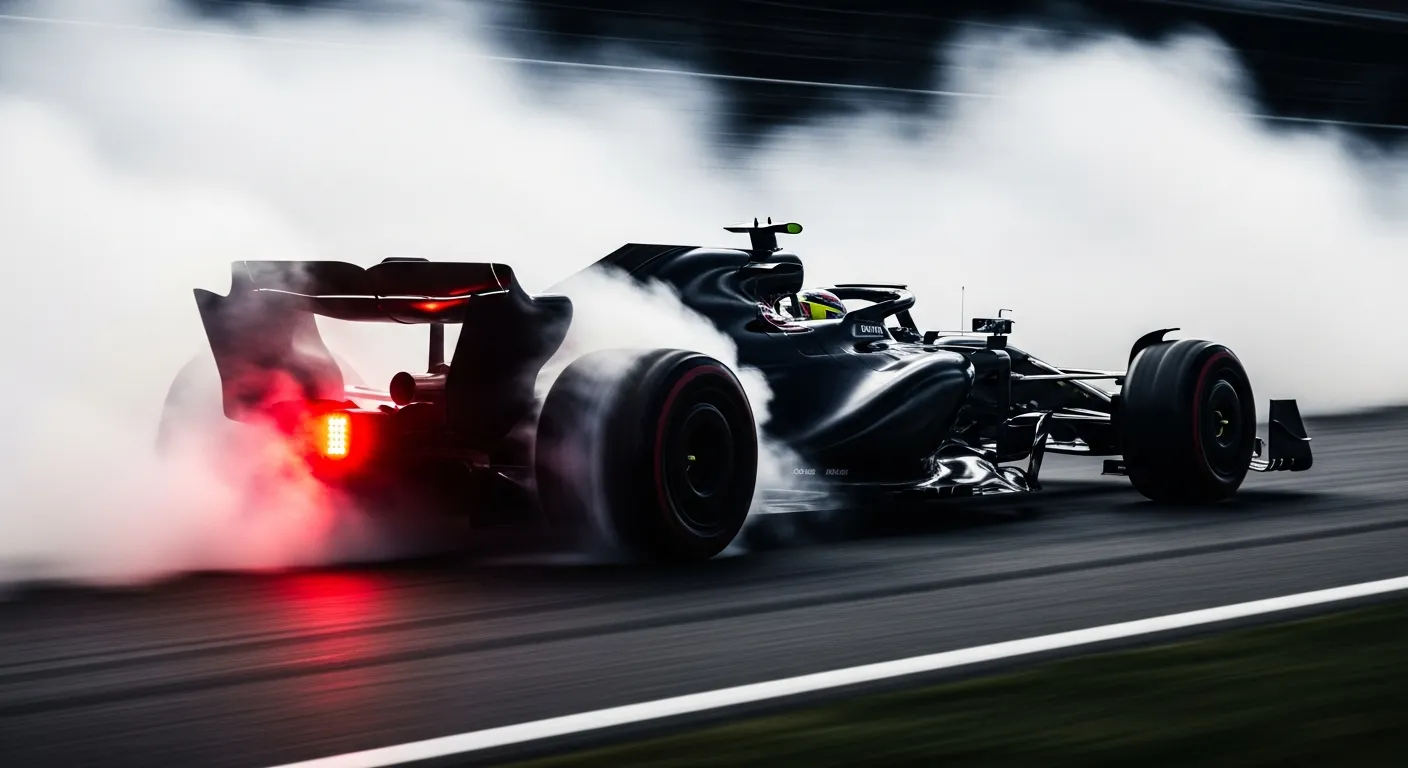
Lewis Hamilton's drive at the 2025 Abu Dhabi Grand Prix was a testament to strategic race management, converting a challenging 16th-place grid start into a points-scoring 8th position for Scuderia Ferrari. The Yas Marina Circuit, with its demanding layout and strategic nuances, often presents opportunities for drivers capable of managing tire degradation and executing overtakes. Starting deep in the midfield, Hamilton's initial objective was to navigate the opening laps cleanly and gain track position, a critical phase on a circuit where track position can be hard-won. His teammate, Charles Leclerc, started significantly higher in 5th and ultimately finished 4th, securing 12 points and the fastest lap of the race with a 1:26.725 on lap 45. This contrast highlights the potential of the Ferrari package when starting in cleaner air, while also underscoring Hamilton's task of fighting through traffic. Hamilton's ability to climb eight positions through the 58-lap race demonstrated a calculated approach, moving him past several competitors who started ahead, a consistent trait of seasoned drivers in the [Formula 1 — official site](https://www.formula1.com/en) championship. The overall performance data for the race can be reviewed on the [Formula 1 — official site](https://www.formula1.com/en) for a comprehensive overview of all competitors.
The British driver completed all 58 laps in a total time of 1:27:20.139, securing 4 valuable points for Scuderia Ferrari. His fastest individual lap, a 1:28.094 recorded on lap 36, placed him 10th overall in terms of single-lap pace, indicating moments of strong performance within the race distance despite the traffic he encountered. This steady climb from a midfield starting position echoes performances seen in previous seasons where drivers have had to fight through the pack, such as [Lance Stroll at the 2020 Belgian Grand Prix](/results/2020-spa-francorchamps-lance-stroll), who also made significant gains from a 15th-place grid start to finish 10th. Similarly, [Nico Hülkenberg at the 2020 Belgian Grand Prix](/results/2020-spa-francorchamps-nico-hulkenberg) showcased a strong recovery drive from 18th to 9th, demonstrating the potential for experienced drivers to maximize results from difficult grid slots. Hamilton's performance here, while not a podium finish, was a solid points haul, keeping him firmly in the championship's top six. The intricacies of [FIA — F1 World Championship](https://www.fia.com/events/fia-formula-one-world-championship) regulations often mean that even a few points can be crucial for constructor standings and driver championship positions, as detailed on the [FIA — F1 World Championship](https://www.fia.com/events/fia-formula-one-world-championship) portal. The strategic calls from the Ferrari pit wall would have been key in optimizing his tire windows and managing overtakes, especially given the tight margins in the midfield. Looking ahead, the full [Jolpica/Ergast — 2026 season data](https://api.jolpi.ca/ergast/f1/2026.json) will provide further insights into how these results impact the upcoming season's car development and team strategies, a critical aspect of [Wikipedia: Formula One](https://en.wikipedia.org/wiki/Formula_One) racing. The race also saw [Esteban Ocon at the 2020 Belgian Grand Prix](/results/2020-spa-francorchamps-esteban-ocon) finish P7, a position Hamilton was actively chasing in Abu Dhabi, underscoring the competitive nature of the midfield battle and the fine margins separating the points positions. This result, concluding the 2025 season, offers a data point for Ferrari's ongoing development efforts as they prepare for the next championship challenge.
Verified race record · Ergast
Grid
P16
Finish
P8
Points
4
Laps
58
Constructor
Scuderia Ferrari
Status
Finished
Teammate that weekend
Charles Leclerc
Grid P5 · Finish P4 · 12 pts
Championship · before vs after
Before round 24
P6152 pts
After round 24
P6156 pts