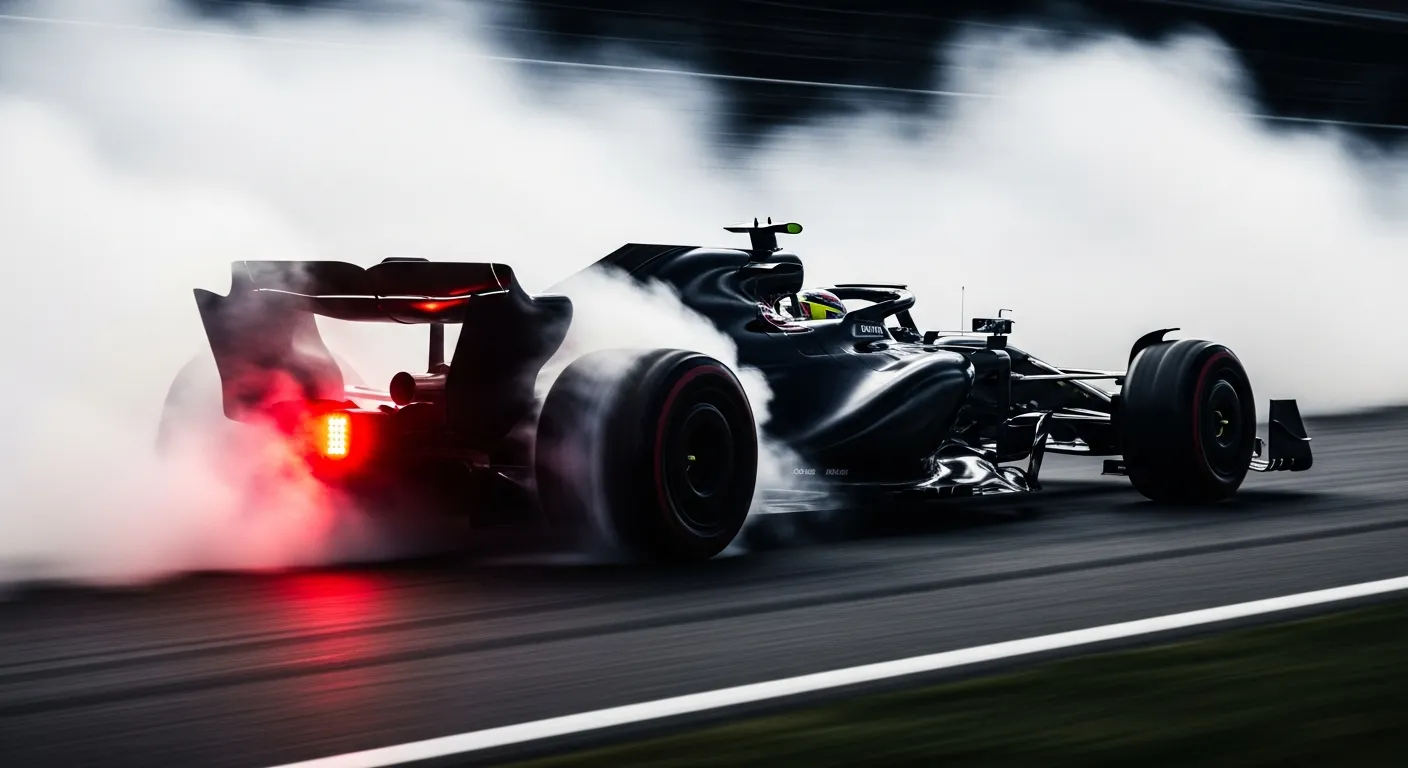
Banking in Formula 1 is the deliberate inclination of a track's corner, where the outer edge is higher than the inner edge, fundamentally altering the physics of cornering for a racing car. This architectural feature is engineered to allow cars to maintain greater speeds through a turn than would be possible on a flat surface, by using the track's slope to counteract the centrifugal forces pushing the car outwards.
The Physics of Speed and Grip
When an F1 car enters a corner, it experiences significant lateral forces. On a flat corner, the tires must generate all the necessary grip to keep the car on track, a task that becomes increasingly challenging with higher speeds. However, with banking, a component of the car's weight acts towards the center of the turn, effectively "pushing" the car into the corner. This reduces the demand on the tires for lateral grip, enabling drivers to carry more speed and maintain better stability. The steeper the banking, the more pronounced this effect, and the higher the potential cornering speed. This is a critical design element, often detailed within the FIA Formula One regulations concerning track design and safety, which dictate parameters for circuit construction.
Iconic Examples and Strategic Implications
Modern Formula 1 circuits rarely feature extreme banking, primarily due to safety considerations and the high speeds modern cars can achieve. However, notable exceptions exist. The updated Circuit Zandvoort, for instance, introduced significantly banked corners at Turns 3 (Hugenholtzbocht) and 14 (Arie Luyendyk Bocht). The Arie Luyendyk Bocht, with its impressive 18-degree incline, allows cars to take the final corner almost flat out, creating unique overtaking opportunities into the main straight and a spectacular visual for fans. Historically, tracks like the old Monza circuit featured incredibly steep banking, though these sections are no longer used for modern F1 races due to safety concerns and the evolution of car design. The concept of banking is a fundamental element in motorsport track design, as explained in the banking — Wikipedia glossary entry.
For drivers, banking presents a unique challenge and opportunity. While it allows for higher speeds, it also subjects them to intense vertical and lateral G-forces that can be physically demanding. For the cars, the sustained high-speed cornering can put immense stress on suspension components and, crucially, on the tires. Tire manufacturers like Pirelli must design compounds that can withstand these unique loads, balancing maximum grip with durability over a race stint. Strategically, banking can influence racing lines dramatically; drivers might use the full width of the banking, sometimes even riding the kerb at the apex, to optimize their exit speed onto the next straight, or choose a higher line to carry more speed through the corner. Unlike a chicane which is specifically designed to slow cars down and create overtaking zones, banking is fundamentally about maintaining momentum and flow on a Permanent Circuit.
Common viewer confusion often arises between banking and simple track camber. While both involve a slope, banking refers to a deliberate, often significant, transverse incline designed for speed and to aid cornering physics. Camber, by contrast, might be a more subtle, functional slope primarily for drainage or minor cornering assistance on a standard track surface, not engineered for the same dramatic effect on cornering speed. The visual drama and the distinct sound of cars under load through a banked corner are unmistakable, offering a unique spectacle in Formula 1.
Common questions
- Why do tracks use banking?
- Banking allows F1 cars to carry higher speeds through corners by using the track's incline to counteract centrifugal forces, reducing the demand on tire grip and enhancing stability.
- Which F1 tracks have banking?
- The most prominent example in modern F1 is Circuit Zandvoort, particularly its Turns 3 and 14, which feature significant banking designed for high-speed cornering.
- Does banking affect tire wear?
- Yes, while banking helps with grip, the sustained high-speed cornering and unique G-forces can put specific stresses on tires, influencing wear patterns and requiring specific tire compounds.