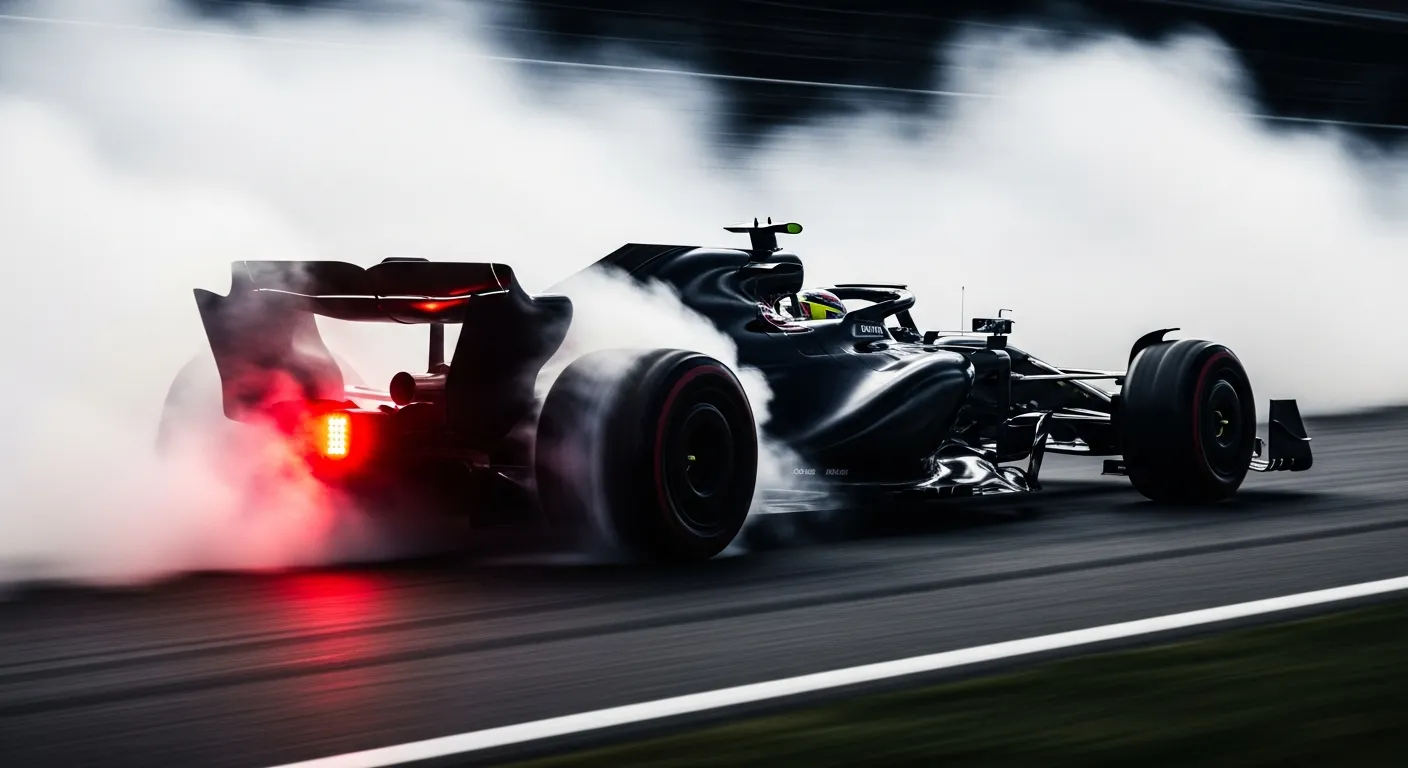
Downforce is the critical aerodynamic phenomenon that generates a downward thrust on a Formula 1 car, dramatically enhancing its grip and cornering capabilities by effectively increasing the car's weight without adding mass. Unlike an aircraft wing designed to create lift, an F1 car's aerodynamic surfaces are engineered to do the opposite, pushing the car firmly onto the tarmac. This effect is primarily achieved through sophisticated designs of the front wing, rear wing, and crucially, the car's underbody, particularly the floor and diffuser, which exploit the Venturi effect to accelerate airflow beneath the car, creating a low-pressure zone.
The Science of Grip and Stability
The generation of downforce is a complex interplay of airflow management. Air passing over and under the car is manipulated to create a pressure differential. The most significant contributor to downforce in modern Formula 1 cars comes from the floor, which, especially since the 2022 regulations, utilizes ground effect principles. These regulations, detailed in the FIA Formula One regulations, mandated a return to more pronounced underbody tunnels and diffusers, effectively sucking the car to the track. This massive aerodynamic force allows F1 cars to corner at speeds that would be impossible with mechanical grip alone, enabling lateral G-forces that push the limits of human endurance. Beyond cornering, downforce also significantly improves braking stability, allowing drivers to brake later and harder, and enhances overall car balance at high speeds.
Downforce in Action: Track Tuning and Driver Feel
The amount of downforce a team seeks varies significantly depending on the circuit. On high-speed tracks like Monza, often dubbed the "Temple of Speed," teams opt for lower downforce setups. This reduces aerodynamic drag, allowing for higher top speeds on the long straights, even if it means slightly slower cornering. Conversely, at circuits like Monaco or Singapore, which feature numerous tight corners and short straights, maximum downforce is paramount. Here, teams run aggressive wing angles and highly optimized floors to maximize grip through the technical sections, prioritizing cornering speed over outright straight-line velocity. Drivers often describe the feeling of high downforce as the car being "glued" to the track, providing immense confidence to push harder through corners.
This constant balancing act has profound implications for tire management. Higher downforce generally means more load on the tires, which can accelerate degradation and increase the risk of issues like graining or blistering if not managed correctly. Teams work closely with tire suppliers like Pirelli to understand how different downforce levels interact with tire compounds and track conditions. Viewers might sometimes be confused by seemingly contradictory statements about "more downforce" versus "less drag"; it's a direct trade-off that teams constantly optimize. Understanding downforce is fundamental to appreciating the intricate engineering and strategic decisions that define Formula 1 racing, as further explained in the downforce — Wikipedia glossary entry.
Common questions
- How do F1 teams adjust downforce?
- Teams adjust downforce by changing the angle of attack of the front and rear wings, modifying the floor's edge, and using different diffuser configurations. These changes are finely tuned to suit each specific circuit's demands, balancing cornering grip with straight-line speed.
- Does downforce create drag?
- Yes, downforce always generates drag. The aerodynamic elements designed to push the car down also create resistance as the car moves through the air. This trade-off between downforce and drag is a fundamental challenge in F1 car design and setup.