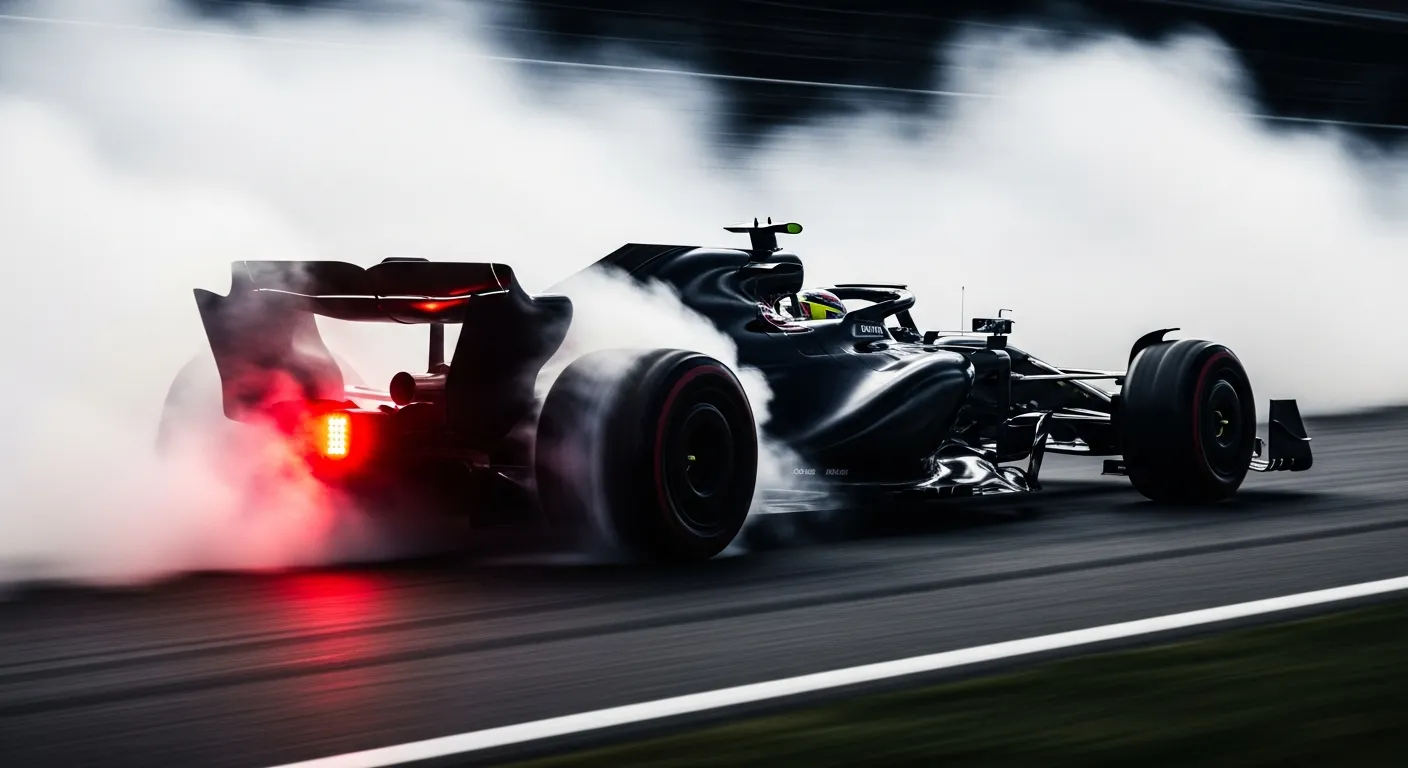
Venturi tunnels are the specifically engineered channels integrated into the underbody of a Formula 1 car, designed to exploit the Venturi effect to generate significant aerodynamic downforce. These precisely sculpted ducts are fundamental to the modern era of F1, particularly since the sweeping aerodynamic regulation changes introduced in 2022, which saw a return to ground effect as the primary means of downforce generation. Unlike previous generations that relied heavily on complex front wings and bargeboards, contemporary F1 cars harness these tunnels to create a powerful suction effect, effectively gluing the car to the track.
The Science Behind the Suction
The principle behind Venturi tunnels is rooted in the Venturi effect, a phenomenon where fluid flowing through a constricted section experiences an increase in velocity and a corresponding decrease in pressure. In an F1 car, the tunnels are shaped to narrow as airflow passes through them, then expand again. As air accelerates through the constricted section between the car's floor and the track, its static pressure drops significantly. This creates a substantial low-pressure zone beneath the car relative to the higher pressure above it. The resulting pressure differential generates immense downforce, pushing the car downwards and increasing grip, especially through high-speed corners. This sophisticated aerodynamic design is a cornerstone of current FIA Formula One regulations, dictating much of a team's aerodynamic philosophy.
Impact on Racing Dynamics and Design
The reintroduction of Venturi tunnels as the dominant downforce mechanism in 2022 fundamentally reshaped F1 car design and racing. The goal was to reduce the "dirty air" effect, where a following car loses significant downforce due to the turbulent wake of the car ahead. By generating most downforce from the underfloor, the intention was for cars to be able to follow more closely, promoting better wheel-to-wheel racing. However, this shift also brought its own challenges, most notably the phenomenon of "porpoising," where the car rapidly bounces at high speeds as the floor repeatedly stalls and reattaches its airflow. Teams spent much of the 2022 season grappling with this issue, refining their floor designs to maintain consistent airflow and prevent the violent oscillations. The stability provided by these tunnels is paramount, and any disruption, such as debris on track or sudden changes in speed under a Safety Car or Virtual Safety Car period, can momentarily impact their efficiency.
Common Misconceptions
While Venturi tunnels are integral to generating ground effect, it's important to differentiate the two. Ground effect is the overarching aerodynamic principle, while Venturi tunnels are the specific physical structures on the car's underbody that actively create and manage this effect. They are not merely flat floors but intricately sculpted channels designed for precise airflow manipulation. Understanding these tunnels is key to appreciating the engineering marvels that F1 cars represent, as detailed in various motorsport resources, including the venturi tunnels — Wikipedia glossary entry. The interaction between these aerodynamic elements and the Pirelli tyres is also critical; maximizing downforce from the tunnels allows for greater mechanical grip, enabling drivers to push harder through corners and manage tyre degradation more effectively. During a Red Flag stoppage, engineers often review telemetry to understand how well the underfloor has been performing, seeking any data points that might indicate a loss of optimal flow or potential damage.
Common questions
- Are Venturi tunnels new to F1?
- While the term gained prominence with the 2022 regulations, the concept of exploiting ground effect via shaped underbodies has roots in F1's past, notably in the late 1970s. The current iteration is a modern reinterpretation, designed with specific goals for racing and safety.
- How do Venturi tunnels affect a car's top speed?
- Venturi tunnels generate downforce, which increases drag. While crucial for cornering speed, this drag can slightly reduce outright top speed on straights. Teams balance downforce levels for specific tracks, sometimes sacrificing a little straight-line speed for cornering prowess.