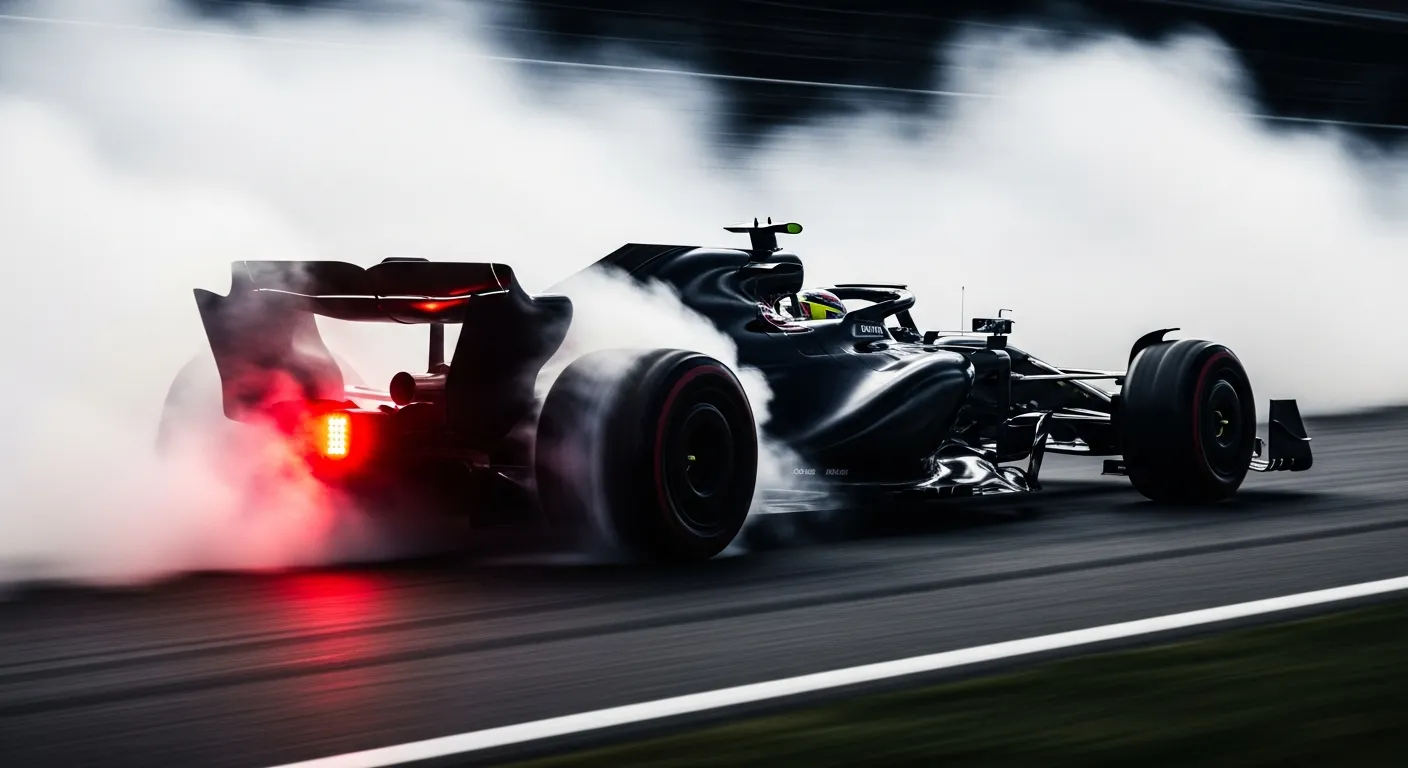
Ride height in Formula 1 is the critical measurement of the vertical distance between a car's reference plane and the track surface, directly influencing its aerodynamic efficiency and mechanical grip. This seemingly simple dimension is, in reality, one of the most complex and impactful variables in car setup, dictating how effectively a car generates downforce and interacts with the track.
The Aerodynamic Imperative
At its core, ride height is fundamental to how a Formula 1 car exploits ground effect. Modern F1 cars generate a significant portion of their downforce by accelerating air through carefully shaped underbody tunnels and diffusers. A lower ride height, particularly at the rear, creates a smaller gap between the car's floor and the tarmac, intensifying the Venturi effect beneath the car. This generates greater suction, pulling the car closer to the track and increasing cornering speeds. However, this pursuit of minimal ride height is a delicate balancing act. Too low, and the car risks "bottoming out" – scraping the floor or diffuser on the track, which can damage components, create sparks, and, critically, disrupt the airflow, leading to a sudden loss of downforce. This phenomenon was famously highlighted during the 2022 season with the reintroduction of ground effect aerodynamics, where many teams struggled with "porpoising" – a violent, high-frequency oscillation caused by the car repeatedly stalling and reattaching its underfloor airflow. To mitigate this, teams often had to compromise by running higher ride heights, sacrificing some aerodynamic potential for stability and driver comfort.
Dynamic Control and Track Demands
The challenge isn't just setting a static ride height; it's managing the car's dynamic ride height throughout a lap. As a car accelerates, brakes, and corners, its weight shifts, and aerodynamic forces push it down. The suspension system, comprising springs, dampers, and anti-roll bars, is engineered to control these movements, maintaining an optimal ride height window for maximum performance. Different circuits demand different approaches. A smooth track like Silverstone might allow for a very aggressive, low ride height setup, while a bumpy street circuit such as Monaco or Baku necessitates a slightly higher setting to absorb undulations without disrupting the underfloor aerodynamics or risking damage. This trade-off also impacts tire performance, as excessive bottoming out or stiff suspension to maintain low ride height can lead to increased Thermal Degradation by preventing the tires from working optimally over bumps.
Teams meticulously analyze track data, driver feedback, and simulations to determine the ideal front and rear ride height settings for qualifying and race conditions. A perfectly optimized ride height contributes significantly to achieving Pole Position on Saturday and setting the Fastest Lap on Sunday. The technical regulations set by the FIA Formula One regulations also play a crucial role, defining permissible dimensions and testing procedures that influence how teams design and operate their suspension systems to achieve these ride height targets. Understanding ride height is key to appreciating the intricate engineering behind an F1 car, as detailed in the ride height — Wikipedia glossary entry. It's not merely ground clearance; it's a finely tuned instrument for extracting every ounce of performance. The interaction between ride height and tire compounds, as highlighted by partners like Pirelli — tire compound + regulation context, further underscores its multifaceted importance in modern Formula 1.
Common questions
- Why is ride height so important in F1?
- It directly impacts a car's aerodynamic performance, especially ground effect, which generates significant downforce. Optimal ride height balances downforce with mechanical grip and stability over bumps, crucial for cornering speed and overall lap time.
- How do F1 teams adjust ride height?
- Teams adjust suspension settings, including spring rates, dampers, and anti-roll bars, to control both the static and dynamic ride height. This is a crucial part of car setup, tailored for each circuit's characteristics and race conditions to maximize performance.