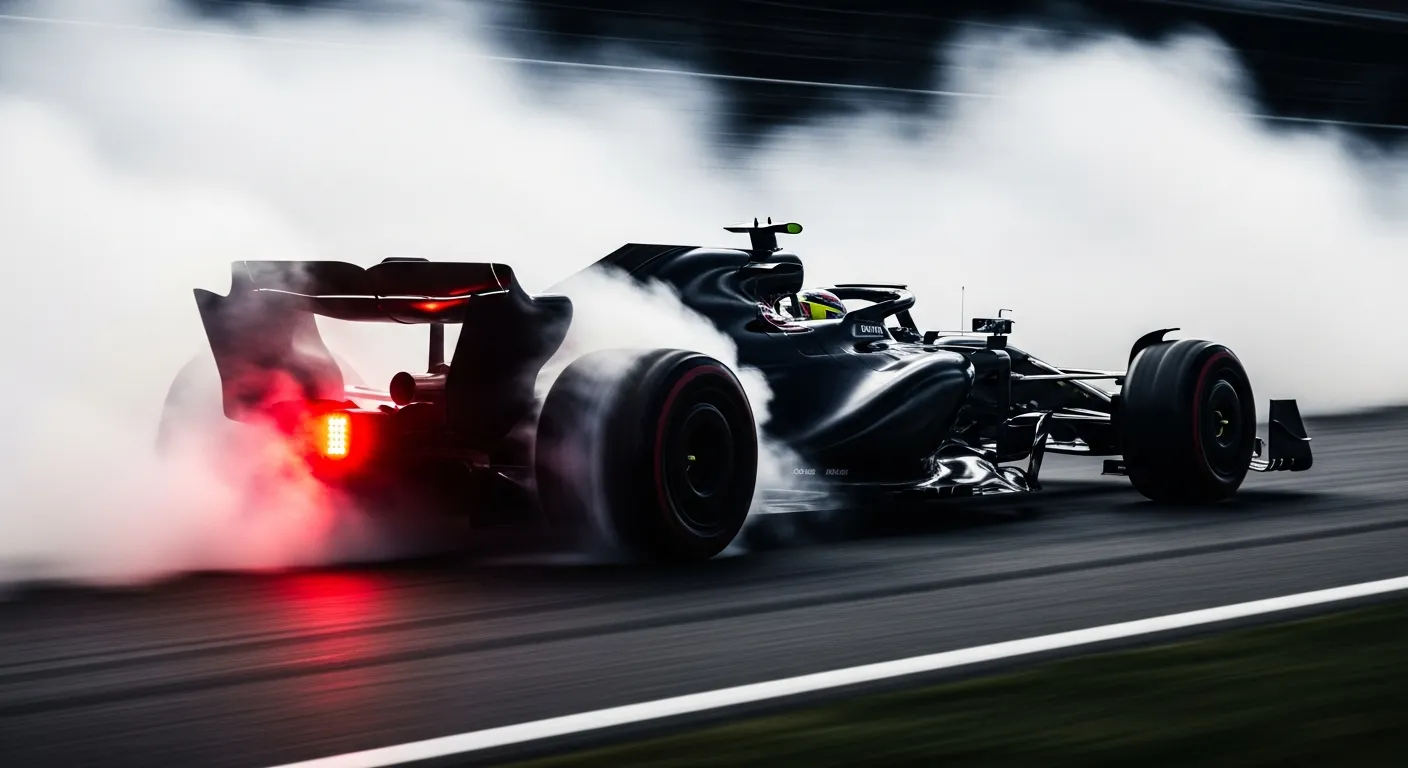
Porpoising describes the severe, high-frequency vertical oscillation of a Formula 1 car at speed, caused by the rapid cycling of aerodynamic downforce as the car's floor repeatedly stalls and re-engages with the track surface.
What is Porpoising?
This phenomenon is a direct consequence of "ground effect" aerodynamics, which made a significant return to Formula 1 with the 2022 technical regulations. These regulations aimed to simplify front wing designs and reduce "dirty air," encouraging closer racing by generating a large proportion of a car's downforce from sculpted underfloors. When a car travels at high speed, the ground effect pulls it closer to the track, sealing the underfloor and creating immense downforce. However, if the car gets too low, the airflow under the floor can become disrupted or "stall," causing a sudden loss of downforce. The car then rises slightly, the airflow re-attaches, downforce is regained, and the car is sucked back down, only for the cycle to repeat. This rapid up-and-down motion, akin to a porpoise swimming, creates the characteristic bouncing.
Impact on Performance and Driver Comfort
The effects of porpoising are far-reaching. For drivers, it's a physically punishing experience, leading to discomfort, back pain, and reduced visibility, especially at high speeds and through fast corners. From a performance standpoint, the constant bouncing disrupts the car's aerodynamic stability, making it difficult to maintain consistent downforce. This translates directly into compromised grip, reduced braking efficiency, and a significant impact on overall Lap Time. Teams are forced to make setup compromises, often raising the car's ride height to mitigate the bouncing, but this comes at the cost of losing valuable downforce and thus overall speed. Analyzing Sector times during a race weekend can often reveal where teams are struggling most with this issue.
The 2022 Season: A Defining Challenge
The reintroduction of ground effect for the 2022 season brought porpoising back into the F1 lexicon in a major way, particularly during pre-season testing and the early races. Mercedes-AMG Petronas Formula 1 Team, in particular, struggled significantly with the W13's propensity to porpoise, often visibly bouncing down long straights like those at Baku. This issue severely hampered their ability to run the car at its optimal ride height, costing them considerable performance relative to rivals like Red Bull Racing, who managed to design a car less susceptible to the phenomenon. The FIA responded to safety concerns by introducing a Technical Directive (TD039) mid-season, which set limits on the amount of vertical oscillation allowed, as outlined in the FIA Formula One regulations. This measure aimed to protect driver health and prevent excessive bouncing, influencing car design and setup for the latter half of the season and beyond. The interplay of these regulations with components like the tires, supplied by Pirelli — tire compound + regulation context, forms a critical part of a car's overall performance envelope.
Common Viewer Confusion
It's important to distinguish porpoising from other forms of car movement. While a car might appear to be bouncing, true porpoising is specifically an aerodynamic phenomenon. It's not simply the car bottoming out on its suspension over bumps, nor is it related to mechanical issues with the dampers. While mechanical setup can influence how a car reacts to porpoising, the root cause is aerodynamic. The extreme nature of the 2022 porpoising was unprecedented for many modern F1 fans, highlighting the complex interplay between aerodynamic design and mechanical tuning. For a more comprehensive understanding of motorsport terminology, readers can refer to the porpoising — Wikipedia glossary entry. The challenges posed by porpoising often influenced a team's strategy, sometimes forcing them into an early Pit Window to make setup adjustments.
Common questions
- Is porpoising the same as bottoming out?
- No, porpoising is an aerodynamic phenomenon where the car's downforce rapidly cycles, causing bouncing. Bottoming out occurs when the car's mechanical components physically hit the track surface, often due to suspension travel.
- Why did porpoising become such a big issue in 2022?
- The 2022 regulations brought back ground effect aerodynamics, generating much of the car's downforce from the underfloor. This design made cars highly susceptible to the floor stalling and re-attaching, leading to the severe bouncing.