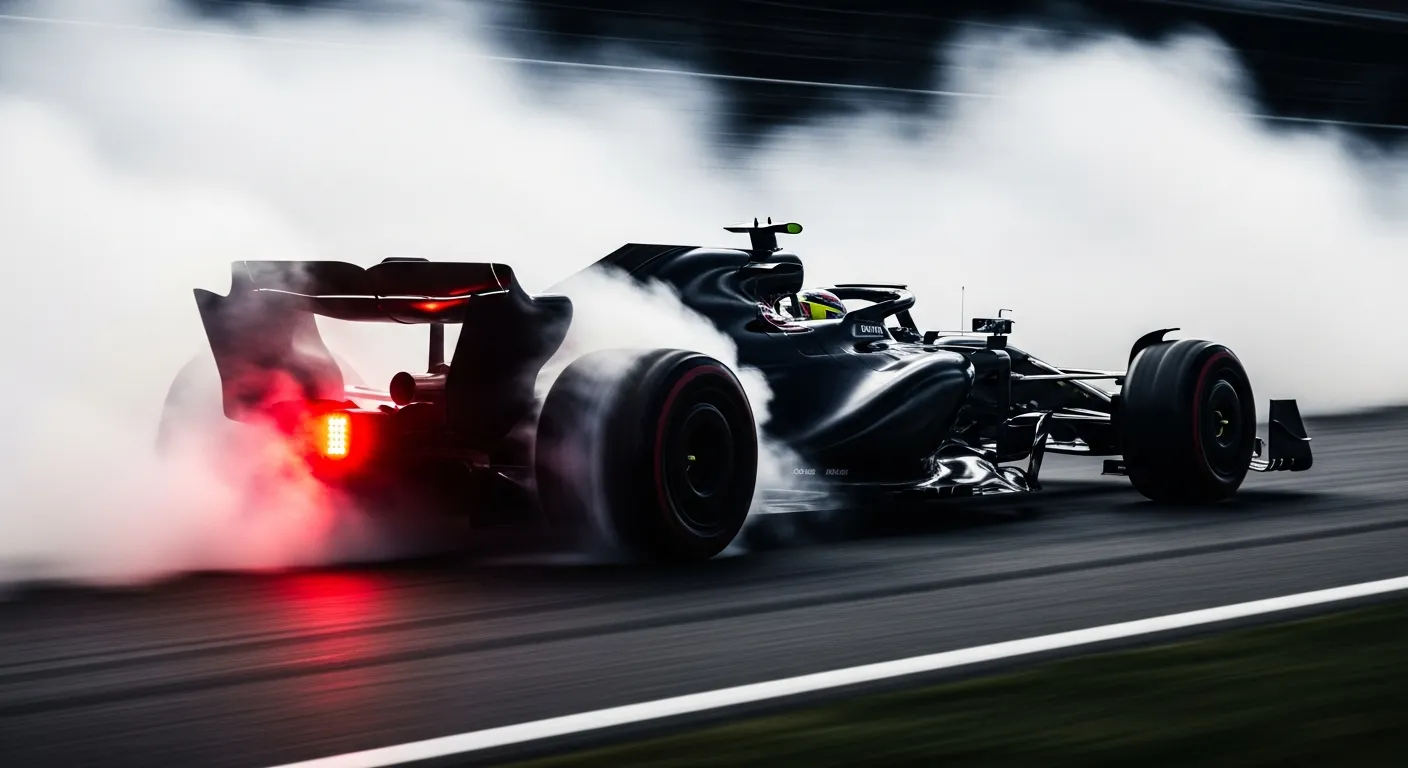
Brake bias in Formula 1 is the dynamic adjustment of braking force distribution between the front and rear axles, a critical tool drivers use to maintain control and maximize deceleration. This seemingly simple setting has profound implications for a car's handling characteristics, especially under heavy braking and corner entry.
What is Brake Bias?
At its core, brake bias dictates how much of the total braking power is sent to the front wheels versus the rear wheels. A driver can adjust this percentage, typically using a rotary dial on the steering wheel, shifting the balance forward or backward. For instance, a 55% front bias means 55% of the braking force is applied to the front wheels, and 45% to the rear. The optimal balance is never static; it's a constantly evolving target influenced by numerous factors. The FIA Formula One regulations permit these in-race adjustments, highlighting their importance in competitive racing.
Why it Matters: Stability and Performance
The correct brake bias is paramount for both stability and outright performance. Too much front bias can lead to the front wheels locking up, causing understeer and extending braking distances. Conversely, too much rear bias risks locking the rear wheels, resulting in snap oversteer, which can be particularly dangerous and difficult to recover from, especially when entering a corner. Drivers are constantly seeking the perfect balance to avoid these scenarios, ensuring the tires are working optimally without exceeding their grip limits. This fine-tuning is explained further in the brake bias — Wikipedia glossary entry.
Dynamic Adjustments During a Race
Drivers make dozens of brake bias adjustments over a single lap, let alone an entire race. These changes are necessary due to varying track conditions, fuel loads, and tire characteristics. As fuel burns off, the car becomes lighter, particularly at the rear, often requiring a shift in bias rearward to maintain optimal balance. Different Soft Tires, Medium Tires, or Hard Tires compounds from suppliers like Pirelli also demand distinct bias settings due to their unique grip levels and thermal properties. For example, a driver might shift bias slightly forward for a high-speed corner with a heavy braking zone, then move it rearward for a slower, tighter turn to help rotate the car more effectively, a technique often seen at circuits with diverse corner profiles.
Consequences of Incorrect Bias
An incorrectly set brake bias can have immediate and detrimental effects. Beyond the obvious risk of locking up wheels, it can accelerate tire wear, leading to issues like graining if tires are consistently overloaded and overheat. This not only compromises performance over a stint but can also force an unscheduled pit stop, costing valuable track position. Spectators often see drivers struggling with inconsistent braking points, sudden loss of control, or excessive smoke from a particular wheel, which can frequently be traced back to a sub-optimal brake bias setting for that specific moment on track. The ability to manage and adapt this crucial setting, often on a corner-by-corner basis, is a hallmark of a truly skilled F1 driver and a key differentiator in performance.
Common questions
- Can brake bias be adjusted during a race?
- Yes, drivers constantly adjust brake bias using a rotary dial on their steering wheel. This allows them to fine-tune the braking force distribution between the front and rear axles to suit changing track conditions, tire wear, and fuel load.
- What happens if brake bias is set incorrectly?
- An incorrect brake bias can lead to wheel lock-ups, either at the front (understeer) or rear (oversteer), making the car unstable and extending braking distances. It also accelerates tire degradation and can compromise corner entry.