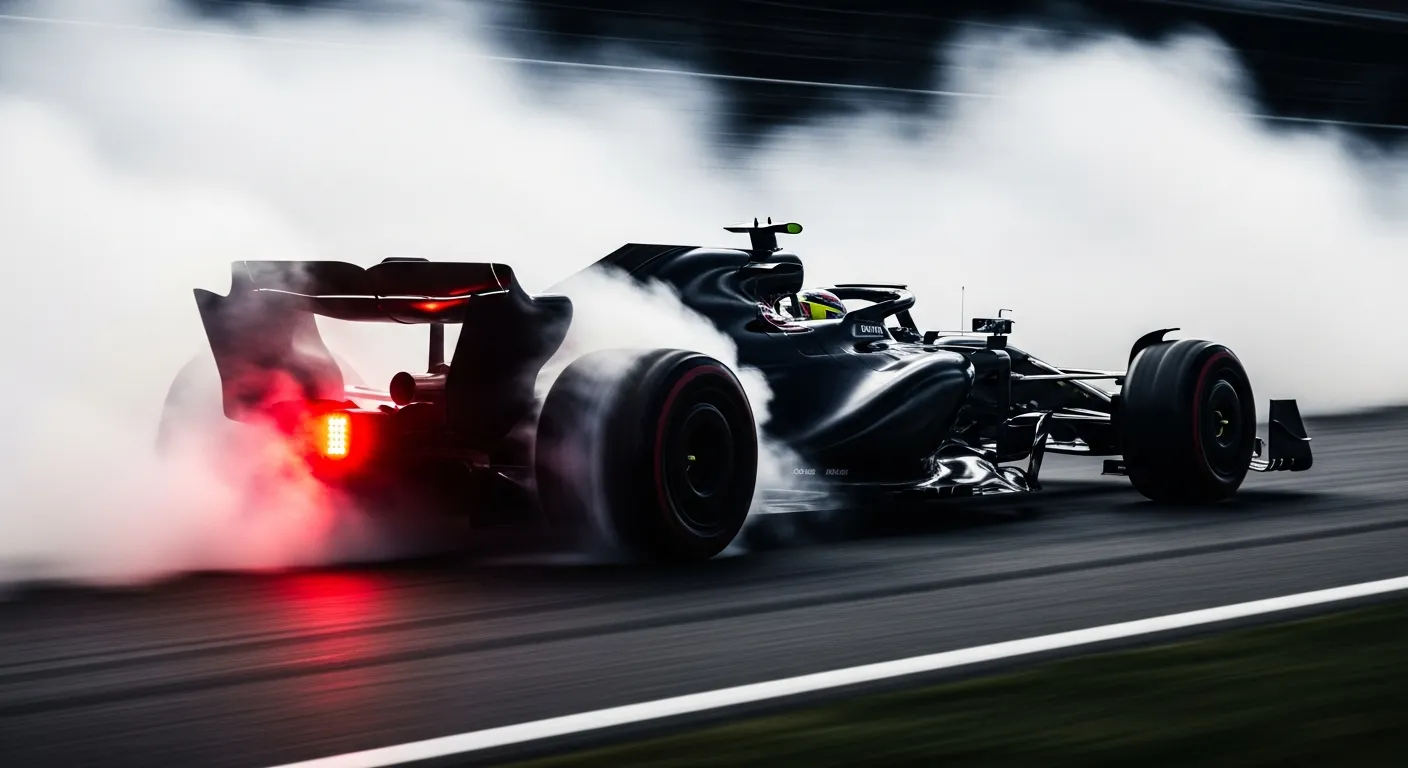
The differential is a critical, often overlooked, mechanical component within a Formula 1 car's gearbox that precisely manages the power distribution between the two driven wheels, enabling them to rotate at different speeds during cornering. Without a differential, both wheels on an axle would be forced to spin at the same rate. This is problematic in a turn, as the outer wheel must travel a greater distance than the inner wheel. A rigid axle would cause one wheel to drag or slip, severely compromising grip, stability, and ultimately, speed. For a deeper dive into the fundamental mechanics, the differential — Wikipedia glossary entry offers a comprehensive explanation.
Optimizing Cornering Performance
In Formula 1, the differential's primary role is to allow for this speed difference while still transmitting power effectively to both rear wheels. Modern F1 cars utilize highly sophisticated, electronically controlled differentials. These aren't simple open differentials; they're designed to be adjustable, allowing engineers and drivers to fine-tune their "locking" characteristics. A more "locked" differential means the wheels are forced to spin closer to the same speed, which can provide better traction under hard acceleration in a straight line or exiting a slow corner. Conversely, a more "open" differential allows for greater speed difference, improving turn-in and reducing understeer, but potentially sacrificing exit traction.
Drivers constantly adjust differential settings throughout a lap and a race, often via steering wheel controls. They might select a more open setting for corner entry to help the car rotate, then switch to a more locked setting for corner exit to maximize traction and put power down efficiently. This constant optimization is crucial for shaving tenths of a second off lap times and managing Pirelli — tire compound + regulation context degradation over a stint.
Impact on Race Strategy and Driver Feedback
The differential's setup has a profound impact on a car's handling balance. A differential that is too aggressive (too locked) on corner entry can cause the inside rear wheel to skip or lock up, leading to understeer and making the car difficult to turn. If it's too locked on exit, it can cause excessive wheelspin, leading to oversteer and rapid tire wear, or even a loss of control that could result in a Track Limits infringement. Conversely, a differential that is too open might not provide enough traction on corner exit, leaving the driver struggling to accelerate effectively.
Teams dedicate significant time during practice sessions to optimize differential settings for each circuit and driver preference. The precise calibration of the differential is a key factor in achieving optimal mechanical grip, especially through the slower, tighter sections of a track. Mismanagement or a poor setup can lead to a driver struggling for pace, potentially receiving a Time Penalty for an on-track incident caused by instability, or even requiring a gearbox change if components fail, which could result in a Grid Penalty. The technical regulations governing these components are detailed within the FIA Formula One regulations, ensuring fair competition and safety standards.
For viewers, the differential's impact is often subtle. You won't see it directly, but you'll observe its effects in how a car attacks corners, how smoothly it puts power down, and how well it manages its tires. When a driver complains about "no rear grip" or "struggling with turn-in," the differential settings are often a significant part of the equation. It's a testament to the intricate engineering that even seemingly minor mechanical adjustments can have such a profound influence on an F1 car's performance envelope.
Common questions
- Is the F1 differential the same as traction control?
- No. Traction control actively reduces engine power to prevent wheelspin, which is largely banned in F1. The differential passively manages power distribution between wheels, allowing them to rotate at different speeds for optimal cornering without reducing engine output.
- Can drivers adjust the differential during a race?
- Yes, F1 drivers can make real-time adjustments to differential settings from their steering wheel. These changes help optimize the car's handling balance for different corners, tire conditions, or fuel loads throughout a race.
- What happens if the differential isn't set correctly?
- An incorrectly set differential can lead to various handling issues, such as excessive understeer or oversteer, poor traction on corner exit, or increased tire degradation. This significantly impacts lap times and driver confidence.