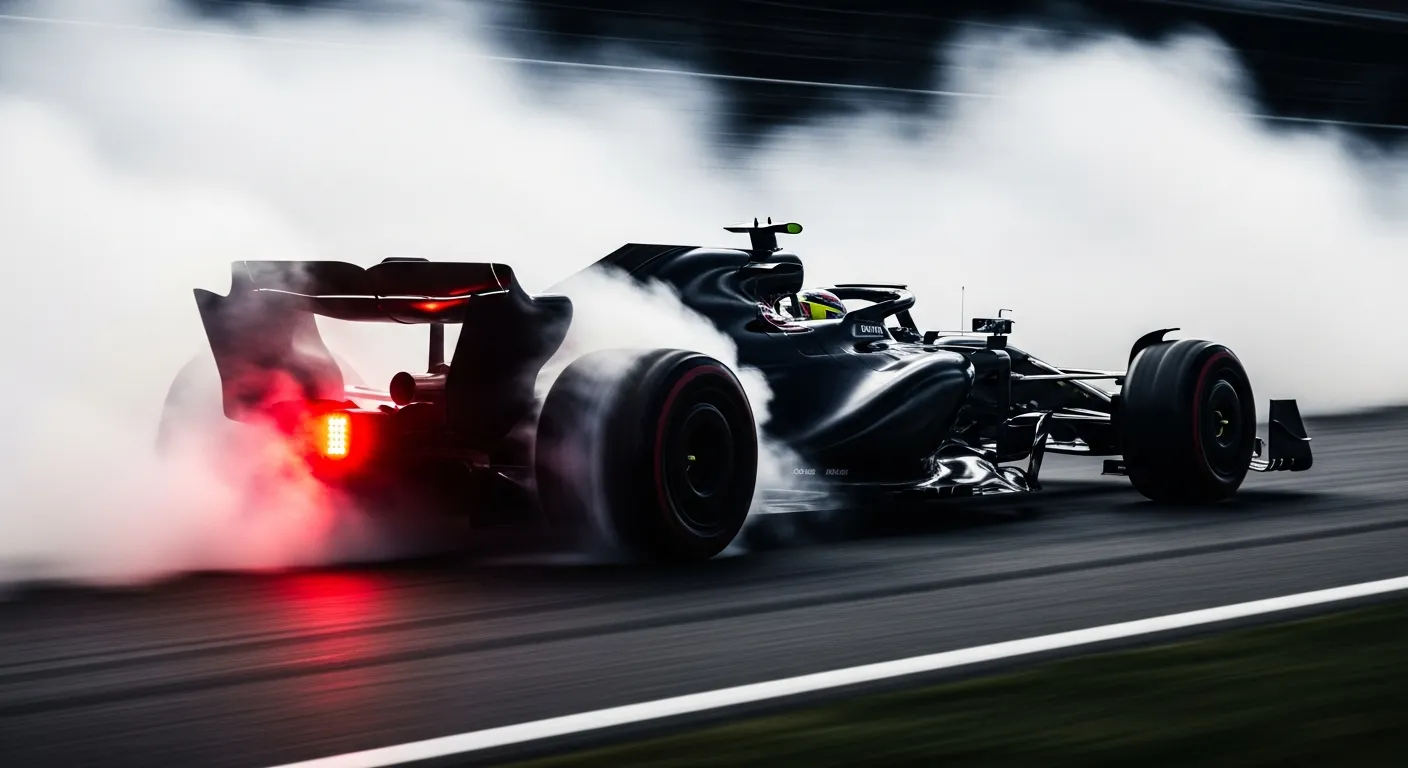
Oversteer is a dynamic characteristic in Formula 1 where the rear wheels of a car lose traction and slide outwards, causing the front of the car to turn more sharply into a corner than intended by the driver. This phenomenon, often described as the car feeling "loose" or "pointy," demands immediate and precise correction from the driver to maintain control and avoid a spin.
Understanding the Dynamics of Oversteer
At its core, oversteer happens when the rear axle of the car exceeds its grip limit before the front axle. Imagine entering a corner: if the rear tires can no longer generate enough lateral force to keep pace with the steering input, they begin to slide. This causes the car's rear to swing out, effectively rotating the car around its own axis more aggressively than the driver intended. Drivers counteract this by applying "counter-steer" — turning the steering wheel into the direction of the slide — and carefully modulating the throttle to help the rear tires regain traction. While a slight amount of oversteer can sometimes help a driver rotate the car quickly through a corner, excessive oversteer is detrimental to Lap Time and can lead to significant time loss or even a crash. For a broader understanding of this and other motorsport terms, the oversteer — Wikipedia glossary entry provides excellent context.
When Oversteer Impacts Race Performance
Oversteer can manifest at various stages of a corner: on entry under braking, mid-corner, or on exit under acceleration. Each scenario presents unique challenges. For instance, oversteer on corner exit can severely limit a driver's ability to get on the power early, compromising their speed down the following straight and impacting their Sector times. It also significantly increases wear on the rear tires, which can force teams into an earlier Pit Window than planned, affecting race strategy. Tire compounds, supplied by manufacturers like Pirelli — tire compound + regulation context, play a crucial role, as softer compounds generally offer more grip but degrade faster, potentially leading to oversteer as they wear out.
Teams spend countless hours fine-tuning their car's setup to achieve the optimal balance between oversteer and understeer, considering factors like aerodynamic downforce, suspension stiffness, and differential settings. These adjustments are made within the strict framework of the FIA Formula One regulations. A car that consistently exhibits too much oversteer will be unpredictable and difficult to drive at the limit, demanding constant corrections from the driver and making it challenging to maintain consistent pace over a race distance. Conversely, a car with a stable rear end but a tendency towards understeer might be easier to drive but slower through corners. The ideal setup is a delicate balance, often tailored to a specific driver's preference, allowing them to extract maximum performance without crossing the line into instability.
Common questions
- Is oversteer always bad?
- Not necessarily. Some drivers prefer a car with a "loose" rear end, as it allows them to rotate the car more aggressively into corners. However, excessive oversteer makes the car unpredictable and difficult to control, significantly increasing tire wear and the risk of spinning.
- How do F1 drivers correct oversteer?
- Drivers typically apply "counter-steer" (turning the steering wheel into the slide) and carefully modulate the throttle. A slight lift or reduction in power can help the rear tires regain grip, while too much throttle can exacerbate the slide.
- What causes oversteer in F1 cars?
- Oversteer can be caused by various factors, including aggressive throttle application, sudden weight transfer to the front under braking, worn rear tires, an imbalance in aerodynamic setup (too much front wing), or track conditions like low grip surfaces.