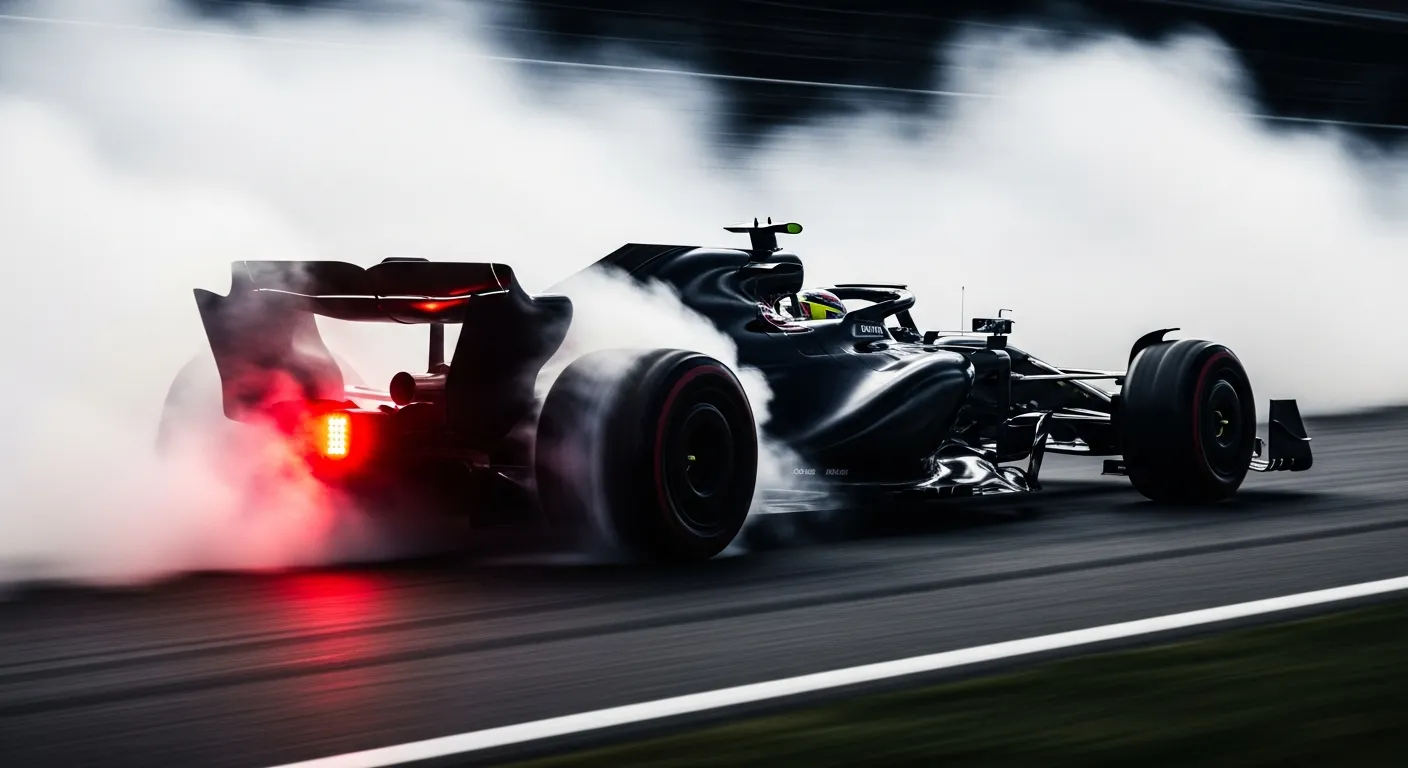
The diffuser is a critical aerodynamic device located at the rear underside of a Formula 1 car, engineered to manage airflow and generate significant downforce by expanding the air volume after it exits the underfloor. This component is far more than just a shaped piece of carbon fiber; it's a sophisticated air pump that works in conjunction with the car's entire floor to create a low-pressure zone beneath the vehicle. As air travels from the front of the car, through the intricate channels of the underfloor, it accelerates. The diffuser then acts as an expansion chamber, slowing this fast-moving air down and increasing its pressure back to ambient levels as it exits at the rear. This process, driven by the Venturi effect, effectively "sucks" the car to the track, significantly enhancing grip.
When the Diffuser Matters Most
The importance of the diffuser cannot be overstated, particularly when a car is navigating high-speed corners or maintaining stability through fast sweeps. While front and rear wings generate downforce by deflecting air over and under their surfaces, the diffuser's contribution is often more efficient because it creates downforce with less aerodynamic drag. This efficiency is paramount in Formula 1, where every millisecond counts. The performance of a diffuser is also highly sensitive to ride height and rake, meaning teams spend countless hours optimizing suspension settings to keep the diffuser working in its optimal window, especially through various phases of a corner, from entry to the Apex and exit. This precise aerodynamic management directly impacts how the car puts power down and manages its Pirelli tires, influencing everything from degradation to overall grip levels.
Historical Impact and Modern Relevance
Historically, the diffuser has been a hotbed of innovation and regulatory scrutiny. A prime example is the "double diffuser" concept pioneered by Brawn GP in 2009. This design cleverly exploited loopholes in the FIA Formula One regulations to create an additional channel for airflow, dramatically increasing downforce and giving Brawn GP a significant performance advantage that year. While initially controversial, it was eventually deemed legal and quickly adopted by other teams, showcasing how a single aerodynamic component can redefine a season. More recently, the 2022 regulatory overhaul shifted F1's aerodynamic philosophy heavily towards ground effect, making the diffuser and the underfloor the primary downforce generators. This change was partly aimed at reducing the impact of Dirty Air, theoretically allowing cars to follow more closely and enabling more overtaking opportunities, though its effectiveness is still debated.
Common Misconceptions
A common misconception among viewers is to conflate the diffuser's role solely with the rear wing. While both contribute to rear downforce, their mechanisms are distinct. The rear wing works by creating a pressure differential above and below its elements, whereas the diffuser manipulates the airflow under the car, making it an integral part of the car's overall ground effect package. Understanding the diffuser is key to appreciating the nuanced aerodynamic battle constantly unfolding on the F1 grid, influencing everything from top speed on the straights to grip through a challenging Racing Line. For a deeper dive into the mechanics, the diffuser — Wikipedia glossary entry provides excellent additional context.
Common questions
- What's the main purpose of a diffuser?
- Its primary role is to accelerate airflow from beneath the car, creating a low-pressure zone that generates significant downforce, effectively sucking the car to the track for increased grip.
- How is a diffuser different from a rear wing?
- While both create downforce, a rear wing works by deflecting air over its surfaces. A diffuser manipulates airflow *under* the car, using ground effect to generate downforce more efficiently.
- Did the diffuser ever cause controversy in F1?
- Yes, notably the "double diffuser" of 2009, which exploited regulatory loopholes. It was initially protested but later deemed legal, giving teams a significant performance edge.