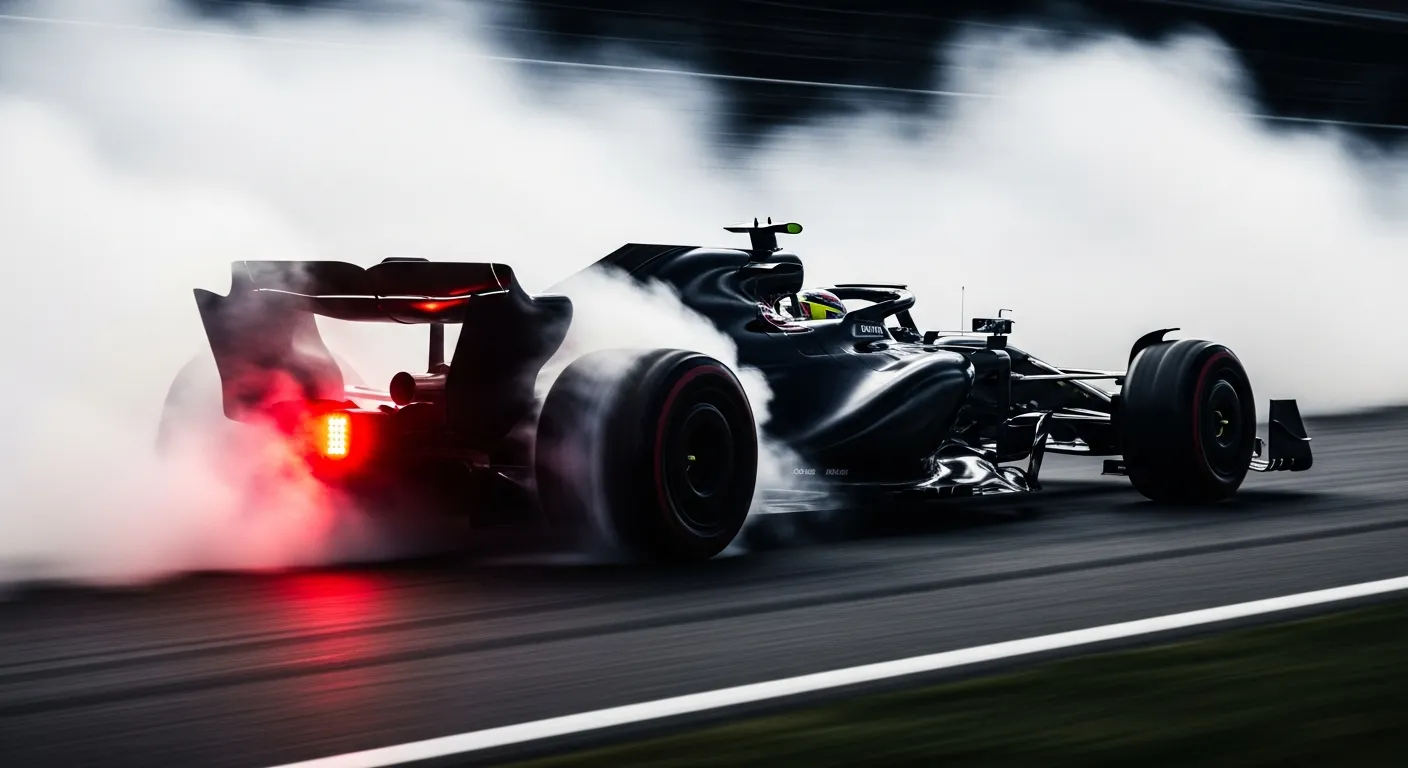
The floor of a Formula 1 car is arguably its single most crucial aerodynamic element, responsible for generating the vast majority of its downforce through precisely managed airflow beneath the chassis. This expansive, largely unseen component extends from just behind the front wheels to the rear diffuser, forming a carefully sculpted tunnel that exploits a phenomenon known as ground effect. By creating a low-pressure area between the car's underside and the track surface, the floor effectively sucks the car downwards, dramatically increasing its grip and allowing for astonishing cornering speeds.
The Science of Downforce
Understanding the floor's function is key to appreciating modern F1 car design. As air flows beneath the car, the shape of the floor accelerates it, reducing its pressure relative to the air flowing over the top of the chassis. This pressure differential generates immense downforce, pushing the car firmly onto the tarmac. The efficiency of this process is highly sensitive to the car's ride height and attitude. Even minor changes in pitch, roll, or yaw can significantly alter the airflow, impacting the car's stability and grip. This is why teams spend countless hours in wind tunnels and computational fluid dynamics (CFD) simulations, optimizing every millimeter of the floor's profile. The FIA Formula One regulations contain extensive provisions governing floor design, reflecting its pivotal role in performance and safety.
Impact on Race Performance
The floor's design directly translates to a car's ability to maintain high speeds through corners. A highly efficient floor allows a driver to carry more speed through the apex of a turn, enabling faster lap times. Conversely, damage to the floor—even a small crack or a piece of debris getting lodged—can significantly compromise its aerodynamic integrity, leading to a substantial loss of downforce. This often manifests as a sudden increase in understeer or [oversteer], making the car difficult to control and forcing a pit stop for repairs or a significant drop in pace. The 2022 regulatory overhaul, which heavily re-emphasized ground effect, brought the floor even more into focus. Teams like Mercedes initially struggled with "porpoising," a violent bouncing caused by the floor repeatedly stalling and re-attaching the airflow at high speeds, demonstrating the delicate balance required for optimal performance.
Evolving Design and Viewer Perspective
The constant evolution of floor design is a testament to its importance. Teams continuously introduce updated floor specifications throughout a season, often bringing visually subtle but aerodynamically profound changes to races. These updates are frequently the most expensive and impactful aerodynamic developments. While much of the floor's work is hidden from plain sight, its effects are palpable on track. When a driver complains about a lack of grip or instability, especially in high-speed corners, a compromised floor is often a prime suspect. For a deeper dive into the specific terminology, the floor — Wikipedia glossary entry offers further context. The interaction between the floor's downforce generation and tire performance, as detailed by entities like Pirelli, is also a critical area of engineering focus, ensuring the tires can handle the immense loads imposed by the aerodynamic forces.
Common questions
- How does floor damage affect a car?
- Even minor damage to the floor can significantly disrupt airflow, leading to a substantial loss of downforce. This makes the car less stable, harder to control, and slower through corners, often requiring a pit stop for repairs or a compromise in race pace.
- Why was the floor so important in 2022?
- The 2022 regulations re-introduced a strong emphasis on ground effect, making the floor the primary downforce generator. This led to challenges like "porpoising" as teams adapted to running cars very low to the ground to maximize floor efficiency.