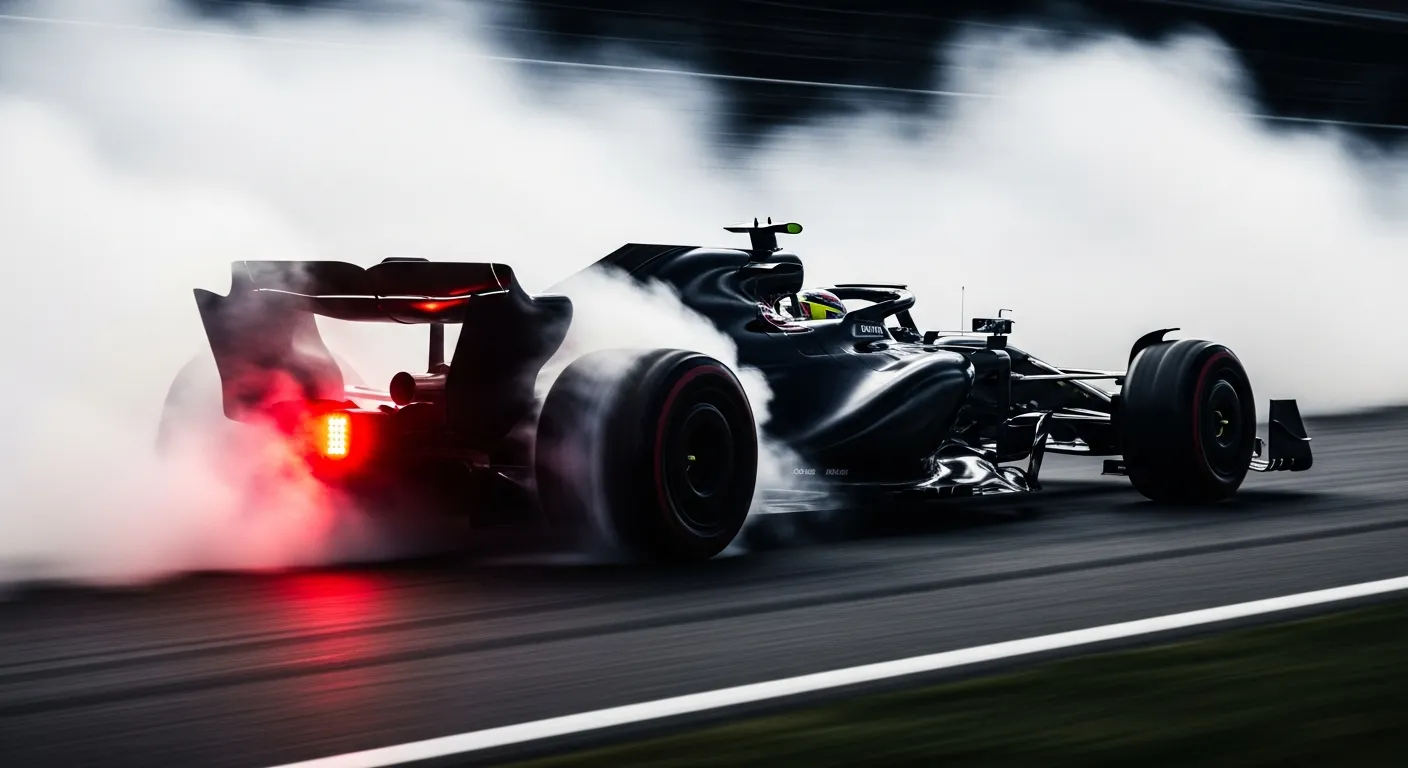
Ground effect in Formula 1 is the aerodynamic principle where a car's underbody shape, working in conjunction with the track surface, generates significant downforce by accelerating airflow and creating a low-pressure zone beneath the vehicle. This phenomenon is critical for modern F1 car performance, allowing for unprecedented cornering speeds and stability.
The Aerodynamic Principle
At its core, ground effect leverages the Venturi effect. The floor of an F1 car is meticulously sculpted with tunnels that narrow as air flows beneath the chassis and then expand towards the rear. This narrowing accelerates the air, causing a drop in static pressure. The resulting low-pressure zone beneath the car, combined with higher atmospheric pressure above, effectively sucks the car towards the track. This "suction" is downforce, which presses the tires into the asphalt, dramatically increasing grip without the drag penalty associated with large wings. The FIA's Formula One regulations extensively detail the permissible designs for these crucial aerodynamic surfaces, which in turn heavily influence how Pirelli designs and compounds its tires to cope with the immense vertical loads.
A Return to Form: The 2022 Regulations
Ground effect had a significant, albeit controversial, presence in Formula 1 during the late 1970s and early 1980s, before being largely legislated out due to safety concerns. Its dramatic return in the 2022 season marked a fundamental shift in car design philosophy. The regulations were specifically crafted to re-emphasize underbody aerodynamics, aiming to reduce the turbulent "dirty air" generated by cars, which historically made it difficult for drivers to follow closely and overtake. The idea was that downforce generated from the floor would be less disruptive to following cars than that from complex front and rear wings. For a broader understanding of the term, the ground effect — Wikipedia glossary entry offers a comprehensive overview.
Impact on Performance and Challenges
The reintroduction of ground effect fundamentally altered how teams approach car setup and performance. Cars became incredibly sensitive to ride height; even minor changes could drastically affect the efficiency of the underbody tunnels. This sensitivity led to a phenomenon known as "porpoising," where the car rapidly bounces up and down at high speeds. This occurs when the downforce generated by the floor becomes so intense that it pulls the car closer to the ground, stalling the airflow under the floor, which then causes the car to rise, only for the cycle to repeat. Teams like Mercedes famously struggled with severe porpoising in early 2022, requiring significant development to mitigate the issue without sacrificing performance.
Drivers must manage this delicate balance, as excessive porpoising can be physically demanding and compromise stability, particularly when navigating high-speed corners or hitting kerbs. Pushing the limits of a car's setup to maximize ground effect can sometimes lead to issues with Track Limits as drivers struggle to maintain a consistent line under extreme conditions. While ground effect cars are designed for stability, a poorly optimized setup can lead to unpredictable handling, potentially even resulting in a Grid Penalty if a car is deemed unsafe or its components fail due to excessive stress. Understanding ground effect is key to appreciating the intricate engineering and driving challenges at the pinnacle of motorsport.
Common questions
- How does ground effect differ from wings?
- Ground effect generates downforce by creating a low-pressure zone under the car, rather than deflecting air over a surface like a wing. This typically produces more efficient downforce with less drag, especially at high speeds.
- What is "porpoising"?
- Porpoising is a rapid, vertical oscillation of the car at high speeds, caused by the ground effect stalling and then re-engaging as the car's ride height changes. It was a significant challenge for teams in the 2022 season.