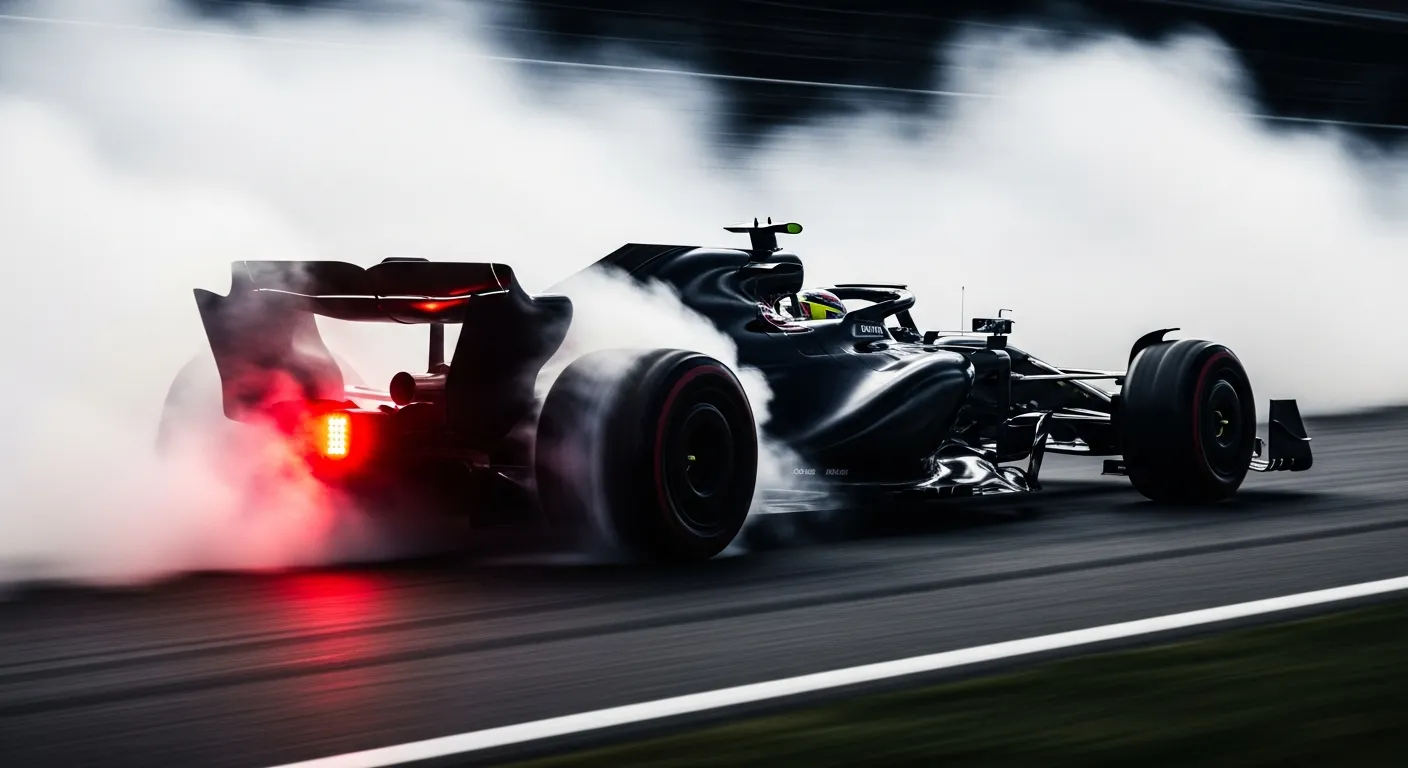
Drag in Formula 1 is the aerodynamic force that opposes a car's motion through the air, acting as a direct counter to thrust and significantly influencing a car's top speed and overall efficiency. It's an unavoidable consequence of a car's design and speed, a constant battle against the air itself.
The Aerodynamic Battle
At its core, drag is the resistance created by air particles hitting the car and flowing over its surfaces. This resistance manifests in various forms: form drag from the car's overall shape, skin friction from air rubbing against surfaces, and induced drag, which is a byproduct of generating downforce. Teams meticulously design every surface, from the front wing to the rear diffuser, to minimize this resistance while maximizing grip. The FIA Formula One regulations FIA Formula One regulations heavily influence these designs, pushing engineers to innovate within strict boundaries. For a deeper dive into the general concept, the drag — Wikipedia glossary entry provides a comprehensive overview.
On circuits like Monza, known as the 'Temple of Speed,' teams run ultra-low drag setups, sacrificing some cornering grip for outright straight-line velocity. This involves fitting smaller rear wings and less aggressive front wing profiles. Conversely, at tracks like Monaco, where top speed is less critical than maximum downforce for navigating tight corners, drag becomes a secondary concern. The Drag Reduction System (DRS) is a prime example of managing drag; when activated in designated zones, it opens a flap on the rear wing, significantly reducing drag and allowing for higher top speeds, crucial for overtaking maneuvers.
Strategic Trade-offs and Race Impact
The management of drag is a fundamental strategic element in F1. A car with excessive drag will struggle to achieve competitive top speeds, making overtaking difficult and defending positions challenging. This directly impacts race strategy, influencing decisions around the Pit Window and whether an Undercut or Overcut might be effective. High drag also means the engine has to work harder, leading to increased fuel consumption and potentially greater stress on components. Furthermore, the interplay between drag and tire performance is critical; a car struggling with straight-line speed due to high drag might push harder in corners, accelerating Degradation of the Pirelli — tire compound + regulation context compounds.
Teams constantly seek the optimal balance between low drag for speed and high downforce for grip. This balance is dynamic, changing not just from track to track but also with varying fuel loads and tire conditions throughout a race weekend. Finding that sweet spot can be the difference between a podium finish and a midfield struggle.
Understanding Drag vs. Downforce
It's a common misconception that drag and downforce are simply two sides of the same coin, or that one is inherently 'bad.' While they are inextricably linked, they serve different purposes. Downforce is the vertical force pushing the car into the track, increasing grip and allowing for higher cornering speeds. It's generally desirable. Drag, on the other hand, is the horizontal resistance that slows the car down. The challenge for F1 engineers is to generate maximum downforce with the absolute minimum amount of drag penalty. Every aerodynamic surface, from the bargeboards to the floor, contributes to both, and the art lies in optimizing this complex relationship to deliver a fast, stable, and efficient racing machine.
Common questions
- How do F1 teams reduce drag?
- Teams reduce drag by optimizing car shape, using smoother surfaces, and employing adjustable elements like the Drag Reduction System (DRS). Low-drag wing setups are common on high-speed tracks, balancing straight-line speed with cornering grip.
- Does DRS eliminate drag?
- No, DRS doesn't eliminate drag but significantly reduces it by opening a flap on the rear wing. This lowers aerodynamic resistance, boosting top speed for overtaking, but it's only available in specific zones during a race.