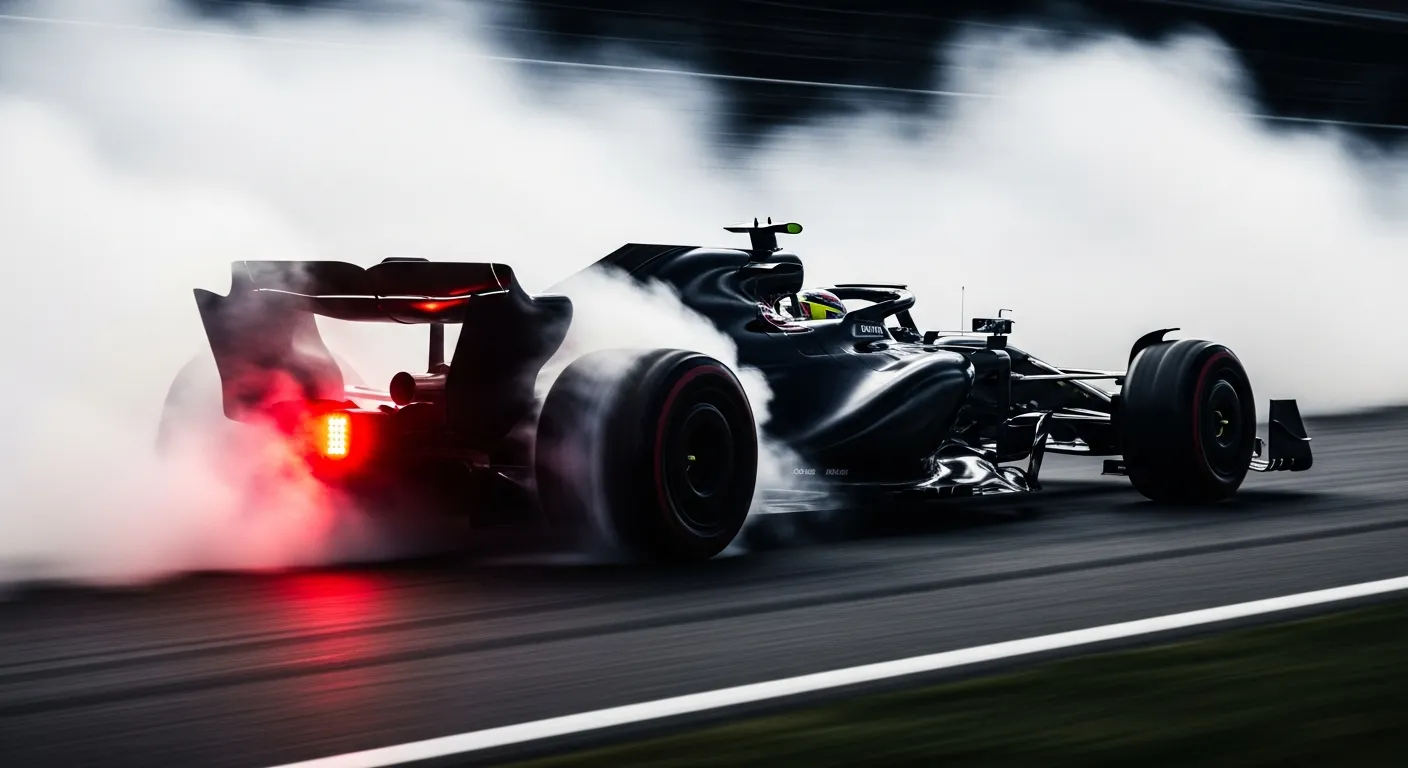
The Motor Generator Unit–Kinetic, or MGU-K, is a fundamental component of Formula 1's intricate hybrid power units, responsible for harvesting kinetic energy during braking and deploying it as additional power to the crankshaft. This sophisticated electrical machine is a direct descendant of the KERS (Kinetic Energy Recovery System) units used in earlier F1 seasons, evolving significantly with the introduction of the V6 turbo-hybrid regulations in 2014. It operates as both a generator, converting the kinetic energy typically lost as heat during deceleration into electrical energy stored in the battery, and as a motor, using that stored energy to provide an extra boost of up to 120 kW (approximately 160 hp) to the rear wheels.
How MGU-K Impacts Race Strategy
The strategic management of MGU-K deployment is a critical aspect of modern F1 racing, influencing everything from qualifying lap times to race-long battles. Drivers must constantly balance energy harvesting and deployment, often working with their engineers to optimize settings for different sections of the track. On a long straight, a driver might fully deploy the MGU-K's available energy for maximum speed, aiding in an undercut attempt or defending against an overcut. Conversely, during heavy braking zones, the MGU-K works overtime to recover as much energy as possible, which is then available for the next acceleration phase. This energy management directly impacts performance, especially when considering tire performance and potential issues like thermal degradation, where consistent power delivery can exacerbate tire wear. The FIA's technical regulations, available on their official website, detail the precise operational parameters and energy limits for these complex systems, ensuring a level playing field.
MGU-K in Action: Recent F1 Scenarios
We've seen numerous instances where MGU-K performance or failure has dramatically shaped race outcomes. Consider a scenario where a driver is attempting an overtake on a rival. Optimal MGU-K deployment can provide that crucial burst of power needed to complete the move, especially out of a slow corner onto a straight. Conversely, a failure or reduced efficiency in the MGU-K can leave a driver significantly disadvantaged, struggling for straight-line speed and acceleration. Teams meticulously monitor these systems, as issues can lead to a substantial loss of lap time, forcing drivers to adapt their driving style or even retire from a race. The complexity of these hybrid systems means that even minor glitches can have significant consequences, making the MGU-K a constant point of focus for engineers and strategists alike. For a broader understanding of how these units fit into the larger motorsport context, the mgu k — Wikipedia glossary entry provides a useful overview.
Common Viewer Confusion
One frequent point of confusion among viewers is distinguishing the MGU-K from its sibling component, the MGU-H (Motor Generator Unit–Heat). While both are part of the Energy Recovery System (ERS), they harvest energy from different sources. The MGU-K focuses solely on kinetic energy from braking, while the MGU-H recovers heat energy from the exhaust gases. Another misunderstanding often revolves around the 'deployment' limit. While the MGU-K can generate significant power, regulations cap its deployment to 4 MJ per lap, preventing an endless power advantage and ensuring drivers must manage their energy effectively throughout a race. This strategic element, combined with the need to manage tire compounds from suppliers like Pirelli, adds layers of complexity to every Grand Prix.
Common questions
- How much power does the MGU-K provide?
- The MGU-K can generate up to 120 kW (approximately 160 hp) of additional power. However, regulations limit its deployment to 4 MJ per lap, meaning drivers must manage this boost strategically throughout a race lap.
- What's the difference between MGU-K and MGU-H?
- The MGU-K recovers kinetic energy during braking, converting it into electrical power. The MGU-H, on the other hand, recovers heat energy from the exhaust gases, also converting it into electrical power or directly spinning the turbocharger. They harvest from different sources.