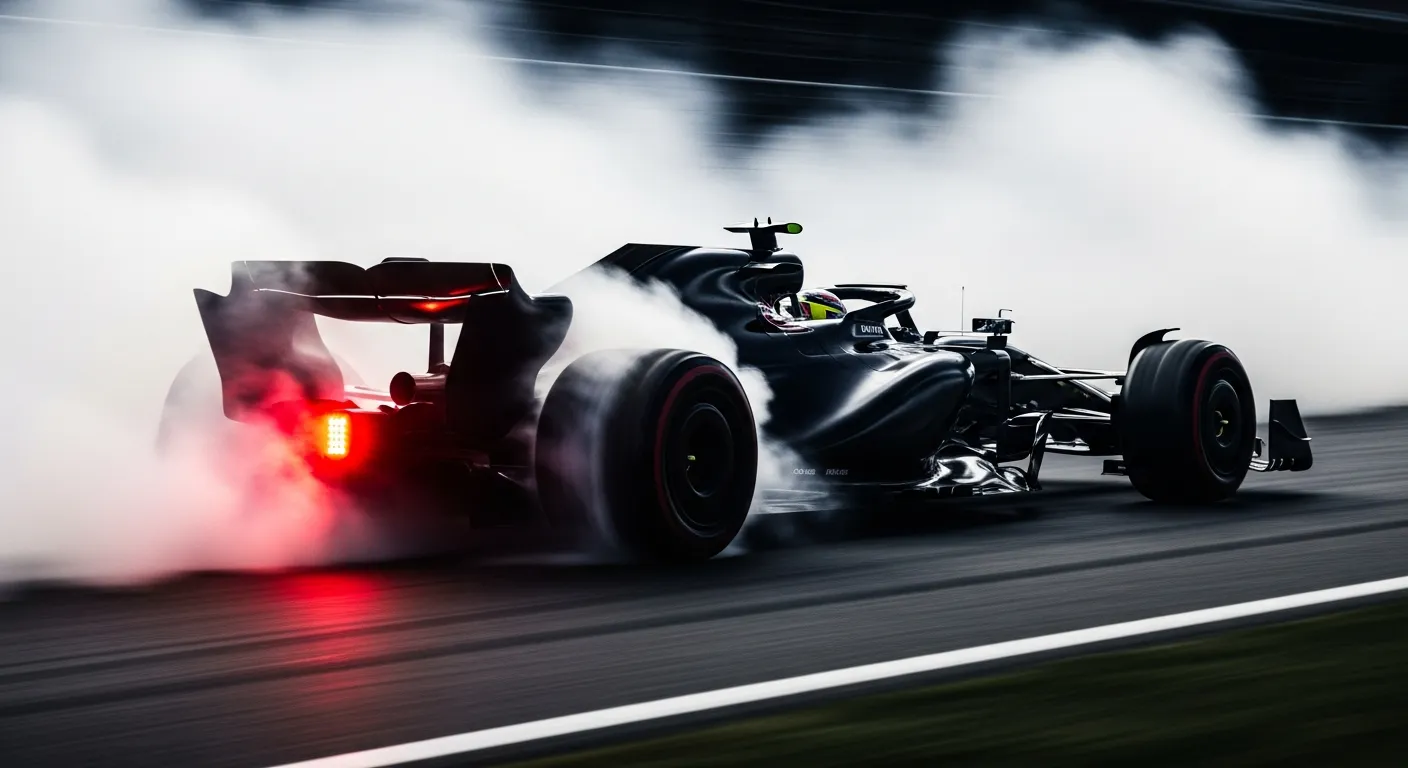
The 2014 British Grand Prix at Silverstone was a race of significant recovery drives and championship implications, marked by an early red flag and a pivotal mechanical failure for the pole-sitter. This event, the ninth round of the turbo-hybrid era, showcased the unpredictable nature of Formula 1, even amidst dominant machinery.
Qualifying
Saturday's qualifying session saw Nico Rosberg secure pole position, continuing the Mercedes team's strong form. However, his teammate Lewis Hamilton found himself further down the grid in P6, a result of adverse weather conditions impacting his final Q3 lap. The grid also featured notable starting positions for drivers who would later make significant progress: Valtteri Bottas began the race from P14 for Williams, while Fernando Alonso started P16 for Ferrari. These grid positions set the stage for a race where strategic prowess and driver skill would be paramount, especially on a circuit as demanding as Silverstone.
Race
The race start was immediately dramatic. A multi-car incident on the opening lap, most notably involving Kimi Räikkönen and Felipe Massa, brought out the safety car, which quickly escalated to a red flag. This suspension, lasting over an hour, allowed teams to reset and re-evaluate their strategies. Once the race resumed, Hamilton began his methodical climb through the field. He demonstrated superior pace, particularly after the restart, and was in contention for the lead when the race's most significant turning point occurred. On Lap 28, Nico Rosberg, who had been leading comfortably, suffered a gearbox failure, forcing his retirement. This handed the lead to Hamilton, who then managed his advantage to secure victory. Behind him, Valtteri Bottas delivered an exceptional performance, advancing from P14 to finish P2, a testament to both his driving and Williams' race execution. Daniel Ricciardo also made strong progress from P8 to secure the final podium spot for Red Bull. Fernando Alonso, starting P16, executed a masterful recovery drive to finish P6, showcasing his ability to extract performance even when the car's outright pace was not at its peak, a trait often seen in challenging races like the 2023 Australian Grand Prix.
Strategic Story
The early red flag fundamentally altered the strategic landscape. Teams had the opportunity to change tires and make repairs, essentially offering a second chance to those who might have struggled at the initial start. For Mercedes, this meant Hamilton could attack with fresh tires and a clear objective. His ability to manage tire degradation while maintaining a blistering pace was key, allowing him to build a significant gap once he inherited the lead. The pit wall's communication and strategy calls were critical in guiding him through the field. Rosberg's gearbox issue, while a reliability concern for Mercedes, underscored the intense technical demands of the turbo-hybrid era's power units, a theme that would continue throughout the season, as detailed by the FIA's F1 World Championship overview. Williams' strategy with Bottas was equally effective, leveraging the car's strengths and the race disruptions to convert a challenging grid position into a podium finish. Such adaptability is a hallmark of successful F1 campaigns, reminiscent of the strategic battles observed in the 2022 Las Vegas Grand Prix.
Championship Impact
The outcome at Silverstone had immediate ramifications for the 2014 Drivers' Championship. With Rosberg's retirement and Hamilton's victory, the points gap between the two Mercedes teammates narrowed considerably. Hamilton gained 25 points, while Rosberg scored none, injecting fresh momentum into Hamilton's title bid. This shift highlighted the critical nature of reliability in a championship fight, where every point counts. For the Constructors' Championship, Mercedes continued its dominant run, but Rosberg's DNF meant they missed out on a potential maximum points haul, a situation teams meticulously avoid as they track their performance against historical Formula 1 data. The broader context of F1's competitive landscape is frequently discussed on the official Formula 1 website, providing insights into how such results shape a season. For a deeper dive into the sport's history and regulations, the Wikipedia page on Formula One offers extensive context. The race underscored that even with a significant performance advantage, the intricate balance of machinery and driver execution remains paramount in the pursuit of a world title, a constant challenge for all teams on the Formula 1 calendar.
Full classified results
Every driver's verified grid-to-flag result from the 2014 British Grand Prix — grid, finish, points, teammate H2H, and championship swing.