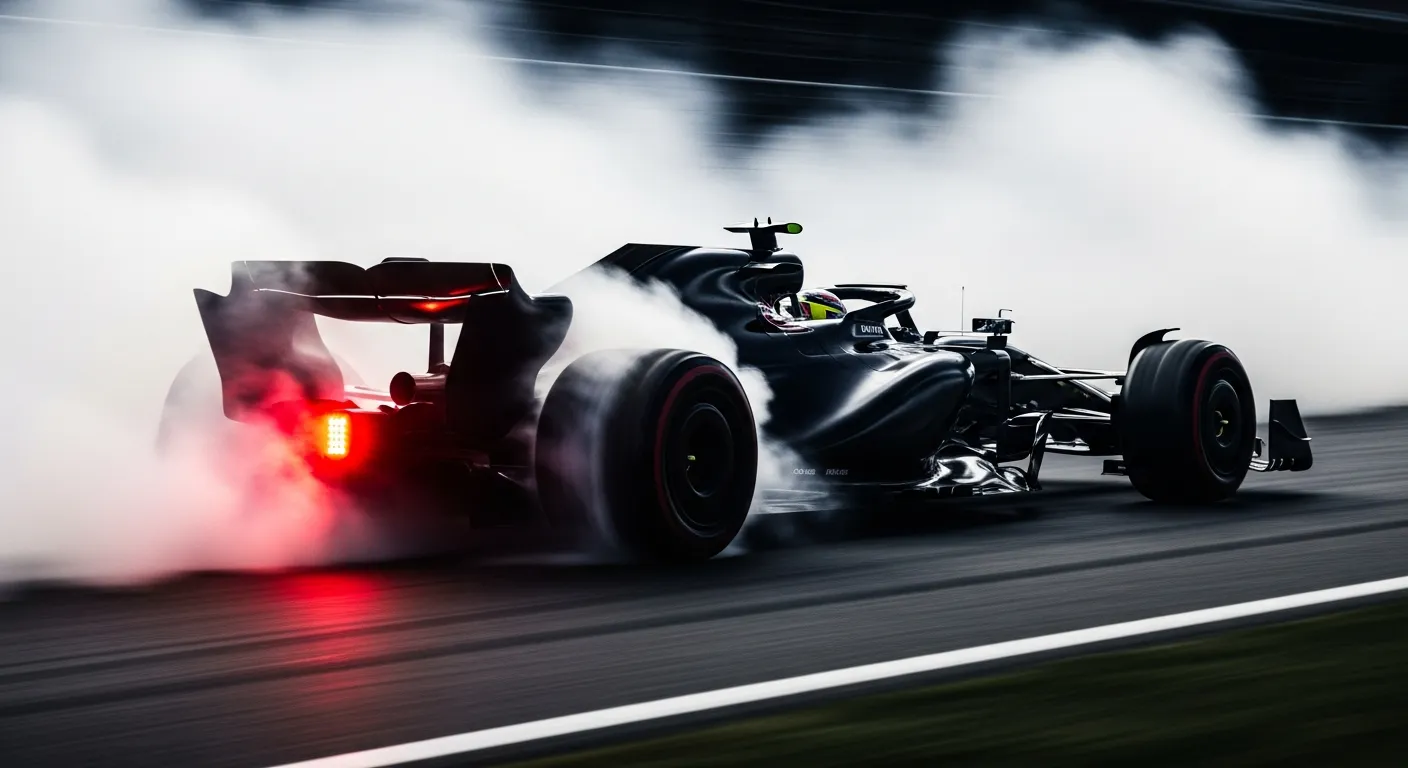
The 2019 British Grand Prix at Silverstone was a masterclass in strategic opportunism, where a mid-race Safety Car intervention fundamentally altered the outcome, solidifying Lewis Hamilton's championship lead.
Qualifying
Qualifying at the iconic Silverstone Circuit saw Valtteri Bottas claim pole position, narrowly edging out his Mercedes teammate Lewis Hamilton. The front row lockout for Mercedes underscored their dominant form in the turbo-hybrid era. Charles Leclerc, in the Ferrari, secured third, demonstrating Ferrari's single-lap pace, while Max Verstappen placed fourth for Red Bull. The close margins at the top promised an intense race, with the Mercedes drivers set to battle from the outset, and the Ferraris and Red Bulls poised to capitalize on any early opportunities.
Race
The race began with an immediate and fierce battle for the lead between the two Mercedes drivers. Bottas initially held his position, but Hamilton pressed relentlessly. The pivotal moment arrived on lap 20 when Antonio Giovinazzi's Alfa Romeo spun into the gravel, prompting a Safety Car deployment. This incident proved to be a game-changer. Hamilton, having not yet pitted, was able to dive into the pits for fresh hard tyres under Safety Car conditions, effectively gaining a 'free' stop and emerging ahead of Bottas, who had pitted earlier under green flag conditions. This strategic advantage allowed Hamilton to control the remainder of the race.
Beyond the lead battle, the midfield provided significant action. Charles Leclerc and Max Verstappen engaged in a thrilling, prolonged wheel-to-wheel duel, showcasing aggressive but fair racing. This culminated in a dramatic collision between Verstappen and Sebastian Vettel, which saw Vettel run into the back of Verstappen's Red Bull, resulting in a penalty for the Ferrari driver. Such incidents often define a season's narrative, much like the intense rivalries seen at circuits such as the 2021 United States Grand Prix. The ability to manage tyres and execute clean overtakes, especially on a high-speed circuit like Silverstone, is always a critical factor, as detailed in various analyses of Formula 1 technical regulations.
Strategic Story
The Safety Car was the undeniable strategic fulcrum of this Grand Prix. Bottas's early stop for hard tyres under racing conditions meant he lost track position to Hamilton once the Safety Car was deployed. Hamilton's team made the decisive call to pit him during the Safety Car period, switching to the harder compound and negating the time loss of a conventional stop. This move was a prime example of how race strategy, often informed by real-time data analysis (see Jolpica/Ergast — 2026 season data for examples of how race data is structured), can override raw pace. The decision highlighted Mercedes' operational excellence and their ability to react swiftly under pressure, a characteristic often crucial in races with unpredictable elements, similar to the strategic gambles observed at the 2021 Singapore Grand Prix.
Championship Impact
The outcome significantly bolstered Lewis Hamilton's position in the Drivers' Championship. By securing both the victory and the fastest lap point, he extended his advantage over Valtteri Bottas, creating a substantial gap that would prove difficult to close. This result further solidified Mercedes' commanding lead in the Constructors' Championship, demonstrating their consistent performance and strategic acumen throughout the 2019 season. The race was a clear indicator of Mercedes' formidable package and strategic prowess, a recurring theme in the Formula 1 landscape of the turbo-hybrid era, often covered by leading Formula 1 news outlets globally. The consistent points haul from both drivers, even when one was disadvantaged by strategy, underscored their championship dominance, a factor that often determines the trajectory of a season, much like the closely fought battles for points at the 2021 Mexico City Grand Prix.
Full classified results
Every driver's verified grid-to-flag result from the 2019 British Grand Prix — grid, finish, points, teammate H2H, and championship swing.
- P1Lewis HamiltonMercedes26 pts
- P2Valtteri BottasMercedes18 pts
- P3Charles LeclercFerrari15 pts
- P4Pierre GaslyRed Bull12 pts
- P5Max VerstappenRed Bull10 pts
- P6Carlos SainzMcLaren8 pts
- P7Daniel RicciardoRenault6 pts
- P8Kimi RäikkönenAlfa Romeo4 pts
- P10Nico HülkenbergRenault1 pts
- P11Lando NorrisMcLaren0 pts
- P12Alexander AlbonToro Rosso0 pts
- P13Lance StrollRacing Point0 pts
- P14George RussellWilliams0 pts
- P16Sebastian VettelFerrari0 pts
- P17Sergio PérezRacing Point0 pts