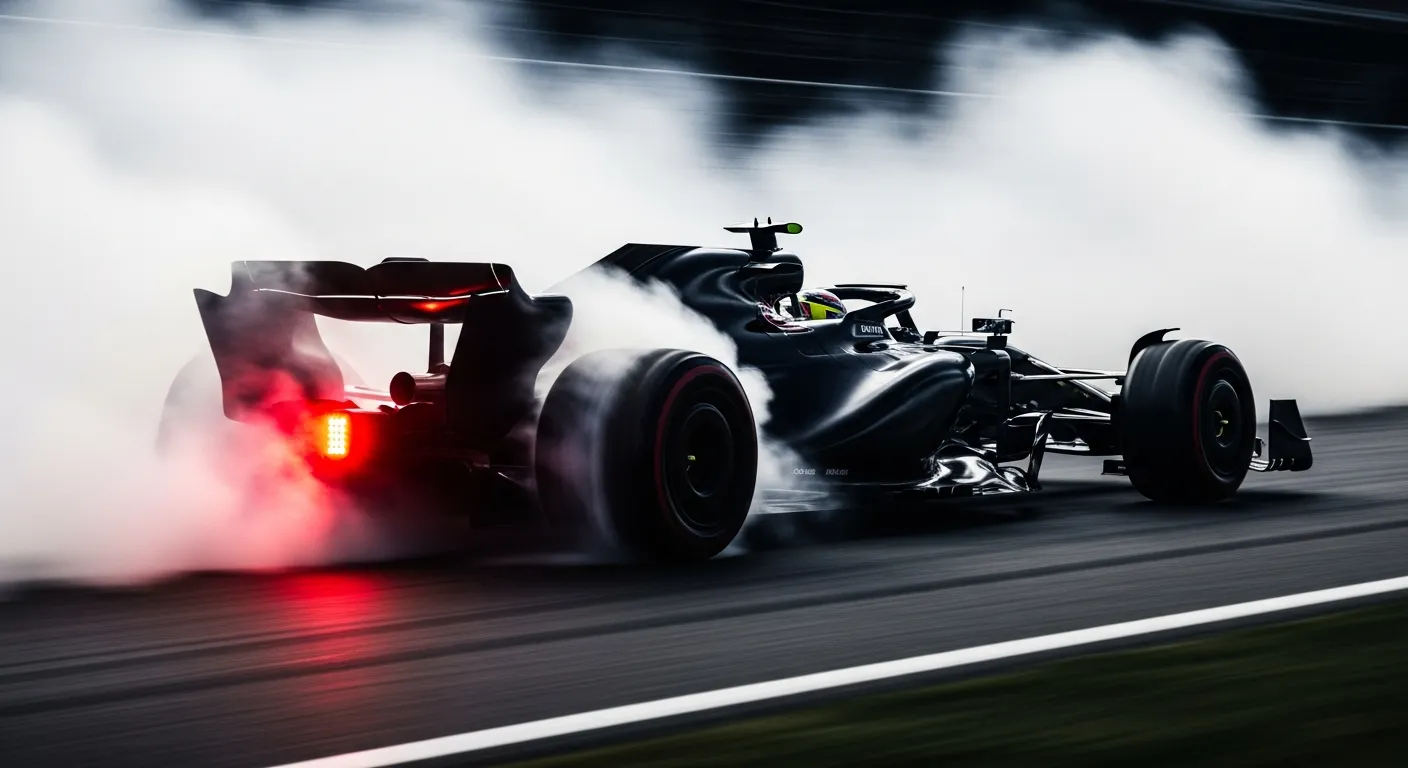
The 2019 Abu Dhabi Grand Prix at the Yas Marina Circuit served as a definitive showcase of Mercedes' unparalleled mastery of the turbo-hybrid regulations, culminating in a dominant lights-to-flag victory for Lewis Hamilton. This final race of the season, under the floodlights, provided a clear demonstration of the established pecking order and strategic acumen required in the modern era of Formula 1.
Qualifying
Qualifying for the 2019 Abu Dhabi Grand Prix saw Lewis Hamilton secure pole position with a commanding margin, setting the stage for his race performance. His Mercedes W10 was perfectly dialled into the Yas Marina layout, demonstrating the team's consistent ability to extract peak performance when it mattered. Ferrari's Charles Leclerc and Red Bull's Max Verstappen were close behind, hinting at a potential three-way battle, though Hamilton's raw pace in the final Q3 runs proved insurmountable. This session highlighted the precision engineering characteristic of the Formula 1 — official site grid at the time, where even marginal gains translated into significant track advantage. The consistency required to perform at this level is a hallmark of the FIA — F1 World Championship series.
Race
From the moment the lights went out, Hamilton's control was absolute. He converted his pole position into an immediate lead, untroubled by the early skirmishes behind him. While a technical issue with the DRS system affected several drivers in the opening laps, Hamilton was largely unaffected at the front, building a substantial gap. Max Verstappen, after a strong start, eventually found his way past Charles Leclerc to secure second place, showcasing Red Bull's strategic race pace. Leclerc, despite a solid drive, faced post-race scrutiny regarding a fuel declaration discrepancy, though his podium position ultimately stood. The race itself, while not filled with dramatic overtakes at the very front, was a masterclass in controlled aggression and tire management, reminiscent of the strategic battles seen in races like the 2015 Chinese Grand Prix or the 2015 Japanese Grand Prix.
Strategic story
The strategic narrative for the front-runners was largely a one-stop affair, dictated by the durable Pirelli tires and the circuit's characteristics. Mercedes executed a flawless pit stop for Hamilton, reinforcing his lead. Red Bull's strategy for Verstappen was equally effective, allowing him to manage his tires and pressure Leclerc. Ferrari, meanwhile, opted for a slightly different approach with Leclerc, but the fundamental pace advantage of Mercedes and Red Bull proved decisive. Tire degradation, while present, was not severe enough to force multiple stops for the leading contenders, making the initial tire choice and subsequent management critical. Understanding these nuances is key to appreciating the depth of Wikipedia: Formula One competition and the role of race engineers. For further data insights into F1 seasons, resources like Jolpica/Ergast — 2026 season data provide comprehensive historical records.
Championship impact
By the time the F1 circus arrived in Abu Dhabi, both the Drivers' and Constructors' Championships had already been sealed by Lewis Hamilton and Mercedes respectively. This race, therefore, served as a final celebratory lap for the reigning champions, allowing them to conclude the season on the highest note. While the titles were secured, the battle for constructor points and individual driver standings still held significance for team prestige and financial allocations, underscoring the relentless competition that defines every Grand Prix, much like the intense midfield battles observed in the 2015 Bahrain Grand Prix. The race provided a definitive end to a season dominated by Mercedes, setting expectations for the following year. News coverage from outlets like Autosport F1 News often details these season-ending narratives.
Full classified results
Every driver's verified grid-to-flag result from the 2019 Abu Dhabi Grand Prix — grid, finish, points, teammate H2H, and championship swing.
- P1Lewis HamiltonMercedes26 pts
- P2Max VerstappenRed Bull18 pts
- P3Charles LeclercFerrari15 pts
- P4Valtteri BottasMercedes12 pts
- P5Sebastian VettelFerrari10 pts
- P6Alexander AlbonRed Bull8 pts
- P7Sergio PérezRacing Point6 pts
- P8Lando NorrisMcLaren4 pts
- P10Carlos SainzMcLaren1 pts
- P11Daniel RicciardoRenault0 pts
- P12Nico HülkenbergRenault0 pts
- P13Kimi RäikkönenAlfa Romeo0 pts
- P17George RussellWilliams0 pts
- P18Pierre GaslyToro Rosso0 pts
- —Lance StrollRacing PointBrakes