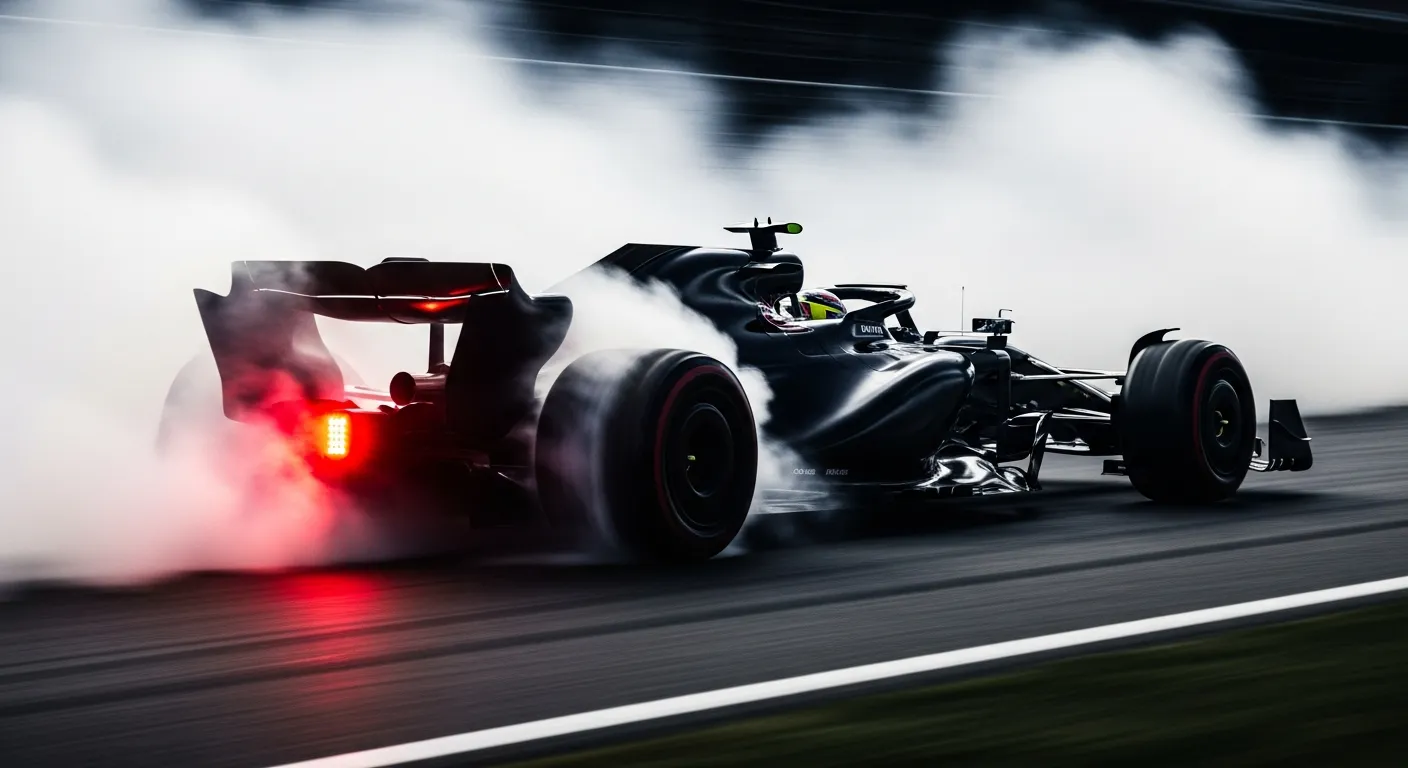
The 2015 Japanese Grand Prix at Suzuka was fundamentally shaped by Lewis Hamilton's assertive opening lap, which decisively flipped the front-row dynamic and set the stage for a dominant performance. This race, held at one of Formula 1's most revered circuits, underscored Mercedes' formidable pace in the turbo-hybrid era while also highlighting Ferrari's consistent challenge.
Qualifying
Qualifying saw Mercedes lock out the front row, with Nico Rosberg securing pole position ahead of teammate Lewis Hamilton. The Silver Arrows demonstrated their raw speed, but the gap to the chasing pack was not insurmountable. Williams' Valtteri Bottas put in a strong performance to qualify P3, positioning himself ahead of Ferrari's Sebastian Vettel in P4. Kimi Räikkönen in the second Ferrari started P6, with Daniel Ricciardo's Red Bull in P7. A significant incident saw Daniil Kvyat crash heavily in Q3, resulting in a grid penalty and a start from P20, illustrating the fine margins at a circuit like Suzuka.
Race
From the moment the lights went out, the race narrative was set. Lewis Hamilton launched from P2 with exceptional traction, immediately challenging Nico Rosberg into Turn 1. Hamilton executed a clean, decisive overtake, seizing the lead he would not relinquish for the remainder of the 53 laps. This early move was critical, allowing Hamilton to control the pace and manage his tires effectively. Rosberg, despite starting from pole, found himself defending from Sebastian Vettel in the Ferrari, who had also made a strong start to climb to P3. The Mercedes duo ultimately secured a 1-2 finish, with Hamilton setting the fastest lap of the race on Lap 33 with a 1:36.145. Vettel held onto P3, demonstrating Ferrari's continued progress, with Räikkönen securing P4. Valtteri Bottas finished P5, a solid result for Williams. Further down the order, Nico Hülkenberg delivered a commendable drive for Force India, climbing from P13 to finish P6. Lotus drivers Romain Grosjean and Pastor Maldonado both scored points, finishing P7 and P8 respectively. Max Verstappen, in the Toro Rosso, also showcased his burgeoning talent, moving up significantly from P17 on the grid to finish P9, a performance reminiscent of strong midfield drives seen at circuits like the 2019 Mexico City Grand Prix.
Strategic Story
The strategic battle at Suzuka largely revolved around tire management and pit stop timing, with most front-runners opting for a two-stop strategy. Mercedes' ability to maintain strong pace on both tire compounds was a key factor in their dominance. Hamilton's early lead allowed him the clean air necessary to execute his strategy without significant pressure from behind. Ferrari's consistent performance, particularly with Vettel, kept them within striking distance of Rosberg, underscoring their improved race pace and strategic execution in 2015. The midfield saw various approaches, with Force India's Hülkenberg benefiting from effective tire usage and pit calls to make up significant ground. The dynamic nature of pit strategies and tire degradation is a constant challenge for teams, as explored in detailed analyses by the FIA — F1 World Championship technical regulations. This race highlighted how crucial a strong opening stint and efficient pit stops are, much like the strategic nuances observed at the 2019 São Paulo Grand Prix.
Championship Impact
This victory at Suzuka further solidified Lewis Hamilton's position at the top of the Drivers' Championship standings, extending his lead over Nico Rosberg. Mercedes' dominant 1-2 finish also significantly boosted their Constructors' Championship points, pushing them closer to securing another title. Ferrari, with both cars in the top four, maintained their clear second position in the Constructors' standings, demonstrating their consistent performance throughout the season. For a broader overview of Formula 1 history and its championship dynamics, the Wikipedia: Formula One page offers extensive context. The consistent points haul for Mercedes put them on an almost unassailable path, a common theme in the turbo-hybrid era, often discussed in F1 news outlets like Motorsport.com F1 News. Further statistical analysis can be found on data archives such as Jolpica/Ergast — 2026 season data. The race results were crucial in shaping the season's final outcome, much like the decisive points scored at the 2019 Abu Dhabi Grand Prix at the end of that season.
Full classified results
Every driver's verified grid-to-flag result from the 2015 Japanese Grand Prix — grid, finish, points, teammate H2H, and championship swing.
- P1Lewis HamiltonMercedes25 pts
- P2Nico RosbergMercedes18 pts
- P3Sebastian VettelFerrari15 pts
- P4Kimi RäikkönenFerrari12 pts
- P5Valtteri BottasWilliams10 pts
- P6Nico HülkenbergForce India8 pts
- P9Max VerstappenToro Rosso2 pts
- P10Carlos SainzToro Rosso1 pts
- P11Fernando AlonsoMcLaren0 pts
- P12Sergio PérezForce India0 pts
- P15Daniel RicciardoRed Bull0 pts