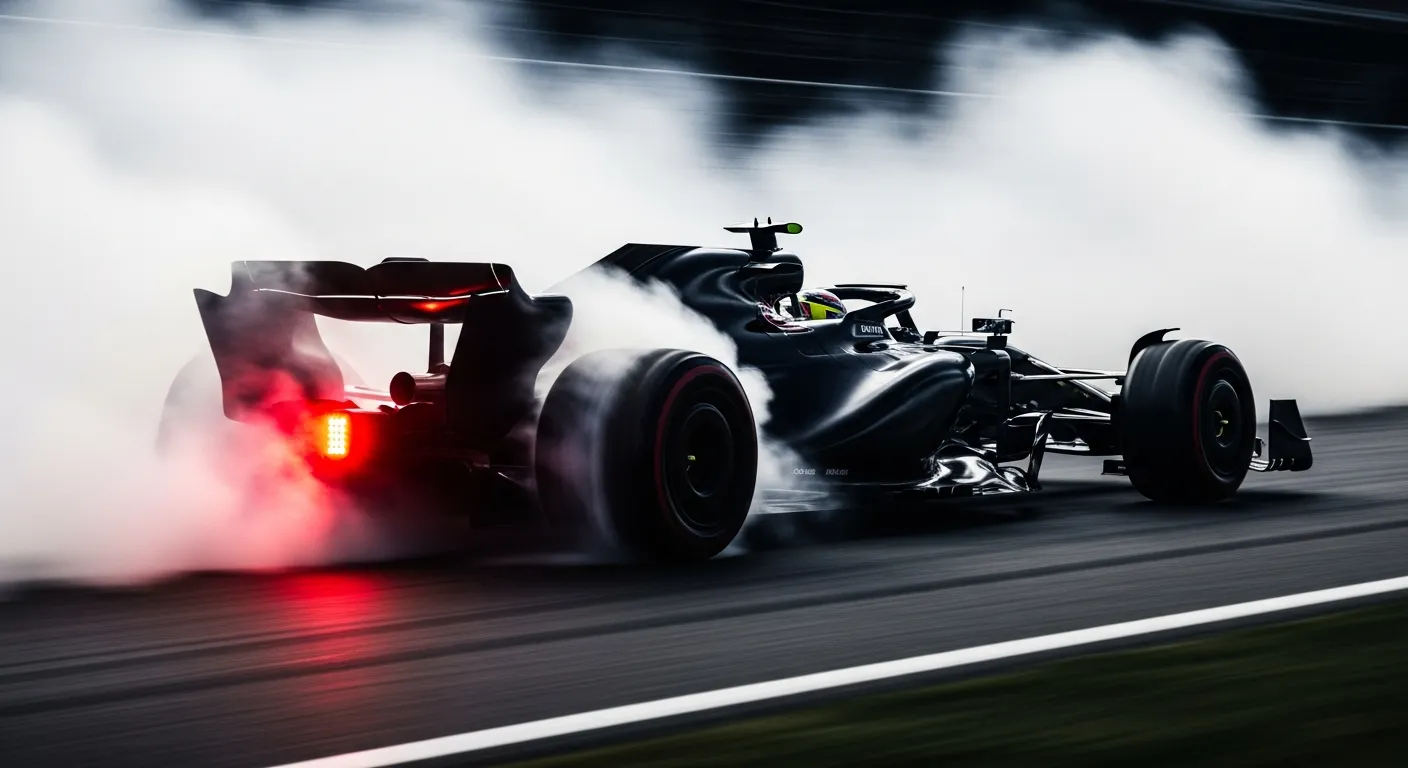
The 2021 Belgian Grand Prix at the iconic Circuit de Spa-Francorchamps stands as a unique entry in Formula 1 history, defined not by on-track battles but by the relentless weather that prevented a conventional race from ever truly starting. This event highlighted the intricate balance between sporting spectacle and driver safety, ultimately leading to a classification based almost entirely on Saturday's performance.
Qualifying
Saturday's qualifying session provided the only true competitive running of the weekend, and it was a dramatic affair in its own right. Under heavy rain, Max Verstappen delivered a masterclass, securing pole position for Red Bull. However, the standout performance came from George Russell, who, driving for Williams, stunned the paddock by qualifying second. This exceptional result placed him on the front row alongside Verstappen, ahead of championship contender Lewis Hamilton in the Mercedes. The challenging conditions separated the field, rewarding drivers who could extract grip and confidence when it mattered most. This kind of unpredictable outcome in adverse weather often brings forward unexpected talents, much like some memorable qualifying sessions seen in previous seasons, such as the 2020 Chinese Grand Prix where conditions could also be tricky.
Race
Sunday brought even more severe weather, with persistent heavy rain making the circuit treacherous. After multiple delays and attempts to start the race behind the safety car, the conditions remained too dangerous for competitive racing. The race was officially started and then immediately red-flagged after just one classified lap behind the safety car, primarily to fulfill the regulatory requirements for a result to be declared. This brief running saw no overtakes or genuine racing, with drivers simply following the safety car around the waterlogged track. The decision to classify the race after such minimal running sparked considerable debate within the F1 community and among fans, raising questions about the spirit of competition versus the letter of the law. The Formula 1 — official site later provided extensive coverage on the procedural aspects of the day.
Strategic Story
The strategic narrative of this Grand Prix was entirely dictated by the weather and the FIA's regulations regarding race classification and points allocation. With only one lap completed under safety car conditions, the race met the minimum distance required for points to be awarded, albeit half points. This meant the grid order from qualifying became the final race result. Max Verstappen inherited the win from pole, with George Russell securing an extraordinary second place, and Lewis Hamilton completing the podium in third. The decision to award points for a non-race was contentious, but it adhered to the sporting regulations in place at the time. The complexities of such scenarios are often discussed by the FIA — F1 World Championship in their technical directives. This event underscored the need for robust rules to handle extreme circumstances, a topic that often arises in the context of Wikipedia: Formula One history.
Championship Impact
The outcome of the 2021 Belgian Grand Prix had a significant, albeit unusual, impact on the championship standings. Max Verstappen's half-points victory allowed him to close the gap to Lewis Hamilton in the Drivers' Championship, gaining 5.5 points on his rival. George Russell's nine points for second place were crucial for Williams, providing a substantial boost in their Constructors' Championship campaign. This peculiar result added another layer of intrigue to an already intense season, where every point, regardless of how it was earned, contributed to the final tally. Such unusual point allocations can dramatically shift the competitive landscape, as seen in other seasons where unexpected results played a role, such as the 2020 Bahrain Grand Prix with its dramatic incidents. Analysing F1 data, even from future seasons like the Jolpica/Ergast — 2026 season data, helps illustrate how these points accumulate. Read the full editorial
Full classified results
Every driver's verified grid-to-flag result from the 2021 Belgian Grand Prix — grid, finish, points, teammate H2H, and championship swing.
- P1Max VerstappenRed Bull12.5 pts
- P2George RussellWilliams9 pts
- P3Lewis HamiltonMercedes7.5 pts
- P4Daniel RicciardoMcLaren6 pts
- P5Sebastian VettelAston Martin5 pts
- P6Pierre GaslyAlphaTauri4 pts
- P7Esteban OconAlpine F1 Team3 pts
- P8Charles LeclercFerrari2 pts
- P10Carlos SainzFerrari0.5 pts
- P11Fernando AlonsoAlpine F1 Team0 pts
- P12Valtteri BottasMercedes0 pts
- P14Lando NorrisMcLaren0 pts
- P15Yuki TsunodaAlphaTauri0 pts
- P18Kimi RäikkönenAlfa Romeo0 pts
- P19Sergio PérezRed Bull0 pts
- P20Lance StrollAston Martin0 pts