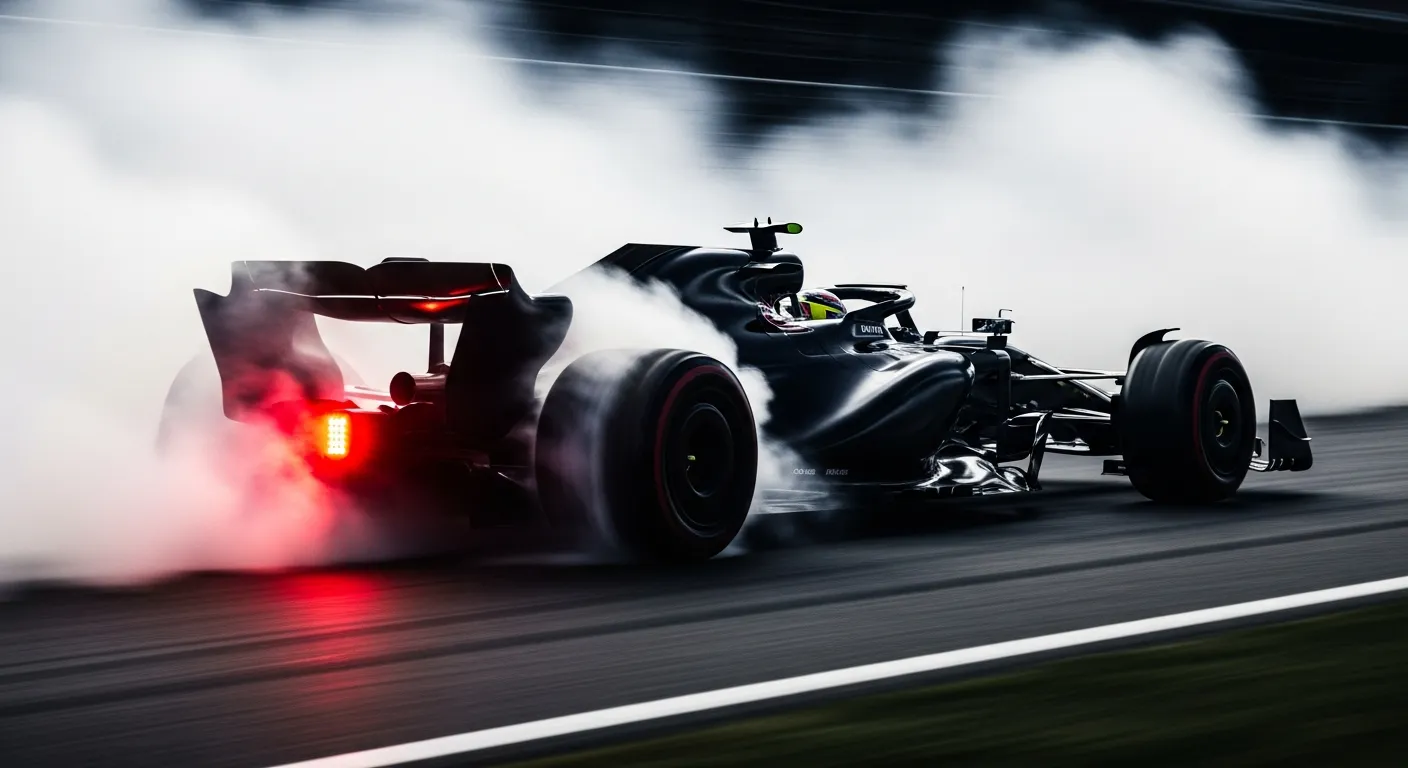
The 2019 Japanese Grand Prix at the iconic Suzuka Circuit was a pivotal moment in the turbo-hybrid era, not only delivering a compelling race but also crowning Mercedes as Constructors' Champions for the sixth consecutive time. This particular event, held under the shadow of Typhoon Hagibis, saw a condensed schedule that added an extra layer of pressure and unpredictability, setting the stage for a strategic battle.
Qualifying
Saturday's qualifying session was a testament to Ferrari's raw pace on a single lap, with Sebastian Vettel delivering a superb pole position lap, narrowly edging out his teammate Charles Leclerc for a front-row lockout. This performance from the Scuderia, particularly at a circuit known for its challenging technical sectors, demonstrated a significant step forward in their qualifying trim. Mercedes, however, were close behind, with Valtteri Bottas and Lewis Hamilton lining up third and fourth respectively. The compressed schedule, with qualifying and the race on the same day, meant teams had less time to analyze data and fine-tune strategies, pushing the limits of their race engineering capabilities. For a deeper dive into Formula 1's technical regulations, the FIA website offers comprehensive information.
Race
When the lights went out, Valtteri Bottas executed a near-perfect start, immediately challenging and then passing both Ferraris to seize the lead into Turn 1. This early move was decisive, fundamentally altering the race narrative that had been set by qualifying. Behind him, Charles Leclerc made contact with Max Verstappen, an incident that ultimately led to Verstappen's retirement later in the race due to damage. While Leclerc continued, the stewards later applied a time penalty, impacting his final classification. Sebastian Vettel, after losing the lead, settled into a rhythm, attempting to manage his tyres and strategy. The high-speed nature of Suzuka always demands precision, a characteristic also found at circuits like the 2026 São Paulo Grand Prix, where driver skill is paramount.
Strategic Story
The strategic battle primarily revolved around tyre management and pit stop timing. Mercedes opted for a two-stop strategy for Bottas, allowing him to push harder on fresher rubber. Ferrari, initially, seemed to be leaning towards a one-stop for Vettel, but the pace differential and tyre degradation on the demanding Suzuka asphalt made this a challenging proposition. Lewis Hamilton, running a slightly offset strategy, found himself in a position to challenge for the fastest lap towards the end, which he successfully claimed on his final lap, earning an extra championship point. This strategic flexibility is a hallmark of the turbo-hybrid era, which began with the 2014 Australian Grand Prix, emphasizing engine efficiency and tyre preservation. For detailed historical race data, resources like Jolpica/Ergast provide extensive archives.
Championship Impact
The most significant outcome of the 2019 Japanese Grand Prix was Mercedes-AMG Petronas Motorsport securing their sixth consecutive Constructors' Championship. This achievement underscored their sustained dominance in the turbo-hybrid era, a testament to their consistent performance and strategic prowess. While the Drivers' Championship was not yet decided, the team's relentless pursuit of excellence was undeniable. The race also highlighted the competitive intensity that defines the sport, a theme that continues to evolve at new venues such as the upcoming 2026 Las Vegas Grand Prix. For official news and updates, the Formula 1 official site remains the primary source, offering insights into the current season and historical context. More general information on the sport can be found on Wikipedia's Formula One page.
Full classified results
Every driver's verified grid-to-flag result from the 2019 Japanese Grand Prix — grid, finish, points, teammate H2H, and championship swing.
- P1Valtteri BottasMercedes25 pts
- P2Sebastian VettelFerrari18 pts
- P3Lewis HamiltonMercedes16 pts
- P4Alexander AlbonRed Bull12 pts
- P5Carlos SainzMcLaren10 pts
- P6Charles LeclercFerrari8 pts
- P7Pierre GaslyToro Rosso6 pts
- P8Sergio PérezRacing Point4 pts
- P9Lance StrollRacing Point2 pts
- P11Lando NorrisMcLaren0 pts
- P12Kimi RäikkönenAlfa Romeo0 pts
- P16George RussellWilliams0 pts
- —Max VerstappenRed BullBrakes
- —Daniel RicciardoRenaultDisqualified
- —Nico HülkenbergRenaultDisqualified