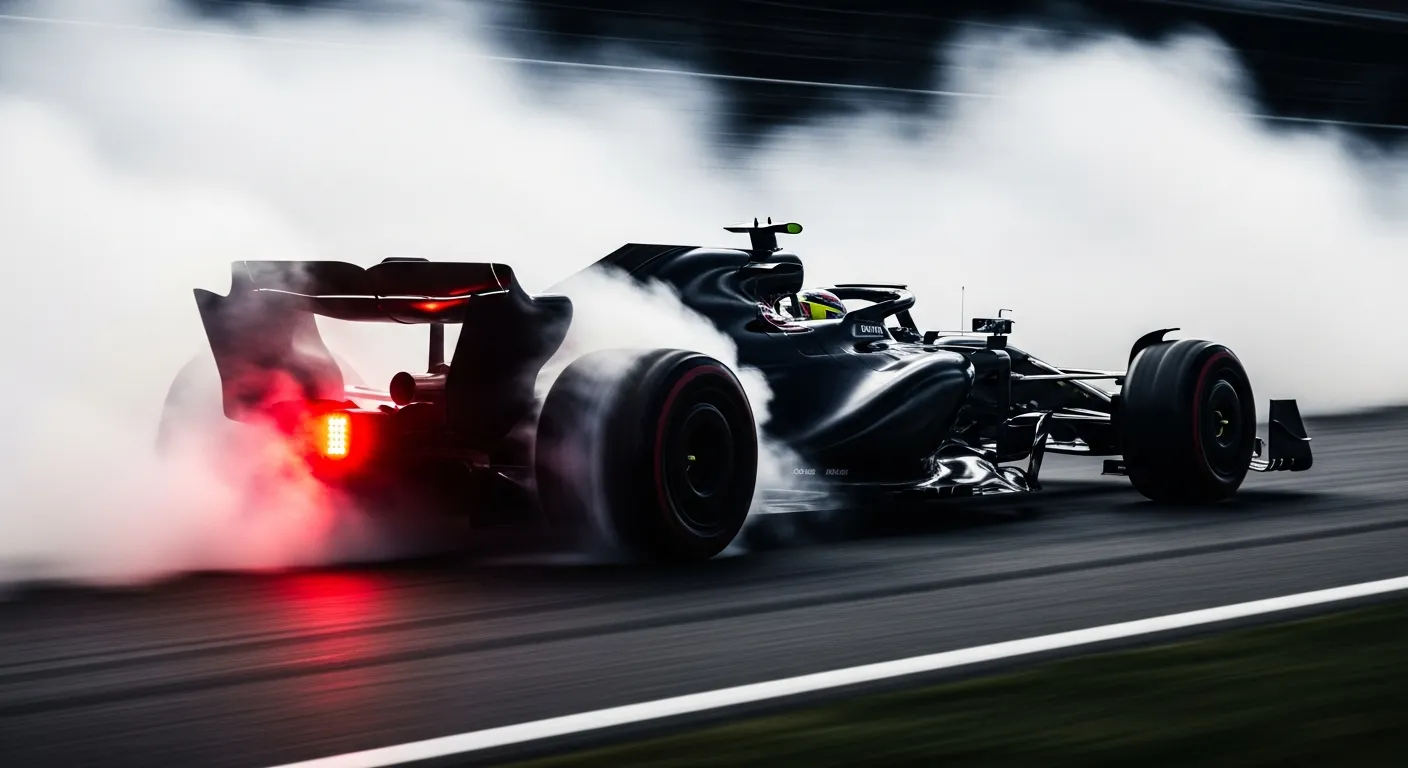
Fernando Alonso's campaign at the 2022 Italian Grand Prix began with significant promise, having qualified his Alpine A522 in sixth position on the grid. The high-speed demands of the Autodromo Nazionale Monza circuit often present a unique challenge for power units, and this round would unfortunately highlight the fragility of machinery for several competitors. Alonso, known for his ability to extract maximum performance, was looking to capitalize on his strong starting position. However, his race was ultimately curtailed on lap 31, when his car registered a "Water pressure" issue, forcing him to retire from the event. The retirement at Monza was a stark reminder of the technical demands placed on every component in a [Formula 1 car](https://www.formula1.com/en), especially at a circuit known for its relentless full-throttle sections. Such failures, while part of the sport's high-stakes nature, are particularly frustrating when a strong grid position, like Alonso's sixth, suggests a potential for significant points. The official [Formula 1 website](https://www.formula1.com/en) often provides detailed technical insights into these events.
The data confirms Alonso completed 31 laps, with his fastest lap recorded on lap 7 at 1:27.203, placing him 18th in the fastest lap rankings for the race. This early pace indicated a competitive car before the issue arose. For the Alpine F1 Team, the outcome was mixed; while Alonso retired, his teammate Esteban Ocon managed to complete all 53 laps, finishing in 11th position. This contrast underscored the individual fortunes within the same constructor during a race. Mechanical retirements are an inherent part of the sport, and while frustrating, they are a factor every team must contend with. Alonso has experienced similar frustrations throughout his career, including instances like his retirement at the [2018 Australian Grand Prix](/results/2018-albert-park-fernando-alonso) where reliability has played a role. Understanding the intricate details of F1 regulations and technical specifications is crucial for fans, as outlined by the [FIA — F1 World Championship](https://www.fia.com/events/fia-formula-one-world-championship) governing body.
The 2022 season, for Alonso, had been a narrative of strong performances often undermined by reliability or strategic missteps. Coming into Monza, he held ninth position in the drivers' standings with 59 points. This DNF meant he scored no points, leaving his championship position unchanged immediately after the race. Such incidents can significantly impact a driver's season trajectory, as seen with other drivers navigating the competitive landscape, such as [Max Verstappen at the 2018 Australian Grand Prix](/results/2018-albert-park-max-verstappen) who also faced early race challenges. The pursuit of championship points requires consistent finishes, and any mechanical failure represents a lost opportunity. The detailed [Jolpica/Ergast — 2026 season data](https://api.jolpi.ca/ergast/f1/2026.json) provides a historical perspective on how such retirements can influence overall standings.
Monza, with its long straights and high average speeds, puts extreme stress on engines and cooling systems. A water pressure issue, as reported, points directly to the powertrain's integrity under duress. This type of failure is not uncommon at circuits demanding maximum power output for extended periods, where cooling systems are pushed to their limits. The broader history of [Formula One](https://en.wikipedia.org/wiki/Formula_One) is replete with examples of races decided not just by driver skill, but by the resilience of the machinery under pressure, a narrative that has shaped many careers. Even drivers like [Charles Leclerc at the 2018 Australian Grand Prix](/results/2018-albert-park-charles-leclerc), in his debut season, understood the fine line between pushing the car and preserving it. For Alpine, this DNF was a setback in their constructor's championship battle, highlighting areas for further development and reliability improvements. The official [Formula 1 — official site](https://www.formula1.com/en) provides comprehensive race reports, detailing these technical challenges. The intricacies of engine management are a constant focus for teams, and a "Water pressure" issue is a direct indicator of a system operating outside its optimal parameters, often signaling an impending or active leak within the cooling system, which can lead to catastrophic engine damage if not addressed immediately.
Verified race record · Ergast
Grid
P6
Finish
Water pressure
Points
0
Laps
31
Constructor
Alpine F1 Team
Status
Water pressure
Teammate that weekend
Esteban Ocon
Grid P14 · Finish P11 · 0 pts
Championship · before vs after
Before round 16
P959 pts
After round 16
P959 pts