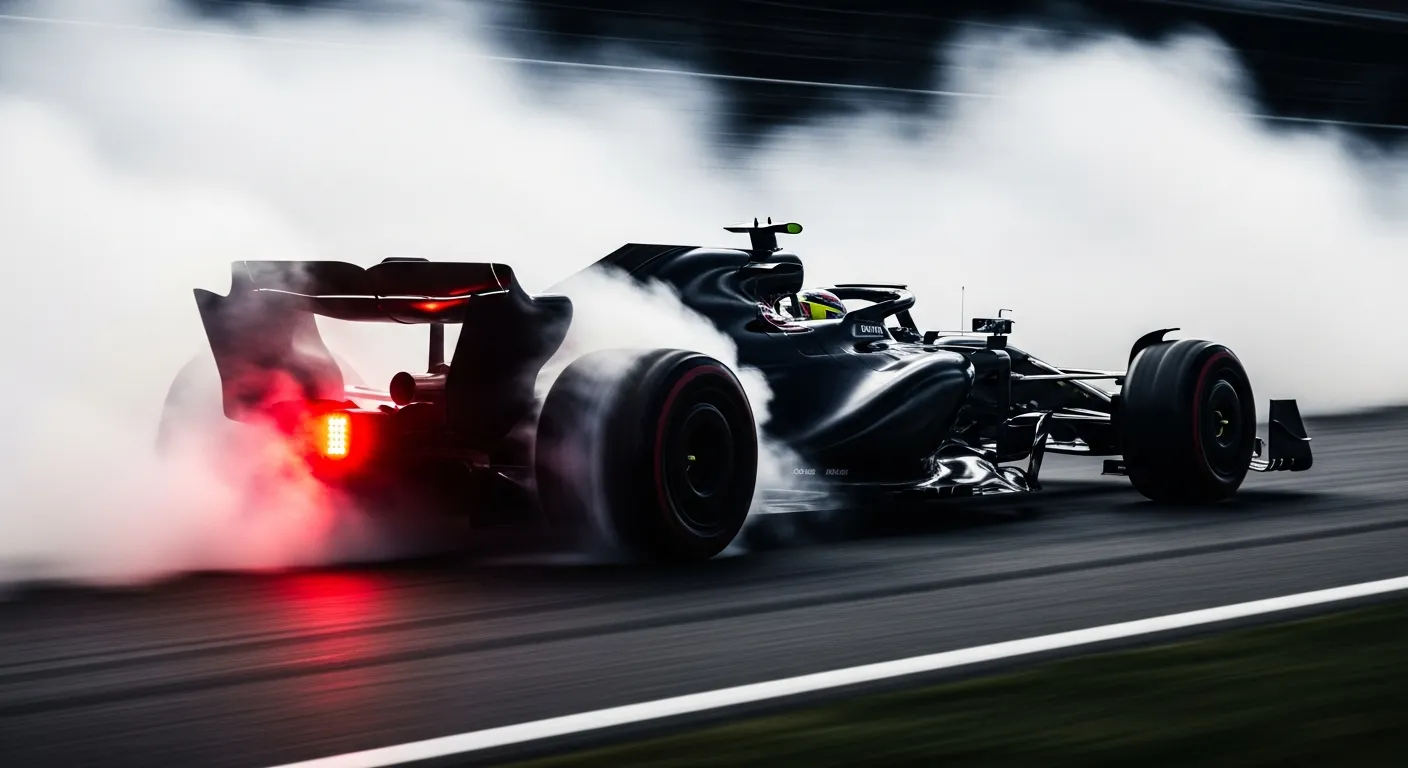
The 2024 Australian Grand Prix proved to be a stark challenge for Lewis Hamilton, culminating in an early retirement on lap 15 due to a power unit issue, a rare mechanical failure for the Mercedes AMG F1 team. Starting from 11th on the grid, Hamilton's race was cut short significantly, preventing him from scoring any points at the Melbourne Grand Prix Circuit. This marked a difficult outing for Mercedes, with both cars failing to complete the full 58 laps, as his teammate George Russell also retired late in the race due to an accident, underscoring a challenging weekend for the German constructor.
Hamilton's brief stint on track saw him record a fastest lap of 1:22.444 on lap 11, placing him 18th in the overall fastest lap rankings for the event. The power unit failure, a critical and highly complex component in modern Formula 1 machinery, meant a premature end to his efforts. This scenario contrasts sharply with his more dominant performances in previous seasons, such as his commanding victory at the [2015 United States Grand Prix](/results/2015-cota-lewis-hamilton), where reliability was a cornerstone of his success. The stringent regulations governing the development and deployment of these power units are a core aspect of the [FIA F1 World Championship](https://www.fia.com/events/fia-formula-one-world-championship), emphasizing the technical demands placed on teams in [Formula 1](https://www.formula1.com/en). For a top-tier constructor like Mercedes, known for its engineering prowess, a mechanical DNF attributed to the "Power unit" is a significant event, prompting immediate and thorough analysis back at the factory.
The retirement also placed Hamilton in a similar unfortunate category as Max Verstappen, who faced an early exit from the Australian Grand Prix due to brake issues, highlighting that even the most competitive machinery can encounter unexpected failures. This unexpected turn of events for leading drivers often reshapes the race narrative, much like when [Max Verstappen faced a DNF at the 2015 United States Grand Prix](/results/2015-cota-max-verstappen) early in his career, demonstrating how quickly fortunes can change in the sport. The comprehensive historical [Formula 1 data](https://api.jolpi.ca/ergast/f1/2026.json) archives document such incidents, providing valuable context for understanding the sport's evolution. For a veteran driver of Hamilton's caliber, who has navigated many seasons of [Formula One](https://en.wikipedia.org/wiki/Formula_One) and its technical challenges, a mechanical DNF represents a frustrating setback, particularly when trying to maximize any potential points haul in a competitive season. The broader field, including drivers like [Fernando Alonso, who navigated challenging conditions at the 2015 United States Grand Prix](/results/2015-cota-fernando-alonso), often showcases the resilience required to complete a Grand Prix. The Mercedes team will undoubtedly conduct a thorough investigation into the power unit failure to prevent recurrence, as every point is crucial in the constructors' championship standings. The impact of such a retirement extends beyond individual driver points, influencing the team's overall strategic outlook and development priorities for the remainder of the season, as they strive to compete at the pinnacle of [Formula 1 racing](https://www.formula1.com/en). This incident serves as a reminder of the fine margins and inherent unpredictability that define the sport, where even the most seasoned competitors can be sidelined by mechanical issues, a fundamental aspect of [Grand Prix racing](https://www.formula1.com/en) that keeps fans engaged.
Verified race record · Ergast
Grid
P11
Finish
Power unit
Points
0
Laps
15
Constructor
Mercedes AMG F1
Status
Power unit
Teammate that weekend
George Russell
Grid P7 · Finish P17 · 0 pts
Championship · before vs after
Before round 3
P98 pts
After round 3
P108 pts