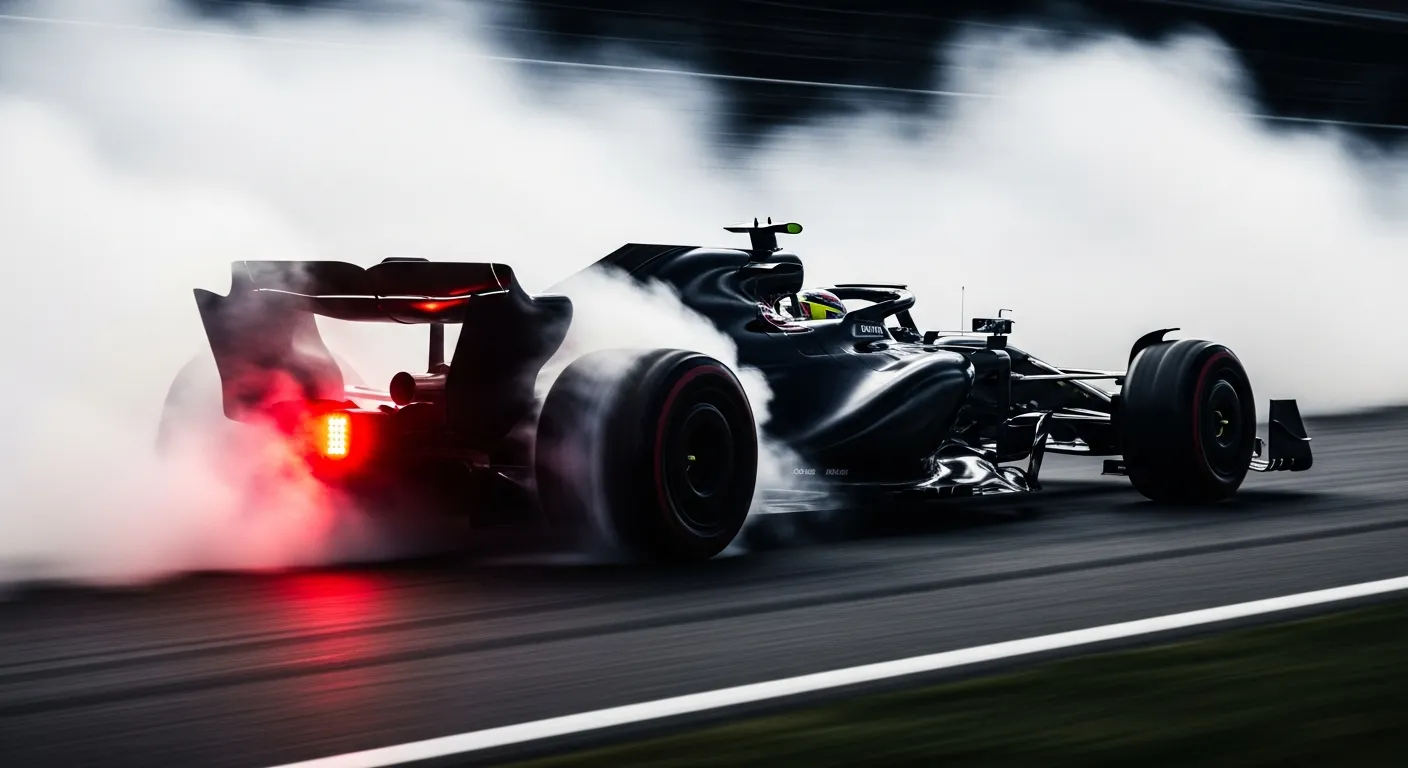
Carlos Sainz's performance at the 2024 Mexican Grand Prix was a masterclass in converting pole position into a decisive victory, a testament to both his skill and Scuderia Ferrari's strategic execution at the high-altitude Autódromo Hermanos Rodríguez on October 27, 2024. Starting from the front of the grid, Sainz maintained a composed and controlled pace throughout the 71 laps, crossing the finish line in 1:40:55.800 to claim a full 25 points. This was not a straightforward race, with the unique challenges of Mexico City's altitude often playing a significant role in engine performance and tire degradation, factors that the Ferrari team managed effectively. The thin air at over 2,200 meters above sea level reduces downforce and puts extra strain on power units and braking systems, demanding a precise setup and disciplined driving.
The race saw a strong showing from McLaren, with Lando Norris, who had a notable performance at [Lando Norris at the 2023 Qatar Grand Prix](/results/2023-lusail-lando-norris), securing second place in Mexico. Sainz's teammate, Charles Leclerc, also contributed to a strong weekend for Scuderia Ferrari, finishing in third position from a fourth-place grid start, adding 16 points to the team's constructors' tally. This dual podium finish highlighted the competitive package Ferrari brought to Mexico, showcasing their ability to extract performance under challenging conditions. Meanwhile, the race was not without its incidents; early retirements included [Fernando Alonso at the 2023 Qatar Grand Prix](/results/2023-lusail-fernando-alonso) due to brakes, and collisions involving Alexander Albon and Yuki Tsunoda on lap 0, which brought out an early safety car. The strategic nuances of tire management and pit stop timing were critical, as detailed in the official race analysis on the [Formula 1 official site](https://www.formula1.com/en). The FIA's [F1 World Championship regulations](https://www.fia.com/events/fia-formula-one-world-championship) often dictate the strategic parameters teams operate within, and Ferrari navigated these adeptly, ensuring Sainz had the optimal window for his tire changes.
Sainz's fastest lap, a 1:20.137 on lap 62, placed him seventh overall in the fastest lap rankings, indicating a strong late-race pace even as he managed his lead. This ability to push when necessary, while conserving the car, is a hallmark of a race winner. The broader context of Formula One racing, as explored on [Wikipedia: Formula One](https://en.wikipedia.org/wiki/Formula_One), shows that converting pole to victory is a key indicator of championship contention, especially when faced with strong competitors like Max Verstappen, who, despite starting from second, could only manage a sixth-place finish. The data from the [Jolpica/Ergast — 2026 season data](https://api.jolpi.ca/ergast/f1/2026.json) provides a comprehensive look at historical race statistics, underscoring the significance of such a dominant performance. Drivers like [George Russell at the 2023 Qatar Grand Prix](/results/2023-lusail-george-russell), who finished fifth in Mexico, often find themselves in close strategic battles, making every point crucial in the championship standings. The detailed lap times and sector performance, often scrutinized by race engineers, confirm the consistent pace Sainz maintained throughout the Grand Prix weekend, a crucial element for securing a victory in modern F1. Further insights into race dynamics and driver performances can be found on the [Formula 1 official site for race reports](https://www.formula1.com/en/latest/articles/mexican-grand-prix-race-report-sainz-wins-leclerc-podium.html). The technical specifications of the cars and the circuit layout are always a factor, as outlined by the [FIA's technical guidelines](https://www.fia.com/fia-formula-1-world-championship/2024/technical-regulations). Sainz’s measured drive, coupled with Ferrari’s operational efficiency, allowed him to control the race from start to finish, demonstrating a complete performance under pressure.
Verified race record · Ergast
Grid
P1
Finish
P1
Points
25
Laps
71
Constructor
Scuderia Ferrari
Status
Finished
Teammate that weekend
Charles Leclerc
Grid P4 · Finish P3 · 16 pts
Championship · before vs after
Before round 20
P5215 pts
After round 20
P5240 pts