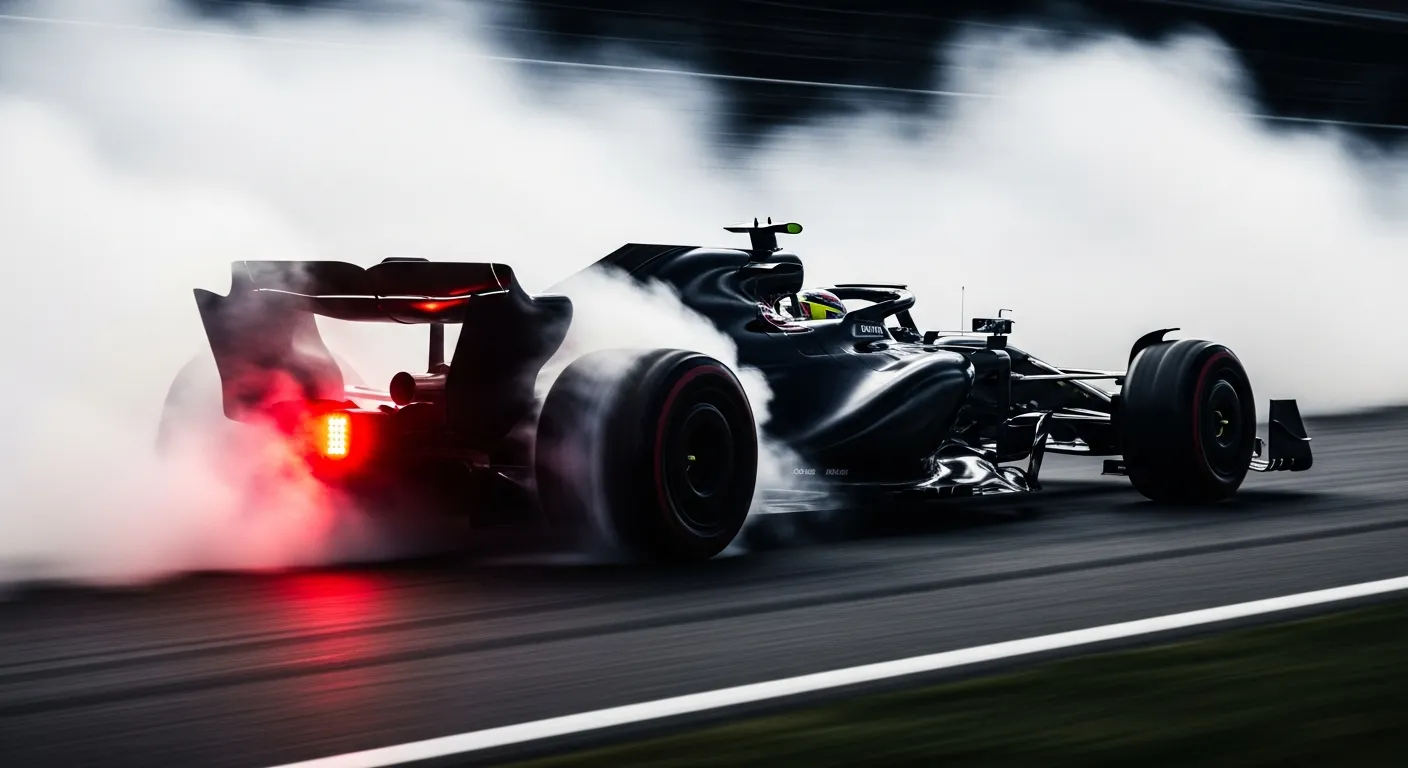
Carlos Sainz's outing at the 2025 Mexican Grand Prix, driving for Williams at the Autódromo Hermanos Rodríguez, culminated in a premature exit on lap 67 due to an accident, marking a significant setback after a promising qualifying effort. Starting from 12th on the grid, Sainz demonstrated competitive pace throughout the race, notably setting a 1:20.098 on lap 48, which stood as the second-fastest lap of the entire event. This raw speed, even in a Williams, highlighted his capability to push the car, a trait reminiscent of his earlier career performances, such as his drive at the [2016 Austrian Grand Prix](/results/2016-red-bull-ring-carlos-sainz) with Toro Rosso. Despite this individual performance metric, the incident on lap 67 meant a classified finish of 17th and zero points added to his championship tally.
The race unfolded with Lando Norris taking victory for McLaren, a testament to the competitive landscape of the [Formula 1 — official site](https://www.formula1.com/en) season. Sainz's teammate, Alexander Albon, starting five positions behind him in 17th, managed to complete 70 laps and secured a 12th place finish, albeit a lap down. This contrast underscores the fine margins and unforgiving nature of the sport, where a single incident can negate strong individual pace. The high-altitude conditions of Mexico City often present unique challenges for car setup and driver endurance, factors that can contribute to unexpected outcomes, as documented in the broader history of [Wikipedia: Formula One](https://en.wikipedia.org/wiki/Formula_One). Understanding the technical regulations set by the [FIA — F1 World Championship](https://www.fia.com/events/fia-formula-one-world-championship) is crucial for teams navigating these demanding circuits. For a comprehensive look at the season's data, resources like [Jolpica/Ergast — 2026 season data](https://api.jolpi.ca/ergast/f1/2026.json) provide detailed statistics. The incident for Sainz, while unfortunate, is a stark reminder of the unpredictable elements that shape a Grand Prix weekend, a narrative thread seen across many races, including the intense battles like those involving [Max Verstappen at the 2016 British Grand Prix](/results/2016-silverstone-max-verstappen). The Williams team will undoubtedly analyze the telemetry to understand the precise circumstances leading to the accident, a standard procedure in the relentless pursuit of performance in modern [Formula 1 — official site](https://www.formula1.com/en). The driver's ability to recover from such setbacks is often a measure of their resilience, a quality demonstrated by seasoned competitors like [Lewis Hamilton at the 2016 British Grand Prix](/results/2016-silverstone-lewis-hamilton) after challenging moments, and a key factor for any driver aiming for consistent results in the [FIA — F1 World Championship](https://www.fia.com/events/fia-formula-one-world-championship).
Verified race record · Ergast
Grid
P12
Finish
P17
Points
0
Laps
67
Constructor
Williams Grand Prix Engineering
Status
Accident
Teammate that weekend
Alexander Albon
Grid P17 · Finish P12 · 0 pts
Championship · before vs after
Before round 20
P1138 pts
After round 20
P1138 pts