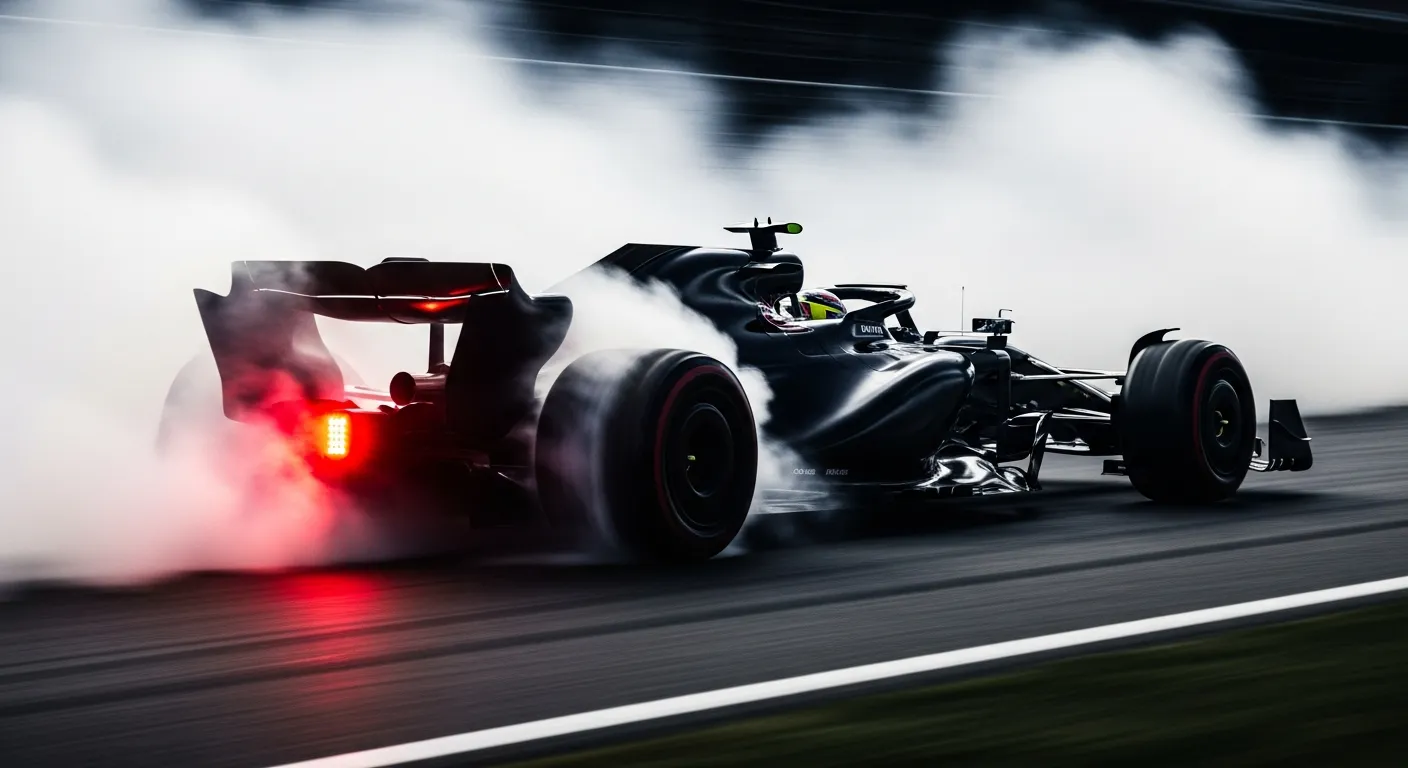
The 2014 Canadian Grand Prix delivered a pivotal moment in the nascent turbo-hybrid era, marking the first time a Mercedes-powered car did not win a race that season, despite their clear pace advantage. This race at the Circuit Gilles Villeneuve unfolded as a strategic battle punctuated by reliability concerns, ultimately culminating in a breakthrough for Red Bull Racing.
Qualifying
Qualifying for the 2014 Canadian Grand Prix saw Mercedes continue their formidable form, with Nico Rosberg securing pole position and Lewis Hamilton lining up alongside him in second. The front row lockout underscored the W05's raw pace, a consistent theme throughout the early stages of the season, as documented on the Formula 1 — official site. Sebastian Vettel, in the Red Bull, started from third, demonstrating that the reigning constructors' champions were still a force, albeit a step behind the Silver Arrows. Daniel Ricciardo, from the sixth grid slot, positioned himself within striking distance, setting the stage for his eventual charge.
Race
The race began with the Mercedes cars asserting their dominance, though the lead pair soon encountered significant technical challenges. Both Rosberg and Hamilton reported issues with their Energy Recovery Systems (ERS), impacting their power delivery and braking performance. Hamilton's race ended prematurely on lap 46 due to brake failure, a direct consequence of the ERS malfunction. Rosberg, however, managed to continue, albeit with reduced performance. This opened the door for the chasing pack, particularly the Red Bulls. Daniel Ricciardo, after starting P6, steadily worked his way through the field, showcasing strong race pace and effective tire management. His teammate Sebastian Vettel also maintained a solid position, capitalizing on the unfolding drama.
Strategic Story
The strategic narrative of this Grand Prix was fundamentally shaped by Mercedes' ERS issues. What initially appeared to be another dominant Mercedes procession transformed into a test of resilience and opportunistic driving. Rosberg's ability to manage his ailing car for the majority of the race was a testament to his skill, but it left him vulnerable. Red Bull's strategy involved maximizing their performance in clean air and executing precise pit stops. Ricciardo's decisive move on Rosberg in the closing laps, a testament to his racecraft, secured his first F1 victory. The race also saw a dramatic conclusion on the final lap, with a high-speed collision between Sergio Pérez of Force India and Felipe Massa of Williams. This incident, occurring on lap 69, brought out the safety car and reshaped the lower points positions, highlighting the fine margins in Formula One racing. Massa, notably, had recorded the fastest lap of the race on lap 58, underscoring the pace he had before the incident.
Championship Impact
Daniel Ricciardo's victory was a significant moment for Red Bull, breaking Mercedes' stranglehold on the top step of the podium. While Rosberg held on for second, extending his lead in the Drivers' Championship over his retiring teammate Lewis Hamilton, the result demonstrated that the Mercedes package, while fast, was not infallible. The Constructors' Championship still saw Mercedes with a substantial lead, but Red Bull's points haul, including Sebastian Vettel's third-place finish, provided a much-needed boost. The technical intricacies of the turbo-hybrid era, from power unit management to ERS reliability, proved to be as crucial as raw speed, a theme that would continue to define the season, much like the challenges faced at circuits such as the 2026 Mexico City Grand Prix with its altitude or the demanding layout of the 2026 São Paulo Grand Prix. For a broader overview of F1 technical regulations, the FIA — F1 World Championship provides comprehensive details. The data from this race, and indeed all F1 seasons, can be explored through resources like Jolpica/Ergast — 2026 season data, offering a detailed look at performance metrics. This race provided a stark contrast to the dominant start of the season, exemplified by the 2014 Australian Grand Prix, where Mercedes had a commanding presence. More insights on the 2014 season can be found through various F1 news outlets.
Read the full editorial
Full classified results
Every driver's verified grid-to-flag result from the 2014 Canadian Grand Prix — grid, finish, points, teammate H2H, and championship swing.