The Technical Baseline Is Set
The FIA confirmed following its second ADUO evaluation that no changes will be made to current Formula 1 power unit specifications.
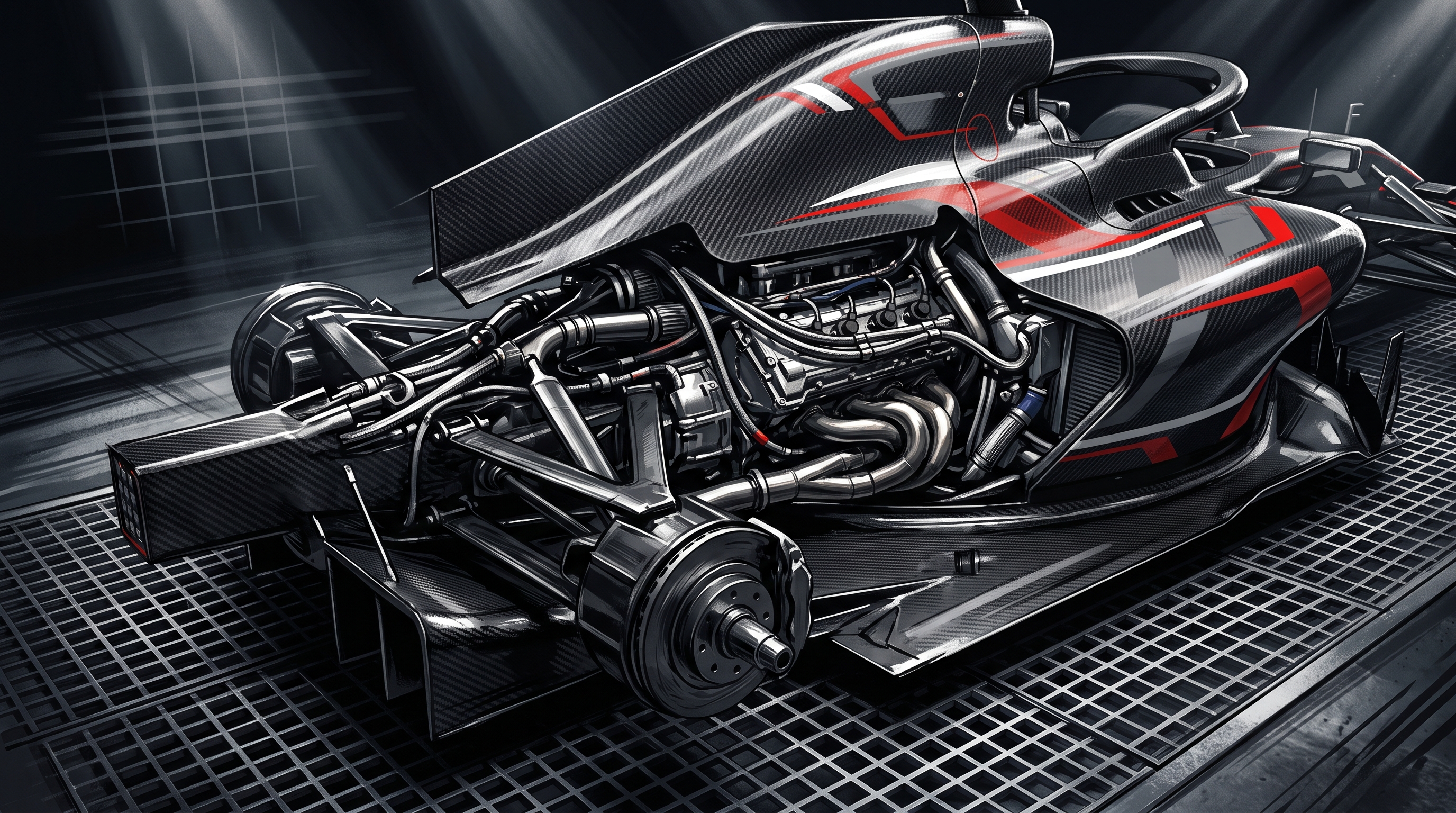
According to reports from RaceFans, the governing body completed its second formal engine performance evaluation under the Annual Development Unit Optimization regulations and confirmed that no adjustments will be made to current engine specs. That decision establishes the static technical baseline for the remainder of the 2026 championship, forcing teams to rely entirely on development timing rather than regulatory rebalancing to close gaps on track.
The stability rewards teams that timed their technical rollouts effectively under the regulations. According to RacingNews365, the FIA's latest ADUO allocations highlighted a strategic masterclass from Ferrari, showing how the team timed its car upgrades to maximize development regulations and secure a competitive edge. With no mid-season power unit spec changes coming from the governing body, Ferrari's tactical upgrade deployment becomes a crucial factor against Mercedes' current advantage.
Mercedes leads the Constructors' Championship with 425 points to Ferrari's 338, holding an 87-point margin built largely on six victories from championship leader Andrea Kimi Antonelli. However, team principal Toto Wolff explained that Antonelli faces a difficult home weekend at Monza due to specific team and technical circumstances. Without regulatory engine modifications available, managing track-specific performance limits is a pure operational exercise.
Championship Math and Monza Benchmarks
With 12 of 23 rounds completed, Antonelli tops the Drivers' Championship with 242 points. Teammate George Russell and Ferrari's Lewis Hamilton are tied for second on 183 points, trailing the leader by 59 points. Lando Norris sits fourth with 159 points for McLaren, while Charles Leclerc ranks fifth on 155.
Eleven rounds remain in the 2026 season, leaving roughly 275 to 374 points available across standard races and sprint weekends. A standard Grand Prix awards 25 points to the winner, with up to approximately 34 points available across a sprint weekend.
That volume of remaining points leaves the title race wide open, but past history at Monza highlights how quickly grid dynamics can shift. At the 2025 Italian Grand Prix, Max Verstappen won from pole position, with McLaren's Norris and Oscar Piastri finishing second and third after starting in those same positions. A year earlier, at the 2024 Italian Grand Prix, Leclerc took victory for Ferrari after starting fourth on the grid, leading Piastri and Norris across the line.
With engine specifications locked, Ferrari's upgrade timing gives Hamilton and Leclerc an opportunity to exploit any technical vulnerabilities Mercedes experiences at Monza.
Drivers Lock in 2027 Plans Early
While 2026 performance hinges on upgrade timing, teams are moving rapidly to secure their driver line-ups for 2027. Ten drivers have already locked in confirmed places on the 2027 grid amid active silly season negotiations, according to RacingNews365.
Both McLaren and Ferrari have chosen to keep their driver line-ups completely intact for 2027. Alpine has also finalized its seats, with executive advisor Flavio Briatore confirming that Franco Colapinto will extend his contract to partner Pierre Gasly for a third consecutive season.
Red Bull secured Max Verstappen with a contract extension running through the 2030 season. Oscar Piastri dismissed previous rumors linking Verstappen to McLaren, stating he never felt threatened by the prospect and comparing his secure standing at McLaren to Russell's position at Mercedes. However, former F1 engineer Bernie Collins noted to RacingNews365 that contract extensions do not guarantee a driver's permanent future, emphasizing that in Formula 1 there is always a way out of agreements if circumstances change.
Development Windows Over Driver Drama
The urgency to settle future driver line-ups contrasts with the long-term rebuilding efforts elsewhere on the grid. Williams Team Principal James Vowles revealed that his team has suffered from 20 years of underinvestment, targeting the 2026 regulation overhaul as Williams' primary opportunity to escape the midfield.
For the current championship contenders, however, long-term stability offers no shortcut through the current engine rules. The FIA's confirmation of unchanged power unit specifications under the second ADUO review ensures that the final 11 rounds will be decided by upgrade timing and operational execution on track.
Ferrari's strategic timing around upgrade allocations provides a clear blueprint for capitalizing on static regulations. As Mercedes prepares for technical complications with Antonelli at Monza, the title fight remains governed not by driver market speculation, but by the precise execution of development schedules within fixed engine rules.
The F1 Formula is an independent, fan-run publication. "Formula 1", "F1", the F1 logo, Grand Prix, and team/driver names are trademarks of their respective owners. This site is not affiliated with, endorsed by, or sponsored by Formula One Group, FIA, or any Formula 1 team. All coverage is editorial commentary and analysis under fair use.
Daily Brief
Get tomorrow’s analysis in your inbox.
One email a day, ahead of every session.
ה-F1 של המחר, בתיבת הדואר שלך.
אימייל אחד ביום, לפני כל מקצה. תוצאות מרוצים, מידע מהפאדוק וההחלטות שאתרי ההסברים מפספסים.
By subscribing, you agree to receive חדשות ועדכוני פורמולה 1 יומיים from The F1 Formula. No spam. Unsubscribe anytime. Privacy Policy
רוצים ניתוח מעמיק יותר?
ניתוחי סופ"ש מרוץ, דיווחים מהפדוק והחלטות שאתרי ההסברים מפספסים.
Written by
Founder & Editor, The F1 Formula
Independent Formula 1 analysis — reading the paddock’s best reporting and distilling what happened, why it matters, and what’s next. Founder, editor, and producer of The F1 Formula.
Sources
- 01
- 02
- 03
- 04
- 05Complete F1 2027 confirmed driver line-ups
RacingNews365
- 06
- 07
- 08
- 09Alpine explain decision to extend Franco Colapinto
RacingNews365
- 10
- 11
- 12


