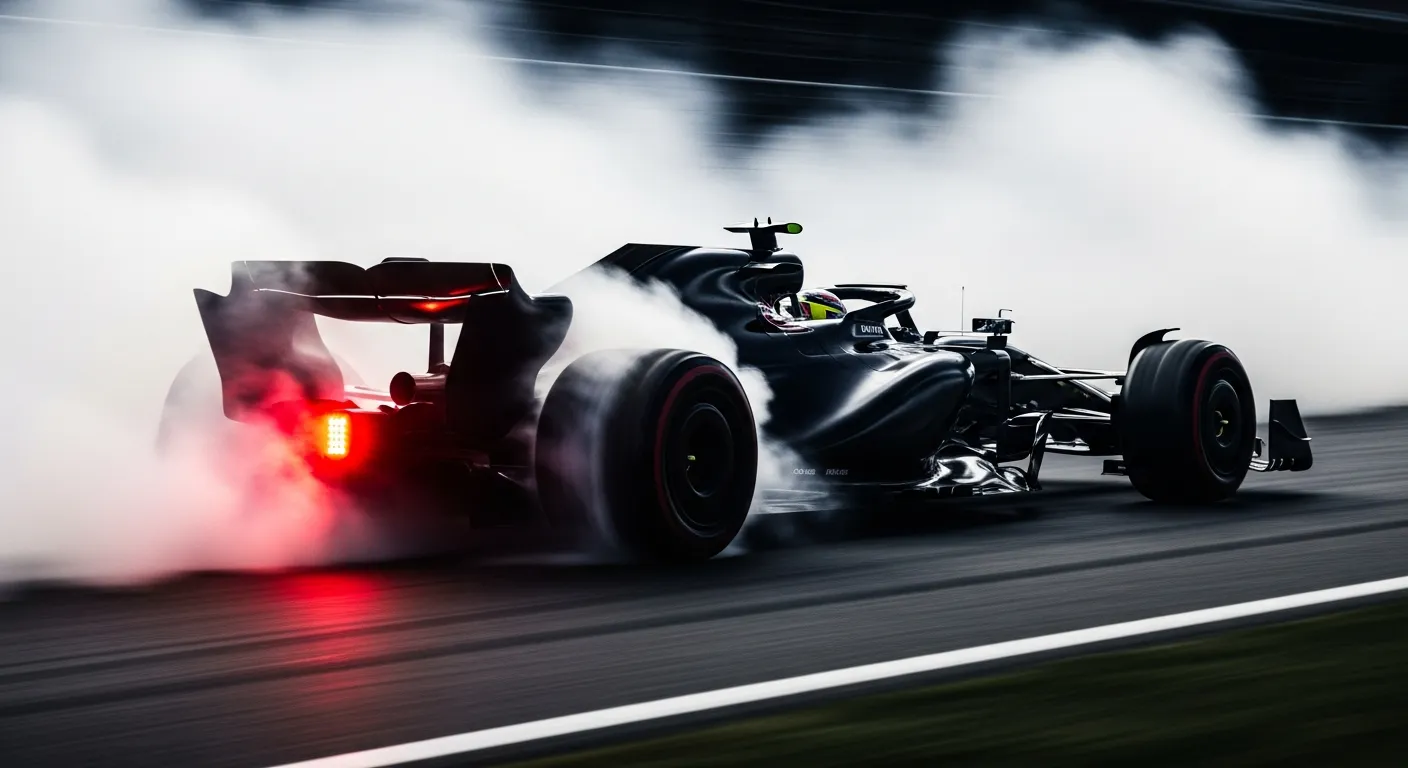
The 2021 São Paulo Grand Prix at Autódromo José Carlos Pace delivered one of the most compelling narratives of the turbo-hybrid era, showcasing a remarkable recovery drive that reshaped the championship fight. This race was not merely a contest of speed but a testament to resilience and strategic execution under immense pressure.
Qualifying and Penalties
The weekend began with significant drama for Lewis Hamilton. After setting the fastest time in Friday's qualifying session, which determined the grid for the Sprint, his Mercedes W12 was found to have a DRS infringement. This led to his disqualification from qualifying, forcing him to start the Sprint from the very back of the grid. Despite this setback, Hamilton carved his way through the field in the Sprint, finishing fifth. However, an additional five-place grid penalty for an engine component change meant he would start Sunday's main race from tenth position. Valtteri Bottas, Hamilton's Mercedes teammate, secured pole position for the Grand Prix after winning the Sprint, lining up ahead of Max Verstappen.
The Race Unfolds
From the moment the lights went out, Hamilton's intent was clear. He quickly dispatched several cars in the opening laps, demonstrating the raw pace of his Mercedes. The first stint saw him steadily climb through the top ten, making decisive overtakes. The battle for the lead intensified as Hamilton closed the gap to Verstappen. Their on-track exchanges were a focal point, with both drivers pushing the limits of their machinery and the regulations. The circuit's characteristics, with its long straights and challenging corners, provided ample opportunity for strategic play and overtakes, reminiscent of some of the classic battles seen at circuits like the 2014 British Grand Prix.
Strategic Story and Performance
Mercedes' strategy for Hamilton was aggressive, utilizing the car's pace and Hamilton's skill to maximize track position. The team opted for a two-stop strategy, mirroring Red Bull's approach for Verstappen. The pit stops were executed flawlessly, returning Hamilton to the track in prime position to continue his charge. Meanwhile, Sergio Pérez, in the second Red Bull, played a crucial role, eventually securing the fastest lap of the race on the final tour, denying Hamilton an extra point and demonstrating Red Bull's commitment to maximizing every competitive advantage. This strategic nuance is a hallmark of modern Formula 1 — official site racing, where every point can be decisive in a championship campaign. The data from races like this is meticulously analyzed, often informing future season developments, as seen in the ongoing evolution of car specifications, which can be explored through resources like Jolpica/Ergast — 2026 season data.
Valtteri Bottas, starting from pole, maintained a strong pace to secure a podium finish, contributing valuable points to Mercedes' constructors' championship effort. The Ferrari drivers, Charles Leclerc and Carlos Sainz, delivered a solid performance, securing fifth and sixth positions respectively, showcasing the Scuderia's consistent progress in the season. Further down the field, Pierre Gasly, Esteban Ocon, and Fernando Alonso all secured points, highlighting the competitive mid-field battles that are a constant feature of the FIA — F1 World Championship. The race at Interlagos often provides unexpected results, much like the unpredictable nature of the 2014 Canadian Grand Prix where strategic calls under safety car conditions can redefine outcomes. For a broader understanding of how these events shape the sport, the comprehensive overview on Wikipedia: Formula One offers valuable context. The intense championship battle of 2021, covered extensively by various outlets, provided a backdrop where every point mattered, as detailed in many 2021 F1 Season Reviews.
Daniel Ricciardo and Lance Stroll were the only retirements, with Ricciardo experiencing power loss and Stroll succumbing to collision damage, underscoring the demanding nature of the Interlagos circuit and the reliability challenges inherent in the turbo-hybrid machinery. The sheer pace demonstrated by Hamilton, particularly his ability to recover from a significant grid penalty, cemented this race as a defining moment in the 2021 season, echoing other great comeback drives in F1 history, such as those seen at the 2014 Spanish Grand Prix.
Full classified results
Every driver's verified grid-to-flag result from the 2021 São Paulo Grand Prix — grid, finish, points, teammate H2H, and championship swing.
- P1Lewis HamiltonMercedes25 pts
- P2Max VerstappenRed Bull18 pts
- P3Valtteri BottasMercedes15 pts
- P4Sergio PérezRed Bull13 pts
- P5Charles LeclercFerrari10 pts
- P6Carlos SainzFerrari8 pts
- P7Pierre GaslyAlphaTauri6 pts
- P8Esteban OconAlpine F1 Team4 pts
- P9Fernando AlonsoAlpine F1 Team2 pts
- P10Lando NorrisMcLaren1 pts
- P11Sebastian VettelAston Martin0 pts
- P12Kimi RäikkönenAlfa Romeo0 pts
- P13George RussellWilliams0 pts
- P15Yuki TsunodaAlphaTauri0 pts
- —Daniel RicciardoMcLarenPower loss
- —Lance StrollAston MartinCollision damage