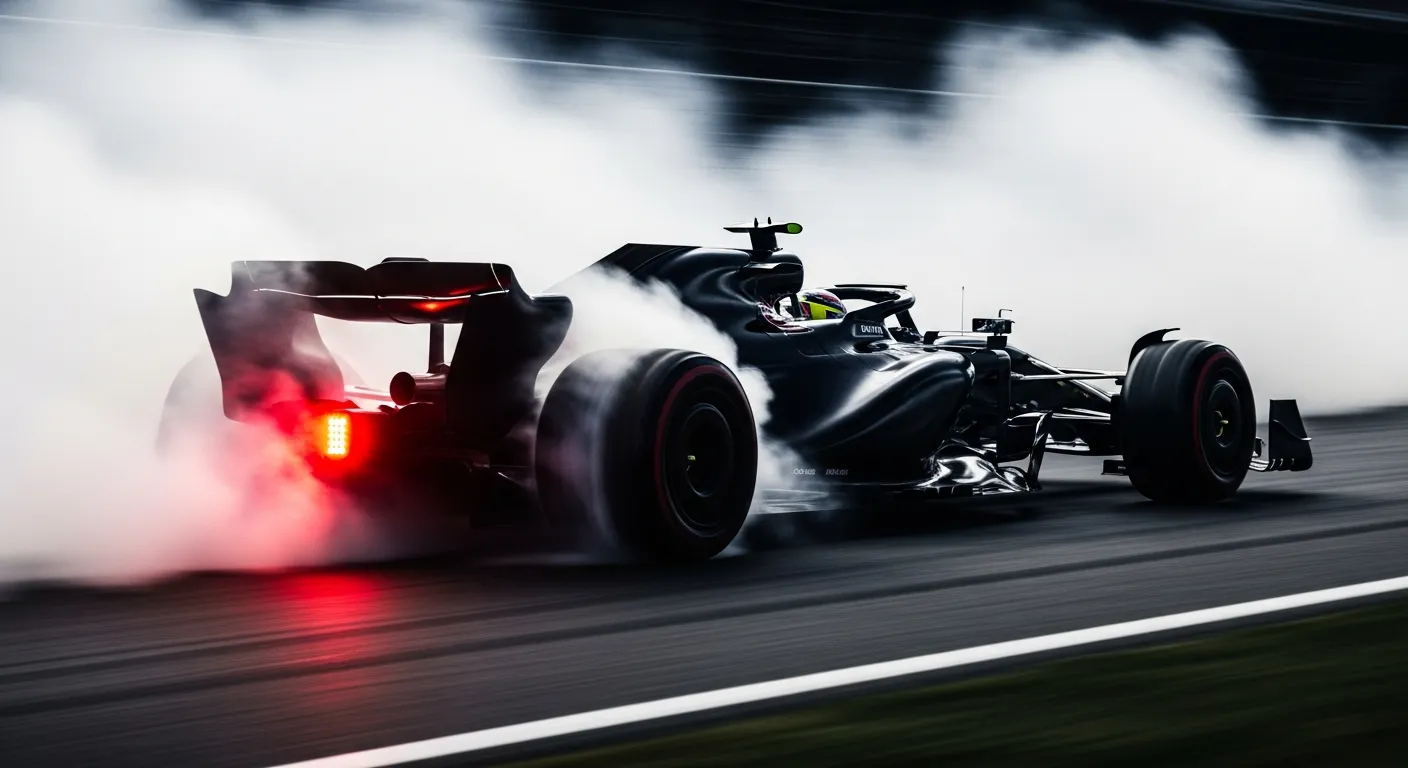
The F1 Formula brings you the latest news from the paddock: Spa-Francorchamps is gearing up to be a brutal test of energy management, with F1 cars expected to be “significantly energy-starved” in its demanding second sector. This isn't just a technical footnote; it's a critical factor that will shape race strategy, overtakes, and ultimately, who stands on the podium. If you're tracking the championship, this detail is a game-changer for understanding the Belgian Grand Prix.
The Energy Equation at Spa
Spa is renowned for its long straights and high-speed corners, a combination that typically allows for significant energy recovery. However, the unique demands of the circuit, particularly through the iconic Eau Rouge/Raidillon complex and into the Kemmel Straight, create a complex energy management scenario. The current generation of F1 power units relies heavily on electrical energy deployment, and any deficit can severely impact top speed and acceleration.
When we talk about cars being “energy-starved,” it means the hybrid system's battery is depleted, limiting the amount of electrical power available for deployment. This can happen when drivers are on full throttle for extended periods without sufficient braking or lifting to regenerate energy. Spa's second sector, with its blend of high-speed sections and minimal heavy braking zones, presents a perfect storm for this issue.
Why Sector Two is the Crux
Sector two at Spa includes the run from Eau Rouge, up the Kemmel Straight, and through Les Combes. This is where cars spend a considerable amount of time at high speeds, demanding maximum power output. While the run up Eau Rouge and the Kemmel Straight offers opportunities for slipstreaming and overtaking, the lack of significant braking events means less energy can be harvested by the MGU-K (Motor Generator Unit – Kinetic).
Compounding this, the MGU-H (Motor Generator Unit – Heat) recovers energy from the exhaust gases, but its efficiency can also be challenged by the specific engine mapping required for Spa's high-speed profile. Teams will be meticulously balancing deployment and recovery strategies, knowing that a misstep could leave their drivers vulnerable on the long straights.
Impact on Race Strategy and Overtaking
For you, the fan, this translates directly into fascinating strategic battles. Drivers will need to be incredibly disciplined with their energy usage. Deploying too much too early could leave them defenseless later in the lap, especially when defending or attacking on the Kemmel Straight. Conversely, being too conservative might mean missing crucial overtaking opportunities.
We could see teams experimenting with different energy deployment maps throughout the race. Some might opt for aggressive deployment early in a stint to build a gap, risking energy starvation later. Others might play the long game, conserving energy for key moments or to counter an attack. The pit wall is alive with these calculations, and every decision will be magnified by Spa's unforgiving nature.
The DRS Factor
DRS (Drag Reduction System) will be more critical than ever. A car that is energy-starved will struggle to maximize the benefit of DRS, even with the rear wing open. This could lead to situations where a following car, even with DRS, might not have enough electrical boost to complete an overtake if the leading car has managed its energy more effectively. This adds another layer of complexity to the on-track action and makes the news from the paddock even more compelling.
Beyond Spa: Other Key Developments
While Spa's energy challenge dominates the headlines, other news from the F1 world continues to unfold. Teams are constantly pushing the boundaries of technical regulations, and driver market rumors are always circulating. The championship battle remains tight, and every race weekend brings new developments that can swing momentum.
Understanding these nuances is what separates the casual observer from the truly informed fan. The technical intricacies, the strategic gambles, and the sheer speed of F1 cars combine to create a spectacle unlike any other. Keep an eye on how teams adapt to these energy demands at Spa; it will be a masterclass in engineering and driving skill.
What This Means for the Championship
For championship contenders, managing energy at Spa could be the difference between a significant points haul and a frustrating weekend. Reliability will also be a concern; pushing the power unit to its limits while managing energy recovery can stress components. Any technical glitch or strategic miscalculation could have major implications for the standings.
This is the kind of detail that makes F1 so compelling – the blend of raw speed, cutting-edge technology, and human strategy. The upcoming race at Spa promises to be a thrilling demonstration of these elements, with energy management taking center stage. Read the full story — link in bio.
The F1 Formula is an independent, fan-run publication. "Formula 1", "F1", the F1 logo, Grand Prix, and team/driver names are trademarks of their respective owners. This site is not affiliated with, endorsed by, or sponsored by Formula One Group, FIA, or any Formula 1 team. All coverage is editorial commentary and analysis under fair use.
Daily Brief
Get tomorrow’s analysis in your inbox.
One email a day, ahead of every session.
Tomorrow’s F1, in your inbox.
One email a day, ahead of every session. Race results, paddock signal, and the calls the explainer sites miss.
By subscribing, you agree to receive daily F1 news and updates from The F1 Formula. No spam. Unsubscribe anytime. Privacy Policy
Want the deeper read?
Race-week analysis, paddock signal, and the calls the explainer sites miss.