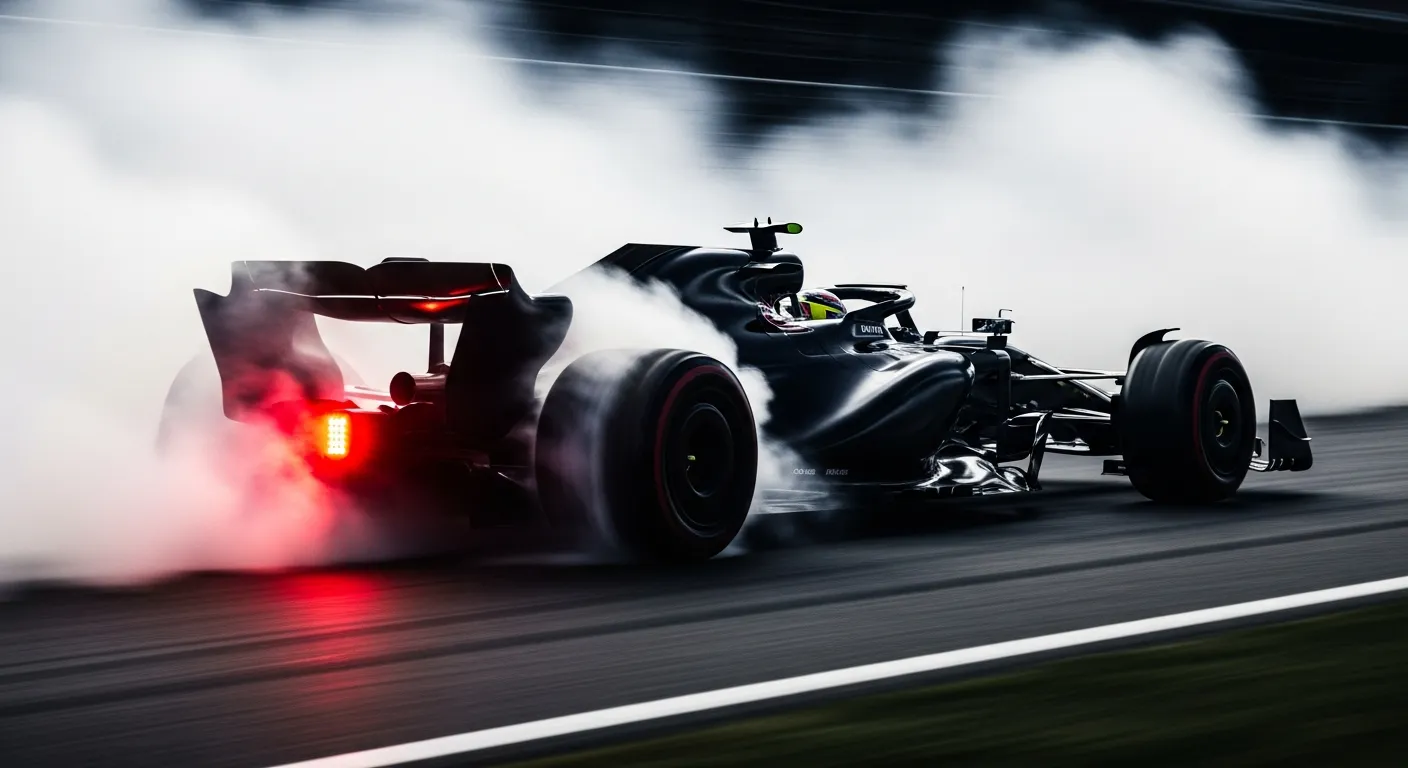
The 2022 Mexico City Grand Prix at the Autódromo Hermanos Rodríguez delivered a compelling strategic battle, primarily centered on tire compound durability and performance at extreme altitude, distinct from the turbo-hybrid debut at the 2014 Australian Grand Prix. This race highlighted how crucial tire degradation and pit stop timing remain, even in the ground-effect era, when teams navigate the unique atmospheric conditions of Mexico City.
Qualifying
Qualifying set the stage for a fascinating strategic contest. The high altitude of Mexico City, sitting over 2,200 meters above sea level, significantly impacts aerodynamic downforce and engine performance, making car setup a delicate balance. The reduced air density means less drag, but also less cooling efficiency and less downforce, demanding specific compromises from the teams. Pole position was secured with a lap that demonstrated exceptional car balance, particularly through the stadium section, and indicated a strong one-lap pace. The grid saw a mix of tire strategies emerging, with some teams clearly eyeing an aggressive start on softer compounds, while others prioritized longevity for the race distance. The tight margins at the front hinted that race day would be decided by more than just raw pace.
Race
The race start was typically intense, with the long run down to Turn 1 providing immediate opportunities for position changes. The initial laps saw drivers carefully managing their tires, understanding that the circuit's abrasive surface and the high energy demands of the ground-effect cars would test compound integrity. The strategic narrative quickly coalesced around tire choices: a significant portion of the field opted for a one-stop strategy, predominantly moving from medium to hard compounds. However, the exact timing of these stops, and the ability to extract performance from the hard tire, proved to be the decisive factor. The high-altitude environment meant engines were working harder for less power, and cooling systems were pushed to their limits, adding another layer of complexity to driver and team management throughout the 71 laps. The strategic nuances were as critical as outright speed, a theme often seen in demanding races like the 2026 Qatar Grand Prix.
Strategic Story
The strategic story of the 2022 Mexico City Grand Prix was unequivocally about the tires. Pirelli's compound selection – C2 (hard), C3 (medium), and C4 (soft) – presented teams with a genuine dilemma. While the soft tire offered initial grip, its degradation at this circuit made it a risky proposition for anything beyond a short first stint. The medium tire emerged as the favored starting compound for many, offering a balance of pace and durability. The critical decision point came when transitioning to the hard compound. Teams that managed to extend their medium tire stint, or those who made an early switch to the hard and then expertly managed its wear, gained a significant advantage. This was not a race where a safety car dramatically reshuffled the pack; instead, it was a pure test of strategic foresight and pit wall execution, a stark contrast to the late-race drama that can define a championship decider like the 2026 Abu Dhabi Grand Prix. Understanding the nuances of tire performance is fundamental to Formula 1, as detailed on the Formula 1's official site.
Teams had to balance tire wear with the need for track position, a delicate act under the watchful eye of the FIA's F1 World Championship overview. The data from races like this is meticulously analyzed, often found in comprehensive archives like Ergast's F1 data archive, to inform future strategies. The ability to push the hard tire for an extended period, maintaining competitive lap times without excessive degradation, ultimately separated the front-runners. This strategic depth is what makes Wikipedia's comprehensive F1 entry a valuable resource for understanding the sport's evolution.
Championship Impact
This result further solidified the championship picture for the season. With strong performances from the leading contenders, the points accumulated in Mexico City significantly influenced the final F1.com for driver and constructor standings. The consistent performance from the winning team underscored their dominance in the ground-effect regulations, adding crucial points to their tally and making their position in the Constructors' Championship almost unassailable. For the Drivers' Championship, the outcome further extended the lead of the eventual champion, making subsequent races more about consolidation than a direct battle for the title on the official Formula 1 calendar.
Full classified results
Every driver's verified grid-to-flag result from the 2022 Mexico City Grand Prix — grid, finish, points, teammate H2H, and championship swing.
- P1Max VerstappenRed Bull25 pts
- P2Lewis HamiltonMercedes18 pts
- P3Sergio PérezRed Bull15 pts
- P4George RussellMercedes13 pts
- P5Carlos SainzFerrari10 pts
- P6Charles LeclercFerrari8 pts
- P7Daniel RicciardoMcLaren6 pts
- P8Esteban OconAlpine F1 Team4 pts
- P9Lando NorrisMcLaren2 pts
- P10Valtteri BottasAlfa Romeo1 pts
- P11Pierre GaslyAlphaTauri0 pts
- P12Alexander AlbonWilliams0 pts
- P14Sebastian VettelAston Martin0 pts
- P15Lance StrollAston Martin0 pts
- P19Fernando AlonsoAlpine F1 Team0 pts
- —Yuki TsunodaAlphaTauriCollision damage