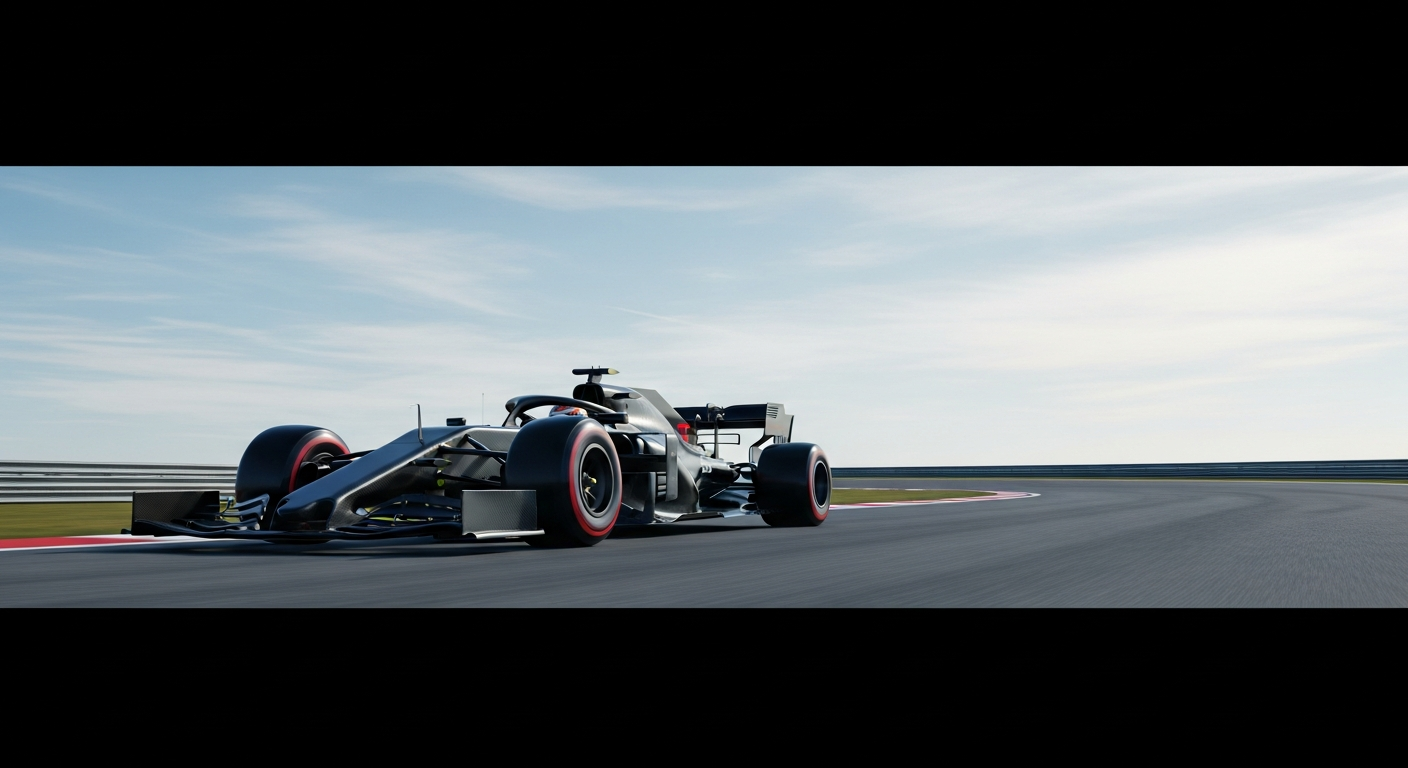
Lights out and away we go. You’ve typed f1 com into your browser a thousand times. You know the layout, you know where the standings are, and you know when the next session starts. But if you’re looking for the pulse of the paddock—the stuff that happens between the lines of a sanitized press release—you’re looking in the wrong place.
For the hardcore fan, the official site is the baseline. It’s the entry-level. But when the pit wall is alive and the undercut is being calculated in real-time, you need more than just a leaderboard. You need the grit, the radio crackle, and the technical nuance that defines modern Grand Prix racing.
Why f1 com is Only the Starting Grid
Don't get it wrong: the official presence at f1 com is essential for the basics. It’s where you go for the official entry list and the high-res photos of the podium. But for those who have been watching since the Senna years, the official narrative often feels a bit... polished.
When Hamilton and Verstappen turned the 2021 Abu Dhabi finale into a digital firestorm, the official channels were busy managing the optics. The real story was in the telemetry and the frantic radio exchanges between the teams and Michael Masi. That’s the gap we fill. We don’t do fluff. We don’t explain what DRS is because if you’re here, you already know it’s the difference between a daring overtake at the end of the Kemmel Straight and a frustrated afternoon staring at a gearbox.
The Lag Factor: When Seconds Cost Positions
In a sport where a three-tenth delay in a pit stop is a catastrophe, why settle for news that’s forty minutes late? The problem with relying solely on f1 com is the corporate filter. By the time a steward's decision is formatted and uploaded, the grid has already moved on.
You need to know the second a VSC is deployed and how it affects the window for the medium-to-hard transition. You need to know why the Ferrari PU is clipping at the end of the straight before the driver even complains about it on the radio. We prioritize the 'why' and the 'how' over the 'who.'
Decoding the Radio Crackle
The most honest moments in F1 don't happen in the post-race pen; they happen in the cockpit. The official broadcast gives you the highlights—the 'leave me alone, I know what I'm doing' moments. But the real tactical battle is hidden in the constant stream of data and coded instructions.
When a driver is told to go to 'Strat 2' or 'Scenario 7,' that’s not just noise. It’s a direct insight into the health of the MGU-K or the state of the battery harvest. While f1 com might give you a summary of the race, we’re looking at the fuel flow and the tire degradation curves that forced the strategy call in the first place.
The No-Fluff Approach to Technical Regs
We are currently in a fascinating era of ground-effect aerodynamics. The technical regulations are dense, and the 2026 shift is already looming large on the horizon. Understanding the nuances of the current floor designs or the complexity of the turbo-hybrid power units shouldn't require a PhD, but it does require an interest in the engineering that makes these cars the fastest machines on earth.
If you’re tracking the development race, you’re looking for which team brought a new front wing endplate to Barcelona and how it changed the outwash. You aren't looking for a 'beginner's guide to wings.' You’re looking for the performance delta.
Mastering the DRS Zones and PU Management
Strategy in the modern era is a game of chess played at 200mph. The undercut is a powerful tool, but it’s only effective if the out-lap is perfect and the tires are in the right window. This is where the nuance lives.
When you see a driver hanging back at 1.1 seconds, they aren't just losing pace; they are managing their thermal degradation, waiting for the right moment to dive into the DRS zone. This level of detail is what separates a casual viewer from a true insider. While you might check f1 com for the final results, you come here to understand how the race was won in the second stint.
The 2026 Shift: Preparing for the New Era
The grid is already bracing for the next massive shake-up. With new engine regulations and a move toward more sustainable fuels, the hierarchy we see today could be completely inverted. The driver market is already reacting—contracts are being signed with 2026 in mind, not just next season.
Staying grid-ready means looking ahead. It means understanding the impact of the cost cap on development cycles and why some teams are sacrificing their current wind tunnel time to focus on the future. It’s about the long game.
Your Next Move
If you’re tired of the sanitized version of the sport and want the raw, unfiltered reality of the paddock, you need to be in the loop. Don't just wait for the highlights. Get the data, the radio, and the technical breakdowns as they happen.
Read the full story — link in bio.
The F1 Formula is an independent, fan-run publication. "Formula 1", "F1", the F1 logo, Grand Prix, and team/driver names are trademarks of their respective owners. This site is not affiliated with, endorsed by, or sponsored by Formula One Group, FIA, or any Formula 1 team. All coverage is editorial commentary and analysis under fair use.
Daily Brief
Get tomorrow’s analysis in your inbox.
One email a day, ahead of every session.
Tomorrow’s F1, in your inbox.
One email a day, ahead of every session. Race results, paddock signal, and the calls the explainer sites miss.
By subscribing, you agree to receive daily F1 news and updates from The F1 Formula. No spam. Unsubscribe anytime. Privacy Policy
Want the deeper read?
Race-week analysis, paddock signal, and the calls the explainer sites miss.


